Get Full Government Meeting Transcripts, Videos, & Alerts Forever!
Get email alerts on the Public Safety Ems Training topic
No spam. Unsubscribe anytime.
Pike County receives $16,100 for EMS training; officials report expanded certifications and improved response capacity
Summary
Pike County public safety officials reported expanded training activity and accepted a $16,100 stipend to support EMS training.
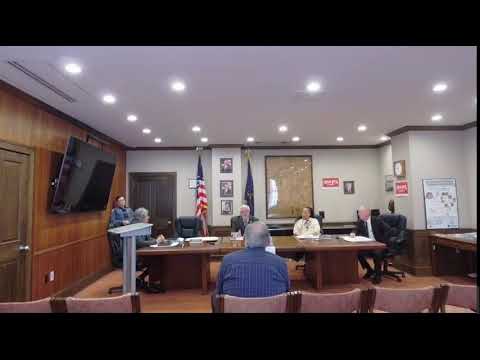
Pike County public safety officials told commissioners on Feb. 5 that the county’s emergency services training center expanded offerings in 2024, added new certifications and is using a $16,100 stipend from a rural education fund to support student training.
Tim App, director of Pike County Public Safety, joined by Jordan Wisniewski, DMS coordinator, and Kyle Rohnert, deputy director, reported that the center hosted dozens of classes and issued multiple professional certifications last year. Wisniewski said the center conducted three testing sessions that led to 41 Firefighter I certifications, four Firefighter II certifications, three area operator certifications, 12 incident management certifications, and 13 hazard-scene awareness certifications; he summarized that the center issued certifications across several levels.
Officials said the center added three new certifications this year — vehicle rescue (passenger vehicle rescue awareness), road rescue awareness and Fire Officer I — and emphasized that local certifications make candidates more competitive for jobs statewide. The presenters said the center is an affiliate test site for state professional certifications and recently partnered with Lehigh Valley for clinical placements for advanced emergency medical technician students.
On funding, Wisniewski said the county received a $16,100 check from a rural education fund to the Department of Health; staff explained the fund reimburses the county for portions of training costs and said the county submits invoices and receives reimbursement from the Greater Pike initiative fund. Wisniewski described per-student cost estimates for comparison: he said an EMT course run privately can cost around $1,200 (and that advanced EMT courses can run from about $1,700 to $2,500), while the county’s internal estimate for a recent training calculation averaged about $700–$800 per student for class delivery. He added that the training center strives to keep courses local to avoid travel burdens for students who otherwise would travel to Lehigh County.
Commissioners and presenters linked the training and local funding to improved EMS capacity. Wisniewski said recent EMT class pass rates were higher than the statewide average (he reported 8 of 10 students passed a recent class, which he compared to a 63 percent statewide passing rate), and commissioners noted those local results and expanded training as contributors to faster EMS response in the county. App and Wisniewski said the county’s model — combining funding to municipalities and training capacity — has reduced time to get ambulances staffed and onto the road.
The deputies and training staff described a continuing reliance on a mix of funding sources (grant reimbursements, county general fund allocations and a locally administered Greater Pike fund seeded by private donations) and said the county moved away from one-time federal relief as a stable funding source. Officials said the county now largely supports the ongoing program with general fund dollars after initial start-up funding.
Officials urged patience as urgent care and hospital planning continue in parallel (see separate coverage). The presentation concluded with commissioners thanking training staff and the county noting continuing work to manage instructor availability and expand the CTE pipeline for future recruits.
Speakers emphasized that the training center’s local offerings reduce travel burdens for students, lower net costs for trainees and help supply both volunteer and career emergency services with certified personnel.