Get Full Government Meeting Transcripts, Videos, & Alerts Forever!
Get email alerts on the District Budget topic
No spam. Unsubscribe anytime.
Newman‑Crows Landing Unified reviews $7.5 million shortfall, prioritizes staff, transportation and TK outreach
Summary
A special meeting of the Newman‑Crows Landing Unified School District Board of Trustees on Feb. 6, 2025, focused on the district's budget outlook and the Local Control and Accountability Plan process after staff presented a projection showing roughly a $7.5 million deficit driven largely by declining enrollment and retroactive payroll costs.
A special meeting of the Newman‑Crows Landing Unified School District Board of Trustees on Feb. 6, 2025, focused on the district's budget outlook and the district's Local Control and Accountability Plan process as staff outlined a projected multi‑year shortfall and options for closing the gap.
The workshop matters because staff said the district is working from preliminary state budget estimates, is already carrying a near‑$20 million beginning balance and faces a roughly $7.5 million deficit this year after retroactive payroll payments; trustees and staff discussed using reserves, limiting hires, and targeting transportation and other noninstructional costs to reduce the shortfall.
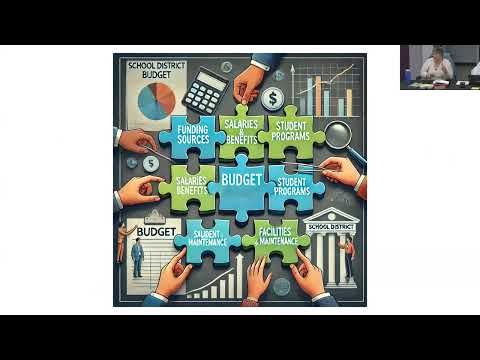
“This workshop is to kinda go over the budget and how everything fits together,” a staff member told the board, walking trustees through the Local Control Funding Formula (LCFF), categorical funding, and program restrictions. Staff said the district's beginning balance was “just under $20,000,000” and that retroactive payments from a prior-year settlement increased this year's expenditures, contributing to the roughly $7.5 million deficit presented to trustees.
The presentation summarized revenue drivers and constraints: the LCFF base grant and several add‑ons (home‑to‑school transportation, transitional kindergarten and grade‑span adjustments), average daily attendance (ADA), property taxes, and the district's unduplicated pupil percentage (students who are English learners, foster youth or low income). Staff reported the district's unduplicated rate at about 71.61%, which qualifies it for supplemental and concentration grants under LCFF formulas.
Staff also explained how the state cost‑of‑living adjustment (COLA) affects the district. They said the COLA funded for the current year was 1.07%, but the district “realized” a negative 1.05% this year because of declining enrollment and the way ADA is calculated; staff gave a preliminary projection that next year's funded COLA could be 2.43% with an estimated district realization of about 1.18%.
Payroll and personnel remain the largest budget items. Staff noted roughly 76% of general fund expenditures are for salaries and benefits and described how step‑and‑column increases, negotiated settlements and staffing levels feed into multi‑year projections. Trustees and staff discussed an equity‑focused approach to potential reductions: assess positions when they are vacated, consider attrition, and review management and certificated classifications for possible realignment.
Trustees and staff flagged transportation costs as a near‑term pressure. A staff member said the district budgeted $180,000 for athletics transportation this year and that First Student, the district's contractor, has improved availability for some trips. Staff gave a specific example: a charter trip that cost about $8,000 because regular buses were unavailable, compared with an estimated $1,215 had district buses been available. Board members discussed whether the district should explore purchasing a small number of buses and using part‑time drivers to reduce recurring charter costs.
Trustees also discussed outreach to increase enrollment, particularly for transitional kindergarten (TK) and kindergarten. Staff reported 12 TK/kindergarten enrollments in the week they spoke and asked trustees to help publicize registration; staff described existing registration windows and said sites accept in‑person registration Mondays from 1 p.m. to 4 p.m. One trustee proposed evening registration events and additional parent outreach (flyers, utility bill inserts, social‑media pushes) to capture families who may be unaware of enrollment timelines.
Staff flagged program and grant timing as constraints: several categorical programs and federal grants are restricted by purpose and time period. The district's mental‑health clinician contract is funded by a two‑year grant that expires in June; staff said contracts could be extended as far as December if additional funding is secured but characterized continuation as contingent on new grant awards. Other federal and state programs mentioned included Title I–IV, IDEA special‑education funding, Perkins career‑technical education grants, and the community eligibility provision for school meals.
Board members asked for near‑term process steps. Staff said the district is preparing a second interim report to be presented to the board in March and reiterated the formal adoption schedule: the governor's May revise, followed by board adoption of the budget and LCAP in June. Trustees were told the district must publish audited financial reports to the state controller and maintain required reserve levels; staff noted the statutory minimum reserve is 3% but said the district historically targets a higher internal minimum and that 3% alone may not be sufficient for cash‑flow needs.
Trustees emphasized equity and minimizing classroom impact while closing the gap. Several trustees urged prioritizing attrition and vacancy reviews before layoffs and asked staff to return with more specific savings scenarios tied to personnel categories and programmatic impacts. Staff said they would analyze vacancies, management positions and districtwide allocations and report back with options.
The meeting closed with a reminder of next steps: the second interim will come to the board in March and the district will continue community meetings for the LCAP and site budget development; trustees adjourned at about 6:07 p.m.