Get Full Government Meeting Transcripts, Videos, & Alerts Forever!
Get email alerts on the Environmental Health topic
No spam. Unsubscribe anytime.
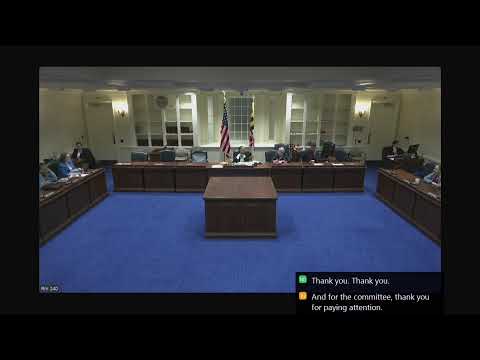
Committee hears bill to phase out PFAS active ingredients in pesticides; farmers, hospitals and pest‑control groups urge changes
Summary
Delegate Sheila Ruth proposed HB 386 to phase out pesticides whose active ingredients meet the OECD/scientific definition of PFAS. She said the bill would first eliminate PFAS pesticides in schools, daycares, hospitals, residential lawn care and mosquito spraying, and give commercial agriculture more time to transition.
Delegate Sheila Ruth presented House Bill 386 to phase out pesticides whose active ingredients meet the widely used OECD scientific definition of PFAS. The sponsor said the bill targets pesticides that list PFAS chemicals as active ingredients — not inert components — and phases uses in sensitive places first (schools, daycares, hospitals and residential lawn care), with longer timelines for commercial and agricultural uses.
Nut graf: Supporters said many pesticides containing PFAS active ingredients are persistent and can contaminate soil, water and food; they asked for a phase‑out to protect children, patients and the environment. Opponents — including agricultural groups, pest‑control professionals and hospital associations — warned the bill’s structural definition and timeline could remove tools needed for disease‑vector control, food production and infrastructure, and urged alignment with EPA definitions or added exemptions and a longer phase‑in.
Supporters’ testimony: Toxicologist Linda Birnbaum, pediatricians and public‑health researchers told the committee that PFAS chemicals are highly persistent, bioaccumulative, and associated with immune, developmental and metabolic harms. Pediatricians emphasized risk to fetuses and children. Environmental advocates and farmers who have adopted PFAS‑free practices urged acting quickly to “turn off the tap” of new PFAS inputs to soil and water.
Opponents’ testimony and concerns: Representatives of pesticide manufacturers, CropLife America, the Maryland Farm Bureau and professional landscapers urged the committee to rely on EPA’s chemical definition and regulatory process, arguing that FIFRA (the federal pesticide law) already requires toxicity testing and that many proposed banned active ingredients are widely used in targeted pest control including mosquitoes, termites, and crop protection. Pest‑control organizations said a statewide ban could remove important vector‑control tools used in public‑health responses (for example, bifenthrin in some mosquito‑control work).
Committee questions focused on definitions, phase‑in timelines and alternatives. Sponsor Ruth said she was open to amendments that lengthen phase‑in periods and that several agricultural and industry proposals were discussed; she said two issues were non‑negotiable for proponents: (1) the use of the broad OECD/scientific PFAS definition the bill adopts and (2) restricting early‑phase uses in schools, hospitals and residential mosquito spraying.
Ending: The committee encouraged the parties to meet. Sponsors agreed to continue discussions; the committee identified subcommittee members (delegates Hutchinson and Hill) to convene stakeholders to seek compromises on definition, essential‑use waivers and phase‑in timing.
Quotes used are verbatim from the hearing transcript and are attributed only to speakers who testified in committee.