Get Full Government Meeting Transcripts, Videos, & Alerts Forever!
Get email alerts on the Meeting Procedures topic
No spam. Unsubscribe anytime.
Robinson council holds workshop to set meeting procedures, public-comment rules and staff contact norms
Summary
At a workshop meeting, Robinson City Council members discussed clarifying how councilmembers should interact with staff, streamlining consent-agenda practice, limits on public comments and possible time limits for council discussion; no formal actions or votes were taken.
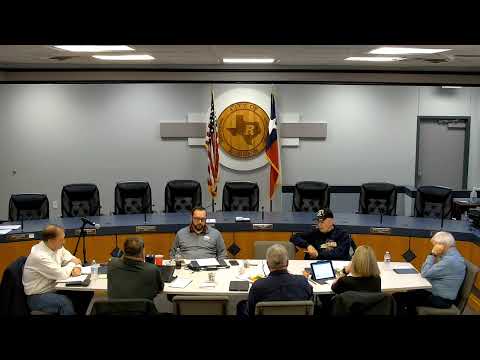
Robinson City Council members held a workshop focused on meeting expectations, rules, policies and procedures, discussing how members should interact with staff, how the council should handle public comment and consent-agenda items, and whether to set time limits for council debate. The session included input from the mayor, multiple councilmembers and city staff but produced no motions or formal votes.
Council members said they wanted clearer guidance so staff members are not put in the position of giving special treatment when individual councilmembers call directly. Several members said they prefer routing constituent questions through City Manager Craig to ensure consistent responses and to avoid creating the impression of preferential access to staff. Councilmembers also discussed the statutory limits on back-and-forth with speakers during public comment and asked for that guidance to be read into the agenda so citizens understand the process.
On consent-agenda practice, the council discussed allowing a single motion to “approve the consent agenda as presented” for items with no changes, and keeping items that include adjustments off the consent agenda. Council staff noted that when an item on consent requires a condition or change, it should be moved to the regular agenda so the record reflects deliberation and any conditions. Members urged clearer wording and consistent use of that approach to shorten routine meetings.
Members raised two competing procedural proposals for debate control: a suggested five-minute time limit per councilmember during discussion, and a more flexible approach that would allow the council to extend time for matters that need deeper deliberation. Several members said they worry rigid limits could prevent full consideration of complex items; others said consistent time management would respect staff and public time. The group agreed to continue refining a practical approach and to consider whether to put any changes on a future agenda for formal adoption.
The council reviewed how ordinances apply in the field and noted that no ordinance fits every scenario; several members recommended relying on the Zoning Board of Adjustment (ZBA) and existing due-process routes for exceptions rather than drafting more blanket rules. Staff were urged to provide clearer red-line changes and application examples for ordinance updates so councilmembers can see how rules would work in practice before voting.
Workshop participants also discussed public-comment logistics: the council already lists a statutory limit (3 minutes per speaker) and members recommended the mayor or designee read a brief explanation at the start of the public-comment period clarifying that the council cannot take action on non-agenda items that evening, and that staff will follow up if contact information is left. The group discussed funneling citizen contact information to staff and using the mayor’s office as a gate to prevent multiple councilmembers from individually contacting constituents on the same item.
The session closed without any formal action; members agreed to bring specific policy language or an agenda item back to a future meeting if they want to adopt binding procedural changes. The council emphasized a shared goal of respectful debate, clear records for votes and more consistent staff-council communication.