Get Full Government Meeting Transcripts, Videos, & Alerts Forever!
Get email alerts on the Opioids Enforcement topic
No spam. Unsubscribe anytime.
Attorney General seeks opioid restitution funding for state enforcement unit; advocates want safeguards
Summary
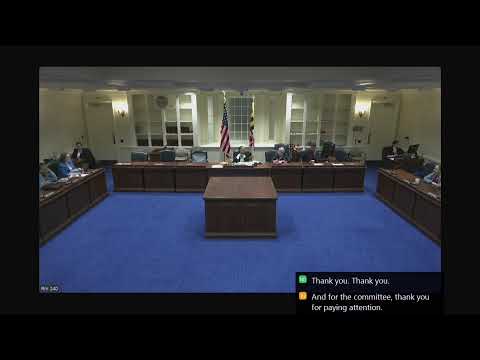
Attorney General Anthony Brown asked the Health and Government Operations Committee to authorize opioid restitution funds to support his office’s Opioids Enforcement Unit so in‑house enforcement and litigation can continue without relying on contingency outside counsel.
Delegate Rosenberg presented House Bill 728 to authorize explicit use of opioid restitution fund revenue to cover operating expenses and personnel costs for the Attorney General’s Opioids Enforcement Unit.
Nut graf: The Attorney General’s office said the unit has recovered hundreds of millions of dollars for the state and local governments and currently uses the Consumer Recovery Fund to support enforcement activities; the bill would allow use of ORF monies to fund the unit’s operating costs so the office can continue in‑house litigation rather than rely on contingency outside counsel, which the AG said would raise costs dramatically.
Attorney General testimony: AG Anthony Brown and Deputy Karen Valentine described the unit’s multi‑year recoveries — they said Maryland has secured more than $670 million in obligations related to opioid litigation and that pursuing further enforcement in‑house is cheaper for the state than using contingency‑fee counsel. Brown said the governor’s budget included a one‑time appropriation but that a stable special‑fund authorization would be more sustainable. He and Valentine asked for the committee’s favorable report.
Supporter and advocate testimony: Some advocacy groups and local governments raised concerns that earmarking ORF money for enforcement could reduce funds available for community abatement. Representatives including the Maryland Chapter of the National Council on Alcoholism and Drug Dependence and Maryland Association of Counties urged amendments — especially a time‑limited authorization (sunset) and annual public reports describing cases pursued, settlements, and dollar flows.
Committee discussion and outcomes: The AG said the proposal could be tailored: he suggested a sunset (five years) and said that a portion of an 'additional remediation' allocation tied to enforcement had been negotiated into settlements, which could be limited to support the unit. Several members pressed for assurances that enforcement funding would not divert remediation dollars from community programs; the AG said he would work with the committee and advocates on amendments.
Ending: The committee heard a mix of support and caution; the AG offered to work on amendments — including a sunset and reporting — and the committee asked parties to continue negotiations before further action.
All quotes used are verbatim from the hearing transcript and attributed to the named speakers in the record.