Get Full Government Meeting Transcripts, Videos, & Alerts Forever!
Get email alerts on the District Budget Shortfall topic
No spam. Unsubscribe anytime.
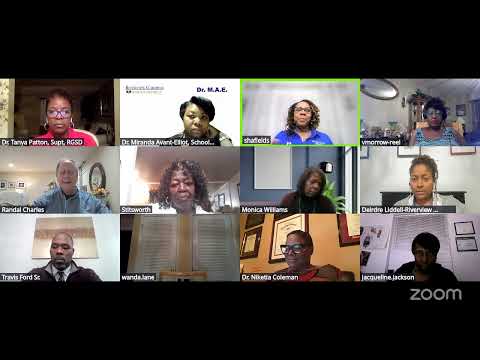
Riverview Gardens board warned of $23 million annual operating shortfall; staff outline staffing cuts, benefit changes and closed‑session RIF planning
Summary
At a Riverview Gardens School District board work session, district finance staff warned the board that the district faces a roughly $23 million annual shortfall in its operating fund unless it makes significant budget changes.
At a Riverview Gardens School District board work session, district finance staff warned the board that the district faces a roughly $23 million annual shortfall in its operating fund unless it makes significant budget changes.
Mr. Charles, a district finance staff member who presented the information, told the board that the district’s operating fund balance has fallen from about $31 million in 2022–23 and 2023–24 to an estimated $16 million this year — a drop the presentation tied to overestimated state revenue and omissions in the salary budget. "If we keep doing what we're doing, we're gonna spend $23,000,000 more than we take in in the operating fund every year," Mr. Charles said.
The presentation cited several causes: roughly $50 million in one‑time ESSER federal relief that the district used for recurring payroll over several years; an increase of about 200 positions over three years that raised salary and wage costs about $15 million and benefits about $5 million; an original budget that continued to use pre‑COVID attendance data for state funding estimates; and a June 2024 budget that, according to the presenter, omitted an entire group of employees' salaries.
The administration described a multi‑year plan that combines midyear reductions already implemented in supply and purchased services accounts, targeted staffing changes this school year, and deeper reductions or revenue steps for the 2025–26 and 2026–27 school years. Examples given include improving bus route efficiency, a 10% cut to many supply budgets, reduced discretionary professional development spending (state‑required PD 1% funds would not be cut), changes to vacation payout practices, and redesigning the district medical insurance plan (the district currently pays about $1,007 per employee per month for medical coverage).
Administrators presented a staffing reduction model that, as part of long‑range projections, assumed eliminating about five administrative positions, 48 classified positions and converting about 71 classified positions from full‑time to part‑time (to reduce salary and remove benefits), plus reductions in certificated staff including about 27 instructional support positions and 23 building‑level certified positions. The presenters said they hope many reductions can occur through retirements and resignations and that affected employees would be offered vacancies districtwide where qualified.
Board members pressed for process details, including whether reductions would follow a seniority or last‑in, first‑out model. Dr. Yvonne Elliott asked whether reductions would be handled as reductions in force and whether seniority would apply; administration replied they would use district policy GCPA that allows the board and administration to determine which employees best serve student needs and that seniority is not required by that policy. Administrators said they would request a closed session to discuss specific positions and personnel because names and the details are sensitive.
Board members also questioned how mistakes occurred in the budget. Mr. Charles said state funding projections had incorrectly relied on pre‑COVID attendance methods in the original budget and that a “whole group of employees” had been omitted from the salary lines. When a board member suggested the errors might indicate embezzlement, Mr. Charles responded: "No. . . . It was just a flat out error, flat out mistake. So no embezzlement, just some pretty significant mistakes." Dr. Patton and other administrators said they had met with principals, department heads and the NEA chapter and had visited buildings to explain the financial picture and gather input.
Administrators warned that without changes the district could not meet payroll or pay bills by about March of next year and could be designated financially distressed by the Missouri Department of Elementary and Secondary Education (DESE) if the operating fund balance falls below the threshold the agency uses for that designation. The presenters showed multi‑year projections indicating the operating fund could decline to about $4 million in a later projection and run out of money thereafter if further actions are not taken. The board was told that, after the present round of reductions and proposed actions that year and next, an additional roughly $4 million in cuts or revenue would still be needed for the following year to stabilize the budget.
At the close of the public portion of the work session, the board voted to move into closed session to discuss the pending reduction‑in‑force and personnel matters under Section 610.021 of the Missouri Revised Statutes; the motion was seconded and approved by roll call.
Votes at a glance • Motion to approve the meeting agenda: moved by Ms. Williams; seconded by Dr. May; roll call votes recorded as "yes" by board members present. • Motion to transition to closed session under Section 610.021(3), (13) and (14), RSMo., to discuss pending reductions in force and personnel matters: moved by board leadership; seconded by Ms. Veronica Marrheil; approved on roll call.
What the board said next Board members asked about communicating the situation to the community, outreach to elected officials to recruit business investment, the potential effect of the senior tax freeze on revenues (administrators estimated roughly $210,000–$250,000 annually), and whether outsourcing or renegotiating contracts could reduce costs. Administrators said they had explored the health insurance market, that health insurance costs are expected to rise, and that some contract and outsourcing options are under review. Several board members urged careful, humane handling of affected staff and asked that HR help employees find vacancies in other districts if their positions are eliminated.
The board then recessed the public session and proceeded to closed session to discuss individual personnel matters and the pending reduction in force.