Get Full Government Meeting Transcripts, Videos, & Alerts Forever!
Get email alerts on the Right To Repair Farm Equipment topic
No spam. Unsubscribe anytime.
Delegate Hornberger renews push for 'right to repair' tractors in Maryland hearing on HB 842
Summary
Delegate Kevin Hornberger introduced House Bill 842, the “farmer right to repair,” asking the House Economic Matters Committee to allow farmers and independent shops access to parts and diagnostic tools to keep tractors and heavy equipment running.
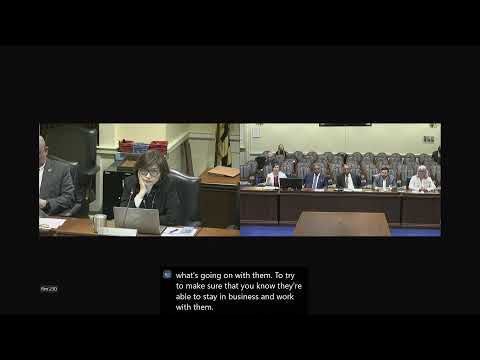
Delegate Kevin Hornberger introduced House Bill 842 on the floor of the House Economic Matters Committee as legislation to give farmers and independent repair providers greater access to parts, diagnostic tools and software needed to repair tractors and other heavy equipment.
“Gonna start off with HB 8 42. This is the farmer right to repair,” Delegate Kevin Hornberger said at the start of the presentation. Hornberger framed the bill as a response to what he called manufacturer limits on repairs that create downtime during seasonal harvests.
The bill’s sponsor said a 2023 US Public Interest Research Group study found that farmers lose roughly $3,500 per year to downtime caused by repair restrictions, and argued that the problem is large enough nationally to raise costs substantially. “When I buy something, do I own it? Right. If I pay for something and I buy it and I own it, I should have the right to repair it or to have someone else repair it of my choosing,” Hornberger said.
Hornberger and other proponents said manufacturers in some cases limit access to firmware and telematics so that a replaced mechanical part must be accompanied by a manufacturer-only software reset. That, they said, leaves farmers waiting for manufacturer technicians or paying higher rates to dealer technicians.
Opponents and questioning committee members pressed on warranty and safety issues. A committee member asked whether a farmer who attempts a repair and makes a mistake should expect the manufacturer to fix that work under warranty; Hornberger replied that the bill would not require manufacturers to cover repairs made outside of manufacturers’ guidelines. “This bill in no way forces manufacturers or maintenance providers to make up for bad actors in this space,” Hornberger said.
A representative of the Engine Technology Forum, a nonprofit trade group representing advanced-engine manufacturers, opposed HB 842 and warned the committee that easing repair restrictions could increase tampering with emissions controls and run afoul of the federal Clean Air Act. The witness said manufacturers have invested heavily in emissions controls and said there is a documented history of tampering aimed at improving performance at the cost of emissions.
Committee members discussed whether industry promises to expand access to diagnostic equipment and technicians have been fulfilled; Hornberger said manufacturers were given a two-year window to expand service availability and that the market had not corrected itself. He noted the Federal Trade Commission’s civil action against John Deere as part of the evidence he plans to present.
The committee heard questions and responses but did not take a recorded final vote on HB 842 at the hearing. The chair concluded the presentation and the committee moved to the next bill on the agenda.
Why it matters: Supporters say repair limits create downtime and higher costs for farmers—especially at harvest—while opponents cite warranty limits, emissions and safety concerns. The bill would modify owners’ ability to access repairs and diagnostics; the scope of any changes would depend on bill language and subsequent committee amendments.
Next steps: The hearing record shows testimony, questions and committee discussion. Committee staff and members signaled further consideration but no committee disposition was recorded in the transcript.