Get Full Government Meeting Transcripts, Videos, & Alerts Forever!
Get email alerts on the State Legislation Open Enrollment topic
No spam. Unsubscribe anytime.
Blue Springs board flags open-enrollment bills, urges close tracking of state education proposals
Summary
At its February meeting the Blue Springs R-IV board heard a legislative update on Missouri bills, with trustees warning open-enrollment proposals and changes to the foundation formula could strain district budgets and capacity.
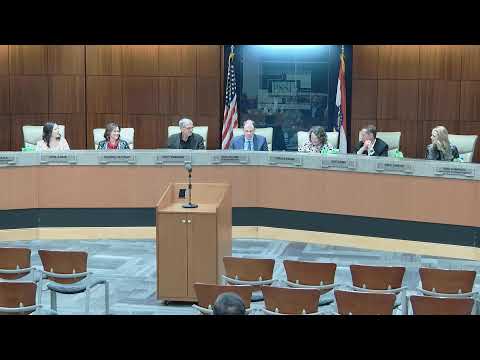
The Blue Springs R-IV Board of Education on Tuesday heard a detailed legislative update that said several proposed Missouri bills on open enrollment, the foundation funding formula and teacher pay are gaining momentum in Jefferson City and could affect district budgets and classroom capacity.
Board member Mark Wolf summarized the session and the bills the district is tracking, saying the legislature had introduced thousands of proposals. “2,091 bills have been filed in the Missouri House and Senate, and we're currently tracking about 528 of those bills,” Wolf said, according to the meeting transcript. He told the board that education priorities discussed at the State of the State included public safety, economic development, agriculture and education, and that the governor had pushed open enrollment as a priority.
The update outlined three open-enrollment proposals (referred to in the meeting as House Bill 711 and related measures, and Senate bills 70 and 215) and noted differences among them. Wolf said some versions would not take effect until the 2026–27 school year but cautioned that timing could change. He also described a Senate proposal that, in his words, “has really not really many guardrails at all when it comes to open enrollment” and that would mandate transfers within district buildings.
Why it matters: district leaders said unrestricted open enrollment could bring additional students without full funding, forcing larger class sizes or new local levies. “We're going to have kids that want to come to our district. And with that, they're not bringing all the dollars that is required to educate that individual student,” Superintendent Dr. Jerome said during the discussion, adding that larger class sizes would be a likely consequence if funding did not follow students.
Wolf also reviewed governor and department proposals connected to K‑12 funding: an increase to the foundation formula (he cited competing figures discussed in the Capitol), a proposed increase for minimum teacher salary grants, transportation and small‑school grants, and one‑time equipment funding for career centers. He said the governor’s proposal would increase the foundation formula but remain below the education department request and that talk of eliminating the income tax could complicate long‑term funding.
Board members who attended a recent legislative breakfast said freshman legislators were receptive to hearing local concerns but the governor’s stated priorities may push some bills forward quickly. Trustees said they will continue to monitor the bills closely and planned a follow‑up call with the district’s lobbyist.
Board members repeatedly emphasized the district’s preference for local control and the need for “guardrails” to allow districts to opt out if open enrollment proves harmful to local planning and funding. The board expressed consensus on the need to keep watching the proposals as committees take up the bills.
The board did not take a formal vote on these state bills at the meeting; district leaders said updates will continue while the session progresses.