Get Full Government Meeting Transcripts, Videos, & Alerts Forever!
Get email alerts on the Utilities Wildfire Liability topic
No spam. Unsubscribe anytime.
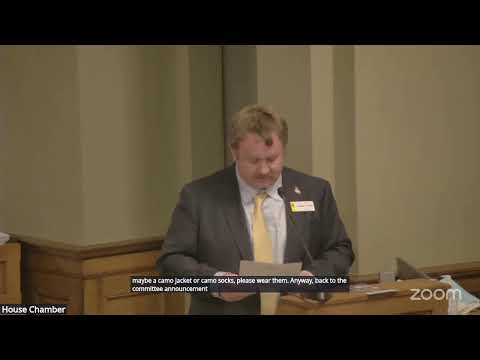
House passes wildfire-mitigation utility liability bill after heated debate over homeowner recourse and rate impact
Summary
The Wyoming House on Feb. 12 passed House Bill 192, creating a rebuttable presumption that shields utilities from simple‑negligence wildfire claims if they follow approved mitigation plans, after extended debate over homeowner remedies and the bill's effect on rates.
The Wyoming House on Feb. 12 passed House Bill 192, a measure that creates a rebuttable presumption limiting utility liability for wildfires when a utility has an approved mitigation plan, after heated debate over whether homeowners should retain easy paths to recover non-economic losses.
The bill, sponsored by Representative J.T. Larson, directs utilities to develop wildfire mitigation plans to be reviewed by the Public Service Commission (PSC). If a utility complies with an approved plan, the bill establishes a rebuttable presumption that the utility was not negligent; plaintiffs may still sue but must introduce evidence to overcome the presumption. The statute explicitly preserves causes of action for gross negligence and willful misconduct. Representative Larson and other supporters said the measure protects small member-owned cooperatives from bankruptcy and preserves incentives for utilities to invest in mitigation.
Opponents pressed for clearer homeowner remedies. Representative Lean offered two third‑reading amendments: the first would have allowed recovery of non‑economic losses such as pain and suffering without first overcoming the presumption; the second would have required an 80/20 cost split on mitigation. Lean said her amendment was intended to give property owners a “lifeline” against catastrophic loss and to limit the insurance-market effects on homeowners. Both amendments failed on the House floor after debate that focused on: whether adding exceptions would erase the presumption; whether raising the burden of proof to "clear and convincing" (as one amendment did in language) would make recovery harder; and how small rural cooperatives would cover exposures if insurers left the market.
Supporters including Representatives Lawley, Tarver and Williams argued the bill balances protection for utilities and a path for plaintiffs to prove actual negligence in court. Representative Harrelson and others described the risk that some cooperatives would face insolvency after a large wildfire if unlimited non‑economic damages were available. Lawley repeatedly pointed members to the existing body of tort law, describing the bill as creating a narrow rebuttable presumption for simple negligence while preserving other remedies.
Representative Lean’s 1st amendment was debated at length; critics said its language would inadvertently raise the standard (to clear and convincing) or create confusion about what plaintiffs must prove and when. Her 2nd amendment, proposing an 80/20 mitigation cost split, was opposed by members who said the Public Service Commission has statutory jurisdiction over rate‑making and should evaluate cost recovery case‑by‑case.
Floor votes: the body rejected Lean’s first amendment and later rejected the 80/20 amendment. On final passage the roll call showed 52 ayes, 8 no, 2 excused; the presiding clerk announced that House Bill 192 had passed the House.
What the bill does and does not do
- Creates a rebuttable presumption that utilities following an approved wildfire mitigation plan are not negligent for simple negligence claims; plaintiffs retain the ability to rebut that presumption in court. - Explicitly preserves causes of action for gross negligence, willful misconduct and malice. - Does not automatically eliminate recovery for economic or limited non‑economic losses when plaintiffs can present evidence of actual negligence or a higher standard where the bill’s text uses it.
Context and next steps
Supporters argued the measure reduces the risk that small, member‑owned electrical co‑ops would become insolvent after catastrophic fires, which in turn could shift costs to ratepayers or lead utilities to self‑insure and pass on large increases. Opponents warned that the statutory changes and proposed evidentiary language could raise plaintiffs’ burden unnecessarily and leave homeowners with less practical recourse, and they urged clear statutory language to avoid unintended changes in burden of proof.
The bill will move to the Senate; any statutory clarifications or changes to evidentiary standards would need Senate consideration and any conference action if the two chambers’ versions diverge.