Get Full Government Meeting Transcripts, Videos, & Alerts Forever!
Get email alerts on the Legislative Process Adjournment topic
No spam. Unsubscribe anytime.
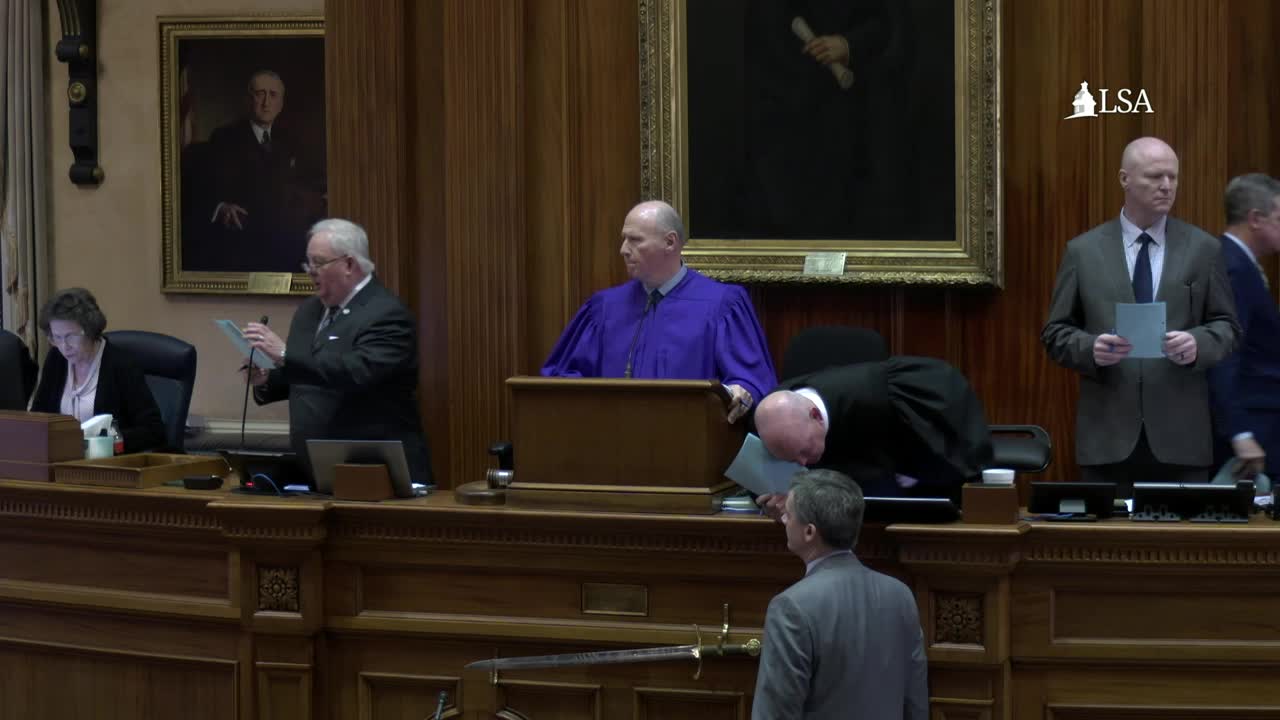
Senate adopts sine die resolution to limit post‑adjournment business; requires two‑thirds to amend
Summary
The Senate approved a sine die resolution (S.292) that sets parameters for recall after adjournment, aiming to finish annual work in May and limiting routine June/September sessions. The resolution was adopted by voice vote after floor explanation and questions.
The South Carolina Senate adopted S.292, a sine die (adjournment) resolution that narrows the circumstances under which the General Assembly will return after the statutory adjournment date. The measure was adopted by voice vote; the clerk reported “Ayes have it.”
Senator from Edgefield explained the resolution on the floor, saying, “The sign and die resolution governs our ability to control our own fate,” and described the measure as a way to encourage the General Assembly to finish its business during the legislative session rather than relying on later special returns called by the governor.
Senators asked detailed questions during debate about exceptions and procedures. One senator asked whether conference committee reports were excluded from the resolution’s restrictions; the sponsor said conference reports are required to be done by May under this version and that the provision aims to force those conversations to occur before adjournment rather than in June.
The floor exchange clarified that the sine die resolution can be amended later by a two‑thirds vote of the Senate if a major issue arises that necessitates recall. The sponsor noted that the president and speaker retain authority to call the Senate back “if something major happens” and that the resolution had been intentionally narrow compared with some prior years.
After questions and discussion, the Senate adopted S.292 by voice vote. The clerk later confirmed the chamber had 38 members present and that a quorum existed when the matter was taken up.
Supporters framed S.292 as a tool to encourage timely completion of budget and policy work; some senators raised concerns that unprecedented or complex items (for example, major energy legislation) might be delayed if conference work could not be completed before adjournment.
S.292 takes effect immediately and governs the Senate’s adjournment and recall procedures for the current session.