Get Full Government Meeting Transcripts, Videos, & Alerts Forever!
Get email alerts on the Education Pronouns topic
No spam. Unsubscribe anytime.
Senator Cash introduces ‘Free to Speak Act’ to limit use of pronouns in public schools
Summary
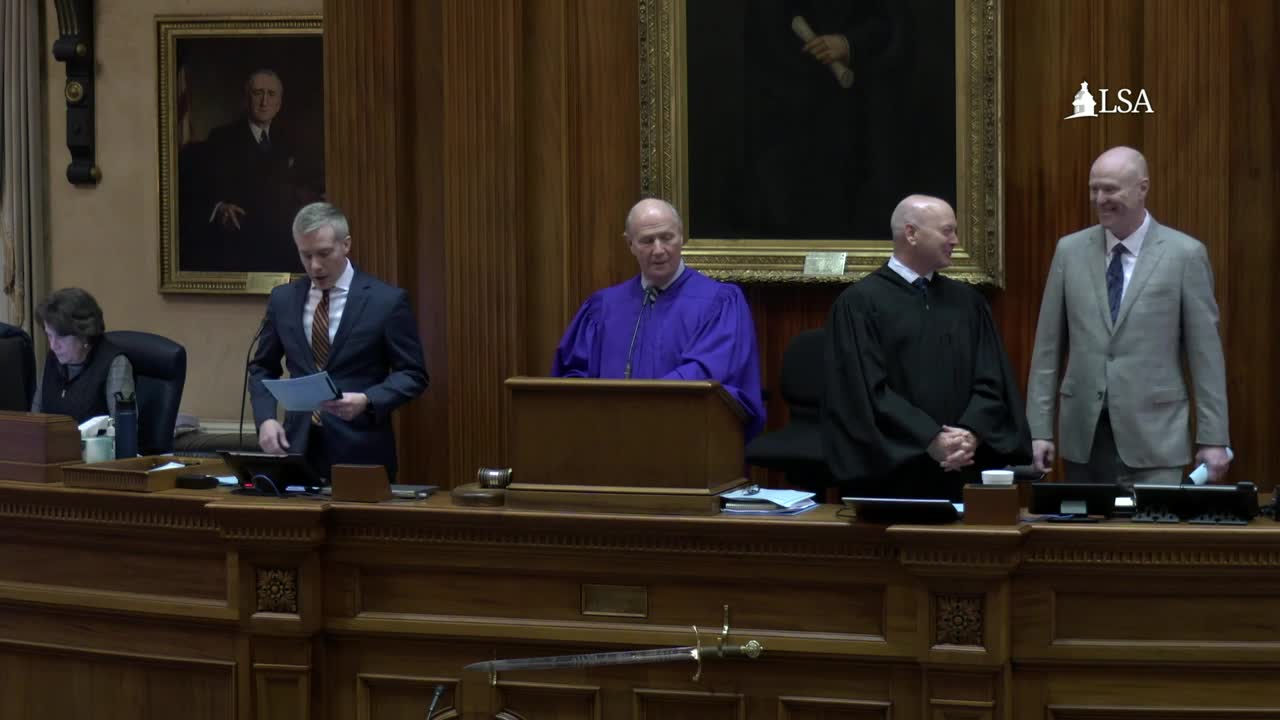
Senator Cash introduced the Free to Speak Act on the Senate floor, a bill that would ban public school employees from addressing a student by a pronoun or title inconsistent with the student’s biological sex without written parental permission.
Senator Cash introduced the Free to Speak Act on the Senate floor, a bill that would amend the South Carolina Code of Laws to prohibit public school employees from “knowingly and intentionally addressing an unemancipated minor who is a student of the school where the employee is employed by the pronoun or title that is inconsistent with a student's” biological sex without the student’s parent or guardian providing written permission.
The bill would also protect K–12 and higher education employees from adverse employment actions if they decline to identify or state their pronouns, and would shield students from disciplinary action for refusing to provide or identify their pronouns. “This bill is titled the Free to Speak Act. It might also could be titled the Free to Not Speak Act,” Senator Cash said in introductory remarks. “Basically, what it does is it protects employees in K–12 and in higher education from having to identify for whatever purpose their pronouns.”
Senator Cash said the measure also protects those who refuse to address someone using a pronoun or title inconsistent with that person’s “biological” sex, and that the bill already had about 10 cosponsors. He provided copies of the text for colleagues and asked senators to consider cosponsorship. “Free to speak, free to not speak, free to address someone as, as you believe, corresponds to reality as you understand it,” he said.
The reading clerk announced that the bill was formally introduced and referred to the Education Committee for consideration. No further debate or votes on the measure were recorded in this session.
The introduction and referral occurred during the Senate’s introduction of new bills; the measure will proceed through committee review before any floor action.