Get Full Government Meeting Transcripts, Videos, & Alerts Forever!
Get email alerts on the Education Equity topic
No spam. Unsubscribe anytime.
EEAC finalizes questions for Tigard-Tualatin SD 23J cabinet, schedules virtual SIP/EACH reviews
Summary
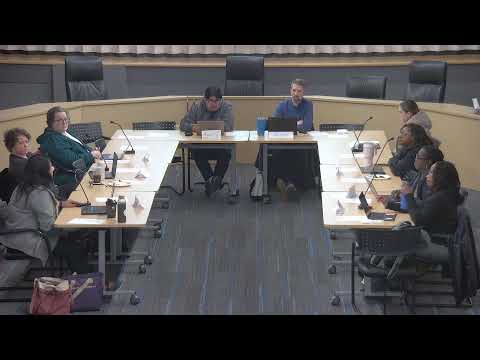
The Equity and Engagement Advisory Committee (EEAC) met Feb. 3 to finalize questions for the district cabinet roundtable, schedule upcoming reviews of school continuous improvement (SIP) and EACH plans, and discuss equity issues including high absenteeism among English-language learners, pay-to-play costs for school sports and apparent disparities in multi-tiered systems of support (MTSS).
The Equity and Engagement Advisory Committee (EEAC) met Feb. 3 to finalize questions for the district cabinet roundtable, schedule upcoming reviews of school continuous improvement (SIP) and EACH plans, and discuss equity issues including high absenteeism among English-language learners, pay-to-play costs for school sports and apparent disparities in multi-tiered systems of support (MTSS).
The committee agreed to hold its March 3 meeting virtually to accommodate a presentation by Margie Green of the Tigard-Tualatin Schools Foundation and to make it easier for members to review SIP and EACH documents. Chair Degraw said the EEAC will send its compiled questions to cabinet so district leaders can prepare for a cabinet roundtable planned for April 28. Chair Degraw also told members she will present an update on EEAC work to the school board on Feb. 10.
Why it matters: The EEAC’s questions and plan reviews are intended to track district progress on long-standing equity goals, including items that originated in the district’s 2019 equity audit and the committee’s 2023–24 annual report. Members repeatedly framed the work as oversight intended to surface inconsistencies across schools and to press for clear timelines, root-cause analysis and measurable progress.
Members reported several concrete concerns they want cabinet to address. EEAC member Barb Doyle said one school had a large, same-day absence among English-language (ELD) students: “Today at our school, we had more than 50% of our ELD students absent today,” Doyle said, characterizing the day as a protest called a “day without immigrants.” She told the committee she worried about supporting immigrant families in coming weeks.
Committee members asked cabinet for clarifications and evidence on multiple topics: how the district defines and measures “staff diversity” and the data behind retention and recruitment goals; what root-cause analyses underlie academic and workforce goals; how after‑school programs are allocated across schools; and how the district determines which students receive MTSS Tier 2 interventions rather than office referrals.
A parent who spoke during the roundtable raised sports participation costs and coach practices, saying inconsistent fees for away games (reported in the meeting as ranging from $5 to $9) and a late notice on dress requirements were creating financial and equity barriers. Members asked cabinet to explain how the district addresses “pay to play” costs in athletics and how teams communicate expectations to families.
The committee discussed MTSS and the practical meaning of tiers in the district. Staff described the tiers this way: Tier 1 supports for all students (about 80% of students), Tier 2 targeted group supports (roughly 5–10%), and Tier 3 individualized intensive supports (roughly 3–5%). Members asked cabinet to explain apparent disparities flagged in prior reviews: that white students were more likely to receive Tier 2 interventions while students of color were more likely to receive office referrals.
Members discussed access barriers including transportation for specialty programs and after‑school activities. Staff described a transportation pilot that provided short-term “stop-gap” rides while permanent transportation was arranged; staff said the pilot recovered more than 300 missed student days in the example discussed and that district teams evaluate promising practices for scaling.
Process and next steps: the EEAC will (1) send its compiled question list to cabinet so cabinet members can prepare for April 28; (2) meet virtually on March 3 for SIP/EACH plan review and an invited presentation by Margie Green (Foundation for Tigard-Tualatin Schools); (3) note the district’s upcoming equity work including a phase focused on multilingual learners (a virtual staff/family input session scheduled for Feb. 11 from 4 to 6 p.m., members were told); and (4) follow the SIP/EACH rubric the committee updated for use in 2024–25 reviews.
The committee recommended that cabinet provide at least one concrete example showing how the district sets numerical targets (for example, the teacher retention target discussed in the SIP) and asked cabinet to make available the documents and links the EEAC should review in advance. EEAC members also asked the district to provide a clear, visual mapping of MTSS tiers and the services attached to each tier at TTSD so committee members and families can better understand what supports look like in practice.
The meeting closed with reminders about the virtual February sessions (the Feb. 11 multilingual-learner verification session) and the March 3 EEAC meeting (virtual), and the April 28 cabinet roundtable.