Get Full Government Meeting Transcripts, Videos, & Alerts Forever!
Get email alerts on the Disability Retirement topic
No spam. Unsubscribe anytime.
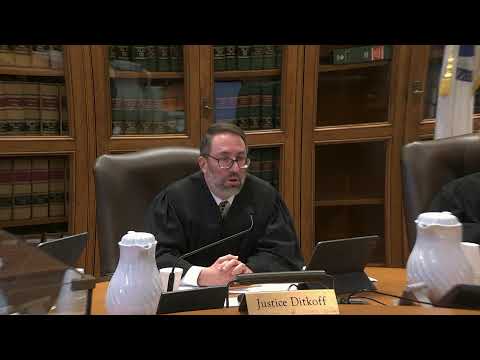
Appeals court hears dispute over ‘identifiable condition’ for disability retirement in Sibley appeal
Summary
The court considered whether Michael Sibley met the statutory standard for accidental disability retirement under Chapter 32 §7 given bilateral rotator cuff tears and years of physically strenuous municipal work.
Catherine Lamondia Ringle, representing Michael Sibley, told the panel that Sibley worked for the town of Northfield performing physically strenuous tasks and was denied accidental disability retirement by the Contributory Retirement Appeal Board. "The accidental disability retirement essentially gives a worker injured ... 72 percent of their average weekly wage tax free," Ringle said, explaining the financial stakes of an accidental-disability designation under Chapter 32, Section 7.
Ringle argued the board misapplied the ‘‘identifiable condition’’ requirement and departed from workers’ compensation jurisprudence that has considered cumulative-stress injuries in related contexts. She said Sibley's record contained medical evidence of "massive bilateral rotator cuff tears" and that Crabbe (the board decision) erred in treating the job’s cumulative effect as ordinary wear and tear.
Michael Sacco, counsel for the Franklin Regional Retirement Board, countered that the retirement statute and case law demand something more than long-term physical labor: courts have consistently held that ordinary cumulative physical stress, common to many occupations, does not qualify as an identifiable condition for accidental disability retirement. "If you decided that that was necessary ... I don't believe they could satisfy that burden," Sacco told the panel, explaining the board's view that the policy would otherwise create a presumption for any physically demanding job.
Justices probed whether a medical panel would ever be reached if the threshold legal question of an identifiable condition is not met. The board’s counsel said that identifiable-condition determinations are legal questions and, when appropriate, preclude referral to a medical panel. Counsel and justices discussed case law going back to Zarofsky and related decisions distinguishing workers' compensation cumulative-stress findings from the retirement- board standard.
Ringle emphasized Sibley's intensity and frequency of lifting, pushing and other tasks, noting the decision below did not convene a medical panel and that Sibley had not been afforded that procedure. "He was not afforded the benefit of a medical panel to even get the opinion from this panel about how it related to his work," she said. The court thanked counsel and concluded the argument on this appeal.