Get Full Government Meeting Transcripts, Videos, & Alerts Forever!
Get email alerts on the Grand Jury Disclosure topic
No spam. Unsubscribe anytime.
Panel questions whether grand-jury disclosure and clerical error undermined Henry indictment
Summary
In 24P445 the Appeals Court heard competing arguments over whether a mistaken phone number in a search-warrant affidavit was material to grand-jury proceedings and whether the conditional guilty plea properly preserved threshold issues for appeal.
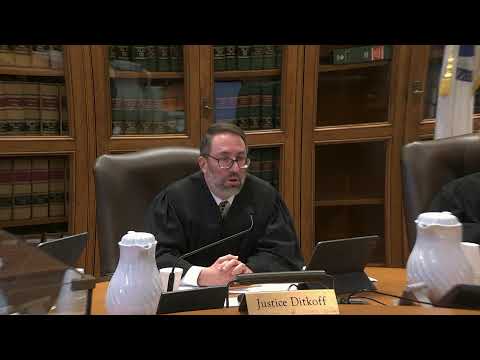
Justice Ditkoff called case number 24P445 and said counsel could proceed. Stacy Silvera, representing defendant Brian Henry, argued the incorrect telephone number in the search-warrant affidavit was material to the grand jury's assessment of the sole witness's credibility and therefore should have been disclosed. Silvera said the alleged error went to "the credibility of the sole witness" and argued the mistake was not merely clerical because the affidavit repeatedly presented the incorrect number as the affiant's personal knowledge.
Arnaud Hansen, arguing for the Commonwealth, answered that the phone number was not material to what the grand jury considered — the narcotics found at the execution of the search warrant — and described the error as a "human" and negligent transcription mistake by another trooper. Hansen told the panel the record showed four controlled buys, surveillance tying the defendant to the buys, and a subsequent seizure of "a substantial amount of fentanyl," a blender with cutting agent and $4,000 in cash at the house.
The panel questioned both sides on procedural posture. Justice Ditkoff and Justice Hand asked whether the Gomez/Rule 12(b)(6) threshold issue was properly before the court on a conditional plea and what remedy the panel should reach if the issue were not properly before it. Both counsel said they treated the issue as properly preserved; Hansen outlined possible outcomes if the conditional plea was not properly before the court and said the practical effect might be vacatur and re-lodging of motions in the Superior Court.
Justices also pressed on evidentiary specifics: whether TrueNarc printouts or drug-certification reports were in the grand-jury record (defense counsel said supplemental police reports and later drug-certificates were in discovery but not presented to the grand jury). Silvera acknowledged uncertainty about some record items but argued the later police attempts to "cure and explain the mistake" supported her materiality argument.
The court explored relevance to suppression: Hansen said suppression of the house search would be dispositive of the Commonwealth's case because all narcotics were recovered in the home; suppression limited to the vehicle would not be dispositive because the phone was the only item recovered from the car. Counsel agreed to the practical consequences this allocation of evidence would have on case viability as presented to the panel.