Get Full Government Meeting Transcripts, Videos, & Alerts Forever!
Get email alerts on the Judicial Appeals Oral Arguments topic
No spam. Unsubscribe anytime.
Appeals court hears bid to reopen judgment in Bragenton Smith property dispute
Summary
The appeals court heard oral arguments on Feb. 12 over whether newly discovered testimony from neighbor John Francis English justifies reopening a 2023 judgment in a property dispute between Bragenton Smith and Dorothy Taryn and another defendant.
WEDNESDAY, Feb. 12 — The appeals court heard oral arguments over a motion to reopen a 2023 judgment in a property dispute involving Bragenton Smith and Dorothy Taryn and another defendant. The motion asks the court to permit an amended appeal under Rule 60 based on newly discovered testimony from a neighbor identified as John Francis English.
The issue is whether English’s affidavit, dated in late October 2024 and describing statements he said he heard during a 1994 cleanup at the property, is new and material enough to justify reopening the trial record. The appellant’s attorney said English first came to counsel’s office on Oct. 24, 2024, and that a follow-up meeting occurred Oct. 28, 2024; those dates were described as included in an exhibit submitted to the trial judge.
Appellant counsel (identified in the hearing as Attorney (unspecified) for Bragenton Smith) argued that English’s account is not merely cumulative of testimony already before the jury because English is not a family member and may supply an independent recollection of conversations between the decedent (the seller), the real estate agent and the decedent’s daughter. Counsel also pressed equitable theories — including constructive trust and unjust enrichment — saying the appellant paid taxes, insurance, maintenance and other costs over decades and that those contributions were central to the claim.
“...I thank the court for giving me leeway to go ahead and file what effectively amounts to an amended appeal following our discovery of a new witness,” Attorney (unspecified) for Bragenton Smith said, describing the late discovery and the contents of the English affidavit. Counsel described the last mortgage payoff as roughly $60,000 and said his client was not given a fair opportunity to make a final payment when the deed transfer occurred.
Responding, Sandra Lundy, counsel for Dorothy Taryn, said the supposed new testimony is at most a ‘‘garden variety’’ admission and pointed to the trial record and documentary evidence that the defense says aligns with the jury’s verdict. Lundy noted that the trial judge commented in closing that memories of 26 years earlier are unreliable and argued the neighbor was both a long-standing acquaintance of the family and a witness that could have been discovered earlier.
“Who can remember what happened last year, let alone 26 years ago?” Sandra Lundy said, quoting a line from the trial transcript that she urged the panel to view as undermining the weight of the late affidavit.
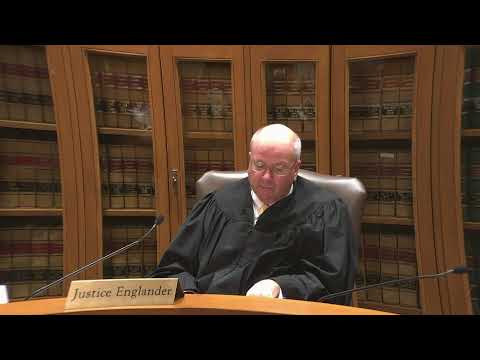
The court’s questions focused on whether English’s account is in the trial record or outside it, on the timing of discovery, and on the factual link between statements attributed to the decedent in 1994 and the property transfer that occurred in 1996. Justice Englander asked, “Because this all in the record, Counsel? That your client came to you, what you're about to say. Because if it's not in the record, it's not before us.”
The parties also debated whether the trial judge’s conduct — including rulings that limited some testimony and a characterization of a witness’s answer — prejudiced the jury. Appellant counsel argued some trial interventions may have improperly summarized or curtailed testimony from the appellant, which could be prejudicial; defense counsel and the record defended the jury’s verdict as consistent with documentary evidence and six witnesses presented at trial.
Counsel and the panel referenced procedural doctrines and precedent, including motions under Rule 60 (counsel cited “60(b)(2)”), case law described in argument as Carroll v. National Court and what counsel called the Van Alwyn case, and hearsay exceptions invoked in the trial (the transcript records references to rule numbers during argument). The judges signaled they would examine whether the asserted newly discovered evidence satisfies the standards for reopening a judgment and whether any alleged error was prejudicial to the outcome.
No ruling was announced at the close of arguments. The court recessed after both sides completed their presentations; the next procedural step or timing for any opinion was not specified on the record.