Get Full Government Meeting Transcripts, Videos, & Alerts Forever!
Get email alerts on the Search And Seizure topic
No spam. Unsubscribe anytime.
Appeals court hears dispute over police "community caretaking" stop in Commonwealth v. Nichols
Summary
Attorneys argued whether officers who opened car doors and questioned sleeping occupants at a gas station exceeded the limited "community caretaking" basis for a seizure after the occupants said they were only sleeping.
The Massachusetts Appeals Court panel heard argument over whether police properly continued questioning two sleeping occupants at a gas-station pump before finding a firearm on the floor, in Commonwealth v. Nichols.
The question presented to the three-judge panel — Judge Desmond, Judge Grant and Judge Hodgins — was whether a community-caretaking encounter became a constitutionally limits-bearing seizure and, if so, whether that seizure exceeded the scope justified by officers’ safety concerns.
Assistant District Attorney Lee Baker told the court that the critical legal inquiry is whether the officer reasonably believed the interaction required follow-up even after Mr. Nichols said he was merely sleeping. "If his actions, at the end of the day were lawful, does it matter? What is the subjective intent?" Baker asked, arguing the officer’s subsequent observations and the circumstances (a car parked at a pump from about 2 a.m. until about 5:45 a.m., unsuccessful attempts by gas-station attendants to rouse the occupants, and medical personnel reported as en route) supported continuing the inquiry.
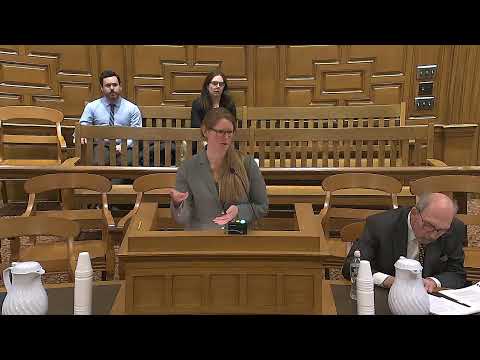
Defense counsel Caroline Howe responded that the motion judge correctly applied the community-caretaking exception but that the encounter had become a seizure that should have ended when Mr. Nichols and the passenger said they were fine. "Because the officer's concerns were fully answered by Mr. Nichols and because the officer didn't develop reasonable suspicion of any criminal activity while questioning Mr. Nichols, the stop should have ended there," Howe said.
Argument explored two lines of precedent the parties relied upon. The Commonwealth urged the court to distinguish Commonwealth v. King (where the justification for questions tied to an administrative rest-area policy terminated once occupants answered) by stressing factual differences: King involved a rest area and a narrowly defined policy; here, the officers responded to a complaint from gas-station attendants about occupants who could not be roused after hours. The Commonwealth also cited Murdoch to emphasize that an officer's subjective concerns about intoxication or narcotics do not defeat an objectively reasonable basis for further inquiry.
Howe urged the panel to treat the encounter as a seizure once officers opened vehicle doors and physically blocked exit paths, invoking cases that limit the permissible scope of community-caretaking seizures to the justification for the initial stop. She emphasized the trial record’s lack of testimony that officers continued to observe objective signs (smell of alcohol, visible needles, markedly disheveled appearance) that would justify extending the interaction before the firearm was found.
Both sides disputed how extensive the inquiry became before the firearm was observed; counsel described the exchange as either a brief follow-up question or a more prolonged conversation. Counsel also debated the relevance of an officer’s training in wellness checks and the fact that medical personnel were reported as coming to the scene.
The matter was submitted after argument. The panel’s decision will turn on whether the appellate judges view the post-answer interactions as reasonably within a community-caretaking inquiry or as an expansion into investigatory detention that required separate justification.