Get Full Government Meeting Transcripts, Videos, & Alerts Forever!
Get email alerts on the Lottery Vending topic
No spam. Unsubscribe anytime.
Bill would allow age-restricted lottery vending machines; retailers and lottery director weigh benefits and risks
Summary
LB 60 would permit Nebraska lottery tickets to be sold from vending machines with age verification (driver's license barcode). Retailers and beneficiary groups supported the change for convenience and sales; opponents raised concerns about underage access, placement, and consumer protections.
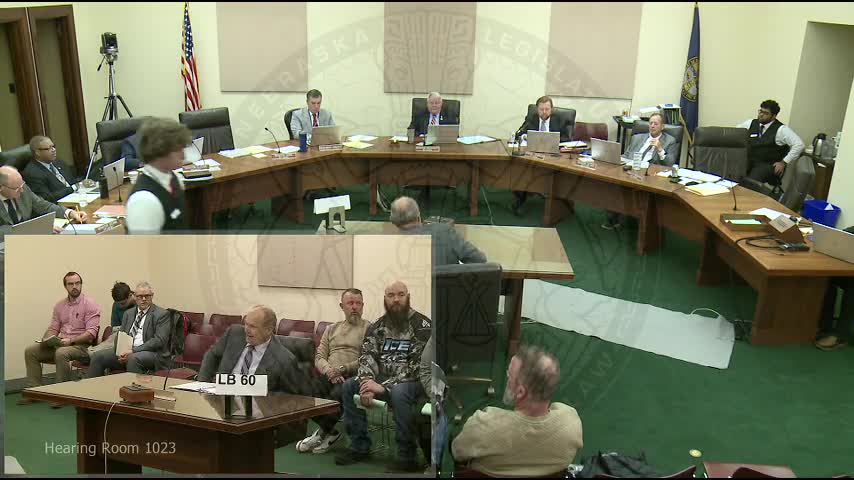
Sen. Dan Quick (District 35) introduced LB 60 to the General Affairs Committee, proposing a change to the State Lottery Act to allow lottery vending machines in Nebraska stores and other retail locations.
Supporters — including grocery owners, the Nebraska Grocery Industry Association, the Nebraska Retail Federation, convenience-store groups and the Nebraska State Fair Board — told the committee vending machines would relieve staffing burdens, reduce long waits at service counters and likely increase sales and beneficiary proceeds. Nathan Bertek, a Norfolk grocery owner and lottery retailer, said machines automatically scan a driver's license barcode to verify age and can provide bilingual interfaces for customers.
The Department of Revenue's director of the Nebraska Lottery, Brian Rockey, testified in a neutral capacity and described operational controls the lottery would use: locations would be selected by criteria (security, visibility, retailer staffing), vending machines could be configured to accept cash, debit or credit per legislative preference, and the machines would not retain personal data from scanned driver's licenses. Rockey estimated the vending rollout would be selective, likely covering up to about 20% of the current retail network (roughly 200'250 devices), and projected that an initial 50 new vending locations could generate $3 million to $4 million in additional annual sales and about $800,000 to $1,000,000 for beneficiary funds.
Opponents — including gambling-harm advocacy groups, individual citizens and others — warned vending machines could increase accessibility for underage purchasers and would likely be deployed disproportionately in lower-income neighborhoods, increasing harm to those groups. Testimony requested statutory clarity on machine placement, cash/credit limits, penalties for retailer noncompliance and whether vending would require additional retailer licensing or fees. Several opponents urged that age-verification, cash-only operation, visibility requirements and remote kill switches be spelled out explicitly rather than delegated entirely to lottery rulemaking.
Technical and legal points from the hearing: - Current Nebraska law requires purchasers to be 19 to buy lottery tickets; redemption rules limit retailer payouts to $500, requires regional office claims for mid-range prizes, and sends large claims (above $20,000) to Lincoln. - The lottery already allows some vending for Pickle cards without age verification; LB 60 would permit age-restricted vending for standard draw and scratch products (Powerball, Mega Millions, Pick 5, Lotto America, scratch tickets, etc.). - Machines can be configured to read the barcode on the back of a driver's license to verify date of birth; testimony from the lottery director said the device reads encrypted barcode data and does not retain personal information. - Retailers would earn standard commission (about 6%) and the lottery or vendor would provide and service equipment under existing vendor contracts; Rockey said retailers would not be charged a fee to host a device.
The committee heard multiple proponents and opponents and closed the hearing with no recorded committee vote at this session. Senator Quick emphasized potential benefits to state beneficiaries and the state fair and noted safeguards in the redemption process that require in-person verification to claim larger prizes.