Get Full Government Meeting Transcripts, Videos, & Alerts Forever!
Get email alerts on the Gaming Tax Audits topic
No spam. Unsubscribe anytime.
Neb. bill would require annual casino audits for auditor review to verify gaming tax calculations
Summary
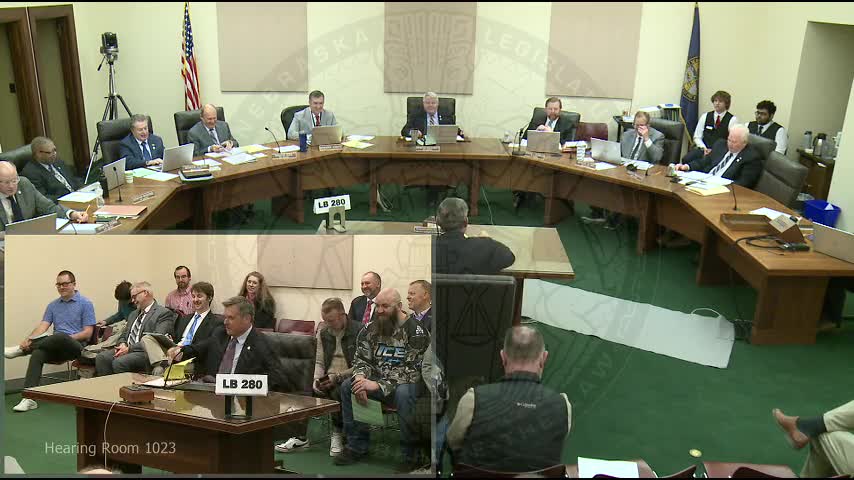
LB 280, introduced by Sen. Brad Von Gillern (Legislative District 4), would require casinos to provide annual independent audits to the Nebraska Auditor of Public Accounts for a limited review to verify the calculation and payment of the state's 20% gross gaming tax.
LB 280, introduced by Sen. Brad Von Gillern (Legislative District 4), would require casinos to provide annual independent audits to the Auditor of Public Accounts for a review limited to whether gross gaming revenue and the 20% gaming tax have been calculated and remitted correctly.
Supporters told the General Affairs Committee that Nebraska’s gaming tax collections have grown quickly and that the Nebraska Racing and Gaming Commission lacks the staff expertise to fully verify the numbers. Jeff Schreier, audit manager for the Auditor of Public Accounts, said LB 280 is “trust, but verify,” and described the bill as a narrowly tailored review limited to mathematical and accounting accuracy of the gaming-tax calculation.
The bill’s backers pointed to figures cited at the hearing: January 2025 gross gaming revenues reported to the Racing and Gaming Commission were described as nearly $18,000,000, and calendar-year 2024 gaming revenues were cited at about $29,000,000. Supporters said the 20% tax on those revenues helps fund property tax credit distributions, cities and counties, gambling-assistance programs and the state general fund; the introducer and witnesses used those reported totals to illustrate why an independent review is warranted.
Opponents — including representatives of WarHorse Casino and a chief financial officer for a gaming parent company — said the Racing and Gaming Commission already requires audits, that the commission has continuous access to gaming systems and on-site staff, and that some past discrepancies attributed to the commission’s records were actually calculation differences by the Auditor’s Office. Angel DeRoche, chief financial officer of WarHorse Gaming, told the committee the commission “has complete access” to gaming systems and that the firm’s internal compliance and third-party CPA audits are already provided to the commission.
The Nebraska Society of CPAs testified with caution, saying its members meet professional standards and raising concern about language that could be read as impugning private auditors. Proponents including the Auditor’s Office, Gambling with the Good Life and Nebraska Family Alliance said the bill is intended only to ensure the state receives the correct tax amount and is not a broad audit authority over private business operations.
Key technical points from testimony: - LB 280 would require casinos to file annual audits to the Auditor of Public Accounts; the auditor’s review would be limited to mathematical and accounting accuracy affecting the gaming-tax calculation and payment. If the auditor’s high-level review identifies issues, the bill would allow a more detailed examination of records related only to the gaming tax. - The fiscal note language described the Racing and Gaming Commission’s Racetrack Gaming Fund as the source of any expenditures for the auditor’s review; proponents said the general fund impact would be small or none. Jeff Schreier said his office’s internal estimate for a review was far lower than a $250,000 figure cited in committee documents. - Supporters emphasized that the bill builds on existing race-and-gaming rules that already require audits; LB 280 would add a required submission to the Auditor’s Office.
The sponsor waived closing and no committee vote occurred at the hearing. The committee heard six proponents and several opponents; the hearing was closed with no formal action taken during the session.
Votes at the hearing: no formal vote was taken on LB 280 in the General Affairs Committee hearing recorded here.
Proponents and opponents may file additional materials and the bill will return to committee or the floor depending on the Legislature’s process.