Get Full Government Meeting Transcripts, Videos, & Alerts Forever!
Get email alerts on the Broadband Infrastructure Protection topic
No spam. Unsubscribe anytime.
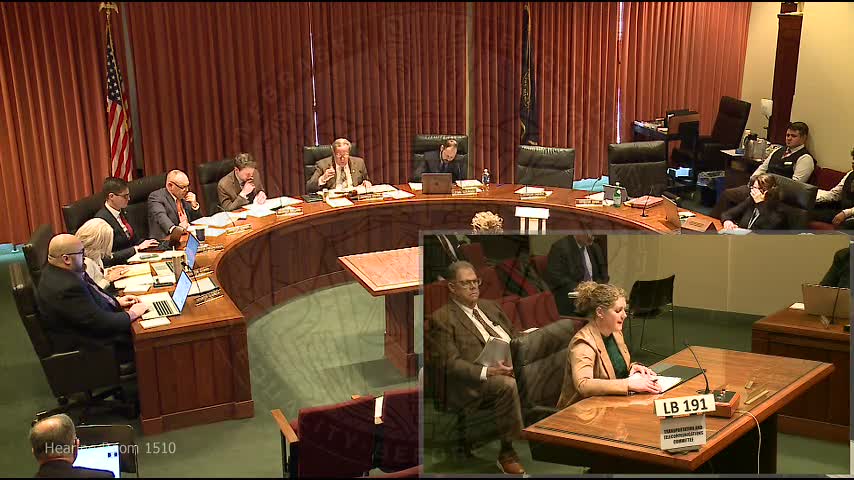
Committee hears proposal to add broadband to critical-infrastructure criminal protections
Summary
A bill to extend existing criminal-mischief protections to broadband and communications infrastructure drew unanimous proponent testimony and questions about penalties and an amendment to include wireless sites.
LB 191 would add broadband and communications infrastructure to the state statute that makes willful and malicious damage to critical infrastructure a criminal offense, the bill’s introducer told the Transportation and Telecommunications Committee at an afternoon hearing.
The measure is intended to reduce disruptive service outages caused by vandalism and theft, sponsor Sen. Carolyn Bosn (introduced as Carolyn Bosn) said, and supporters from telecommunications companies and trade groups urged lawmakers to act. The committee heard proponents describe rising incidents of theft and vandalism nationwide and in Nebraska.
Sen. Carolyn Bosn, sponsor of LB 191, told the committee: “LB 191 includes broadband and communications infrastructure in the section of law, which protects other critical infrastructure from willful and malicious damage, thereby affording them the same protections as we have to other critical infrastructure in the state.” The senator said Nebraska has invested “hundreds of millions of dollars through the Nebraska Broadband Bridge” and that outages can disrupt schoolwork, small business operations and emergency services.
Tip O’Neil, president of the Nebraska Telecommunications Association, told the committee the issue is national as well as local and referenced a paper by former FCC Commissioner Michael O’Rielly recommending both stronger federal penalties and state protections for communications facilities. “Commissioner O’Reilly concludes his paper with the following recommendations,” O’Neil said, summarizing the memo and adding that the association supports LB 191.
Dayton Murty, senior manager of government affairs for Charter Communications (Spectrum), said the company serves about 156,000 Nebraskans and detailed industry figures on theft and vandalism. “In Nebraska, telecommunications, railroad, and power companies already have special protections under the current law, and this bill just extends those same protections to broadband and communication networks,” Murty said.
Committee questions focused on intent and penalties. Sen. Tom Brandt asked whether the statute targets intentional acts rather than accidental or incidental damage; Bosn answered that the language is meant for willful and malicious conduct. Brandt also asked about the existing criminal penalties in Neb. Rev. Stat. §28-5-19; Bosn and other senators discussed that criminal-mischief penalties scale by dollar amount of damage, with misdemeanors and felonies depending on thresholds.
Supporters noted a pending technical amendment: the wireless industry submitted suggested language to also include wireless infrastructure sites; Bosn said the amendment was requested and was under drafting but not yet filed. No opponents appeared at the hearing and the sponsor waived closing, ending the hearing with proponent testimony on the record.
The committee did not vote on LB 191 during the hearing; the measure will be available for further committee action only if members request it or if the sponsor files amendment language and asks for advancement at a later date.
Less critical details: testimony cited both federal and state examples, and proponents recommended coordination between law enforcement and scrap dealers to reduce copper theft that sometimes damages fiber and other equipment.