Get Full Government Meeting Transcripts, Videos, & Alerts Forever!
Get email alerts on the Health It Prior Auth Api topic
No spam. Unsubscribe anytime.
Bill would require prior-authorization API for Nebraska commercial plans to match federal standards
Summary
LB467 would extend the federal prior-authorization application programming interface (API) requirement — already directed at Medicare Advantage and some federal exchange plans — to fully insured, state-regulated commercial plans. Supporters argued alignment reduces administrative burden; witnesses said ERISA/self-funded plans will remain outside.
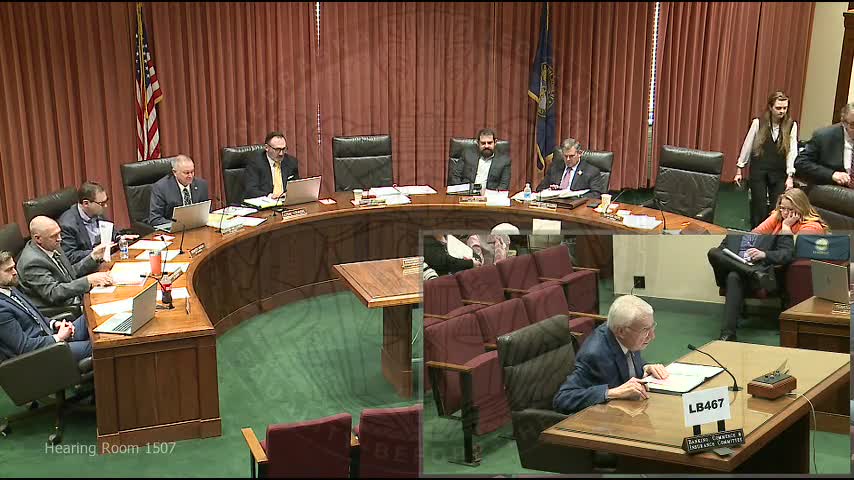
Senator Merv Riepe introduced LB467, legislation that would require state-regulated commercial health plans to implement a prior-authorization application programming interface (API) similar to the federal rule already scheduled for Medicare Advantage and Medicaid managed-care plans.
"This bill continues our effort to improve the prior authorization process for health care providers, patients, and insurers," Riepe said in opening remarks, saying the federal rule requires an API for Medicare Advantage and Medicaid MCOs and LB467 would harmonize Nebraska's commercial market.
Supporters, including the Nebraska Insurance Federation and Blue Cross and Blue Shield of Nebraska, told the committee that standardizing electronic workflows would reduce miscommunication and clerical denials that arise when requests are not handled electronically. Robert Bell, executive director of the Nebraska Insurance Federation, said the legislation mirrors successful statutory language passed in Kansas and urged harmonization with federal implementation timelines.
Insurer witnesses said ERISA-regulated self-funded employer plans are outside state authority and would not be covered by LB467; testimony noted there are roughly 700,000 Nebraskans covered by ERISA plans while about half that number are in state-regulated plans. Blue Cross said the company is beginning implementation for Medicare Advantage and encouraged alignment so providers and plans do not face multiple divergent standards.
Committee members asked about timing and scope. Testimony noted the federal rule has implementation milestones through 2027 and that Kansas gave commercial plans an additional year to comply after the federal deadlines; LB467 similarly included future-dated compliance language.
The committee received proponent testimony and no opponents during the recorded segment; stakeholders urged the committee to advance the bill while aligning state requirements with federal rules to avoid confusion for providers and payers.