Get Full Government Meeting Transcripts, Videos, & Alerts Forever!
Get email alerts on the Prior Authorization topic
No spam. Unsubscribe anytime.
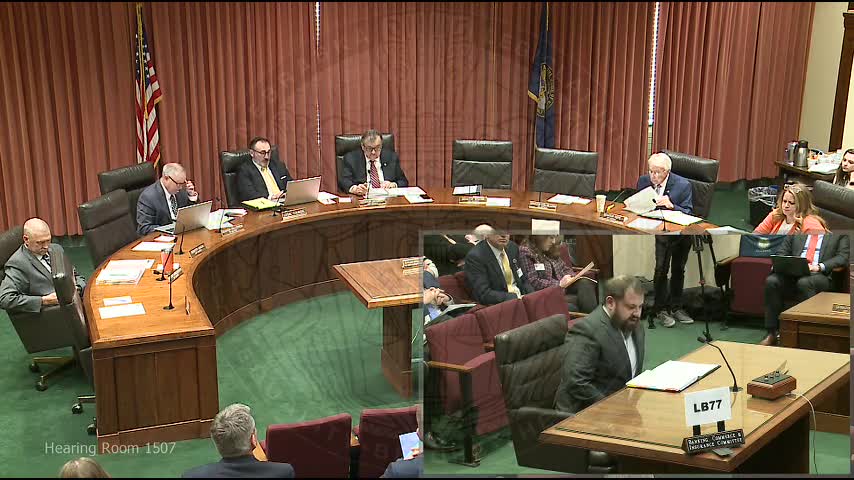
Nebraska committee hears testimony for LB77 to standardize prior authorization, limit AI-only denials
Summary
Supporters including hospitals, physicians and patient advocates told the Banking, Commerce and Insurance Committee that prior authorization delays care and increases costs. LB77 would require clearer criteria, standardized forms, timeline limits, and prohibit AI-only denials; insurers warned of implementation complexity and asked to negotiate.
The Banking, Commerce and Insurance Committee heard more than two hours of testimony on LB77, the Ensuring Transparency and Prior Authorization Act, a bill introduced by Senator Elliot Bostar proposing statewide standards for health-plan prior authorization procedures.
Supporters called the current prior authorization system a widespread and growing barrier to timely care. "Prior authorization requirements create substantial challenges for patients and providers," Senator Elliot Bostar said when he opened the hearing, summarizing the bill's goals to require accessible criteria, standardized forms and limits on automated denials.
The bill's proponents included hospital leaders, specialty physicians and provider groups who described delays that they said prolong hospital stays and slow start of critical treatments. "When a child is unable to admit to our facility in a timely manner, it can mean another crisis event affecting the safety of the child or others," Amber Mcleod, supervisor of access and utilization review at Boys Town Psychiatric Residential Treatment Facility, told the committee. Ivan Mitchell, CEO of Great Plains Health and testifying for the Nebraska Hospital Association, described a case in which a third-party AI tool denied rehabilitation admission after a prolonged hospitalization and said the patient stayed in the hospital more than 10 weeks while appeals were exhausted.
Oncologists and oncology groups pressed for carve-outs tied to clinical guidelines. "LB77 would bar insurers from requiring prior authorization specifically in this setting by making cancer care supported by NCCN guidelines exempt from prior authorization," Dr. Mary Wells, a medical oncologist, said, arguing delays of days to weeks can change outcomes. She cited research and clinical experience that tied longer time-to-treatment to worse survival for some cancers.
Physicians described administrative burdens and staff time devoted to appeals. "Physicians and their staff devote an average of 14 hours per week to managing prior authorizations," Bostar said in his introduction; physician witnesses and hospital administrators gave similar estimates and offered evidence from AMA surveys and internal analyses showing high overturn rates on appeal.
Insurers and pharmacy benefit managers opposed parts of the bill or urged negotiation, saying it could interfere with ongoing modernization and federal rules. Jeremiah Blakey, government affairs director for Blue Cross and Blue Shield of Nebraska, said his company is already working with providers to reduce unnecessary prior authorizations and urged amendments and further talks. Prime Therapeutics told the committee that prior authorization for drugs is functionally different from services and urged separate treatment for pharmacy coverage.
Committee members asked about scope, timelines, and whether Medicaid managed care organizations were included; proponents said standardization should include Medicaid MCOs, while witnesses noted some federal rules already cover MCOs and Medicare Advantage. Several providers urged prohibiting artificial-intelligence-only denials and requiring adverse determinations be made by appropriately qualified physicians.
The hearing closed with back-and-forth about compromise and next steps. Senator Bostar said he would work with stakeholders and indicated willingness to advance the bill to general file while continuing discussions on technical and implementation issues.
Votes at the hearing: no formal committee votes were recorded on LB77 during the transcripted portion; committee members heard proponent and opponent testimony and asked clarifying questions.
Notes: The article draws only on testimony and statements recorded in the hearing transcript. It does not infer legislative amendments or final outcomes beyond the hearing record.