Get Full Government Meeting Transcripts, Videos, & Alerts Forever!
Get email alerts on the Drone Procurement topic
No spam. Unsubscribe anytime.
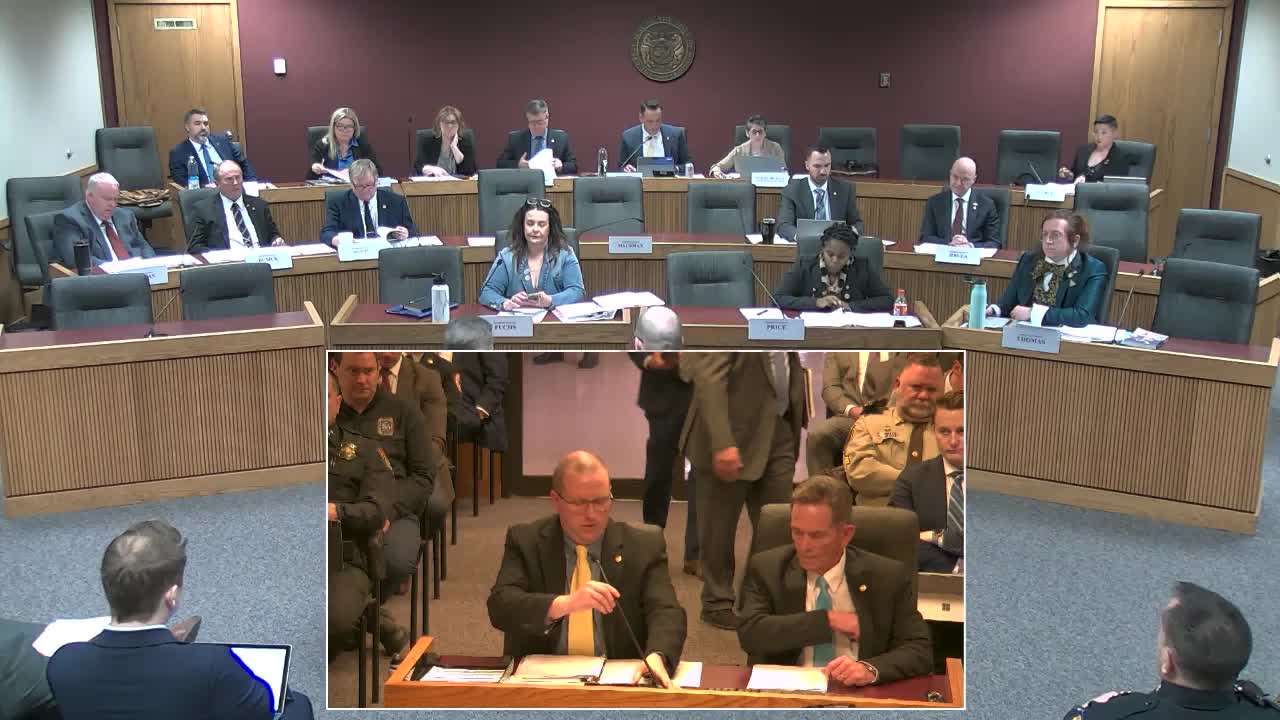
Committee hears wide-ranging testimony on proposal to ban Chinese- and Russian-made drones for public entities
Summary
Lawmakers heard testimony on House Bill 751 and House Bill 930, which would bar state and local governments from buying drones manufactured in China or Russia and require affected fleets to retire those drones within two years unless a waiver is granted by the director of public safety.
House members held a public hearing on House Bill 751 and House Bill 930, introduced to prevent state and local governments from purchasing drones manufactured in the People’s Republic of China or the Russian Federation and to require affected public entities to retire such drones within two years unless a waiver is granted by the director of public safety.
Josh Hobert, presenting the bills alongside Mark Myers, said Chinese-made drones now account for a large share of the U.S. market and asserted federal security concerns, referencing prior Pentagon and Commerce Department steps. Hobert said the bills give Missouri public entities two years to remove Chinese or Russian drones from their fleets and allow the director of public safety to issue waivers in “exigent” or other specified circumstances.
Supporters’ arguments Mason Sisk of the Association for Unmanned Vehicle Systems International (AUVSI) told the committee that several federal agencies have raised security concerns and said many states are considering similar measures. James Harris (StateArmor Action) and other witnesses cited warnings from the Department of Defense, the FBI and CISA and urged action to avoid depending on foreign-made systems. Supporters urged a transition to U.S. or allied suppliers and some suggested grant programs to help local agencies replace equipment.
Opponents’ arguments A string of public-safety witnesses — police chiefs, fire chiefs and county emergency teams — testified that current operations depend on low-cost, proven systems and that many Missouri first-responder programs use primarily Chinese-made drones (DJI and Autel were discussed by name). Those witnesses said the American-made alternatives often cost substantially more, lack necessary features for tactical or search-and-rescue missions, and are not yet available at scale. John Yaste, past president of the Missouri and Illinois chapters of the National Law Enforcement Drone Association, said some U.S. manufacturers’ models were three times larger and far more expensive than the compact tactical drones many agencies use.
Key technical and policy points raised - Bill scope: The draft language applies to Chinese- or Russian-manufactured drones under a specified weight threshold (discussion referenced a 55-pound limit) and targets purchases by public entities; private ownership is not covered. - Transition period and waivers: Sponsors described a two-year transition window. The bill authorizes the director of public safety to grant waivers for exigent public-safety needs, counter-unmanned-aircraft operations, or other specified public-interest reasons. Committee members raised questions about the administrative burden of waiver decisions and the need for grant funding to replace equipment. - Federal actions: Witnesses and members noted parallel federal activity, including Commerce Department rulemaking, Pentagon procurement restrictions and prior agency guidance from the FBI and CISA; committee members asked whether federal action could supersede state measures. - Costs and supply constraints: Multiple witnesses said U.S. manufacturers remain behind in product maturity and market share and that an immediate, universal state ban could create supply shortages; several witnesses recommended phased approaches or funding support.
What the record does not show The committee received testimony from many state and local officials and private witnesses but did not vote on the bills at this hearing. The transcript records questions about grant programs, shelf life of drones, waiver processes and the federal rulemaking timeline, but it does not include committee amendments or a markup of statutory text.
Provenance (selected excerpts) - "Chinese drones dominate the market, accounting for 75% of the drones in The US today... House bill 7 51 builds on the steps taken by the federal government by stopping local governments from purchasing drones made in China or Russia and giving them 2 years to retire those drones from their fleets." — Josh Hobert (presentation) (transcript segment beginning s=1035.015)
- "Public safety teams and organizations here in Missouri are extremely concerned with House Bill 7 51 and 9 3 0... Passing these bills would significantly hinder the success of existing drone operations." — John Yaste, National Law Enforcement Drone Association (opposition witness) (transcript segment beginning s=2996.9202)
Ending The committee heard extended testimony for and against the proposed procurement restrictions and did not take an immediate vote. Sponsors and witnesses signaled ongoing negotiations over waiver language, the timeline for replacement and potential funding mechanisms; the bills remain pending for further committee action.