Get Full Government Meeting Transcripts, Videos, & Alerts Forever!
Get email alerts on the Education Funding topic
No spam. Unsubscribe anytime.
Missouri education officials outline $497 million foundation formula increase; governor recommends $200 million
Summary
Department of Elementary and Secondary Education officials told the House Budget Committee the combination of a recalculated state adequacy target and 2023 legislative changes (Senate Bill 727) created an estimated $497 million increase in the K—2 foundation formula for FY26; the governor recommended $200 million plus a $150 million lottery/gaming backfill.
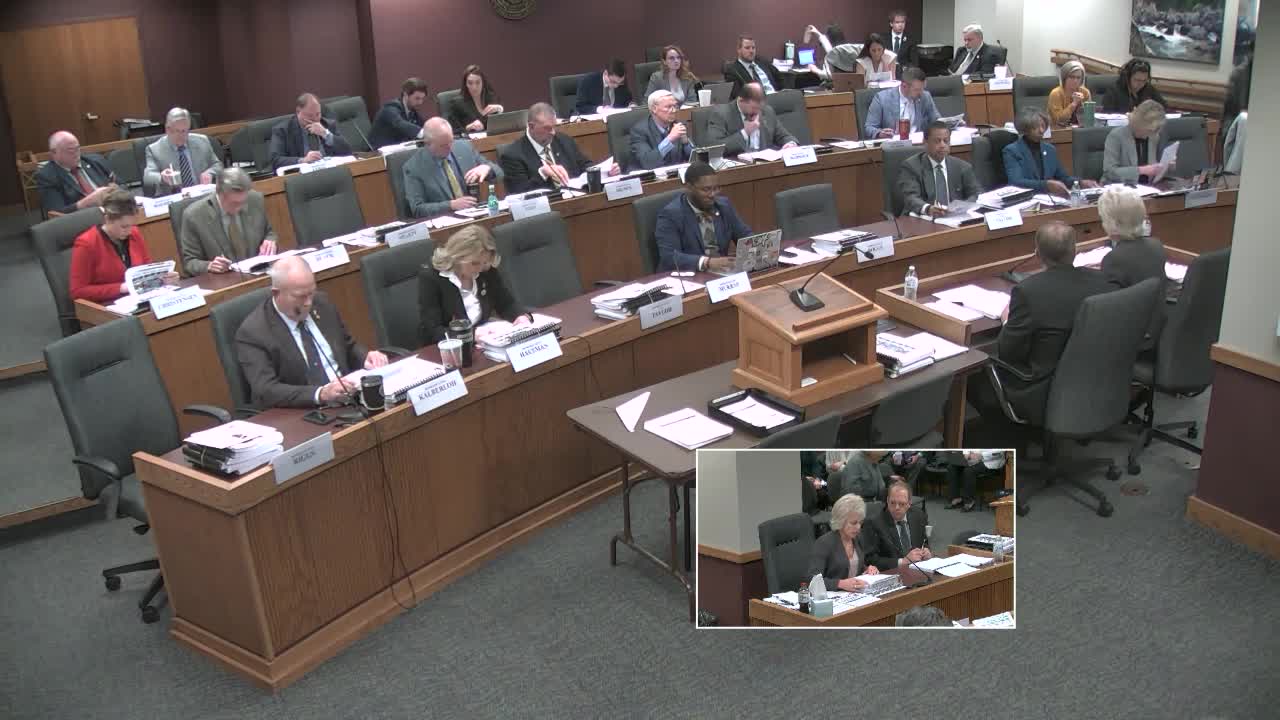
Department of Elementary and Secondary Education officials told the House Budget Committee on Feb. 3 that changes required by the state dequacy target recalculation and provisions in Senate Bill 727 produced a potential $497 million increase in the foundation formula for fiscal year 2026. The department sked legislators to fund the full amount; the governor recommended $200 million, plus $150 million to backfill projected lottery and gaming shortfalls.
The foundation formula is the state—all for operating K—2 education. "The state adequacy target went from $6,375 to $6,760 for this fiscal year," said DESE officials during the presentation, and a larger target combined with SB 727 changes such as phased movement to enrollment-based funding, a new 1% incentive for extended calendars and changes to pre-K funding raised the formula call. "When you put all those different pieces together, we end up with $497 million," DESE staff told the committee.
The department said the $497 million estimate reflects several distinct drivers: the updated state adequacy target (S.A.T.) that reweighted districts after MSIP 6; the phased transition in SB 727 from attendance to membership (enrollment) reporting; a provision that raised the allowable share of pre-K pupils counted in the formula from 4% to 8%; changes to local effort calculations; and other technical adjustments such as virtual-course attendance rules. DESE said the S.A.T. recalculation alone accounted for much of the increase.
The governor—avored a smaller increase. "The governor recommended $200 million," DESE officials said, explaining the administration—hose to fund the SB 727 items and part of the S.A.T. change but not the full estimated call. Committee members repeatedly asked how DESE would implement a lower appropriation; staff said state law gives the Department a prorating mechanism that lowers the S.A.T. if appropriations do not cover the full formula call, and that lowering the S.A.T. affects districts unevenly depending on hold-harmless status, dollar-value modifiers and other local factors.
Lawmakers pressing for more detail asked DESE for a district-level run of the governor nd department scenarios. "We can't identify the precise district impact until we set an appropriation level," DESE said, but agreed to provide the distribution data the committee requested.
The committee also discussed how stable revenue streams (lottery, gaming receipts and sports-wagering transfers) interact with the formula. DESE said some of the previously budgeted sources have lower projected transfers; the governor recommended a $150 million general-revenue backfill to replace anticipated shortfalls in lottery and gaming proceeds.
Why it matters: the size of the foundation formula call determines K—2 operating aid to nearly 900,000 students; funding level changes can materially affect local budgets and district reserve calculations. Lawmakers said they will evaluate the governor nd department proposals and asked for additional DESE-provided district-level impact tables before final decisions.
Ending: DESE committed to provide the committee a district-by-district estimate of the FY26 impacts under the department and governor funding scenarios and to explain the assumptions used to construct the $497 million figure.