Get Full Government Meeting Transcripts, Videos, & Alerts Forever!
Get email alerts on the Guardian Ad Litem Ethics Hb338 topic
No spam. Unsubscribe anytime.
Committee hears bill to impose ethical obligation on guardian ad litems; lawmakers ask for drafting and scope details
Summary
Representative Anne Kelly presented House Bill 338 to require guardian ad litems to meet an ethical obligation to children’s best interests. Lawmakers asked whether the requirement targets non-lawyer guardians or both, and suggested incorporating existing Rule 4 language for clarity.
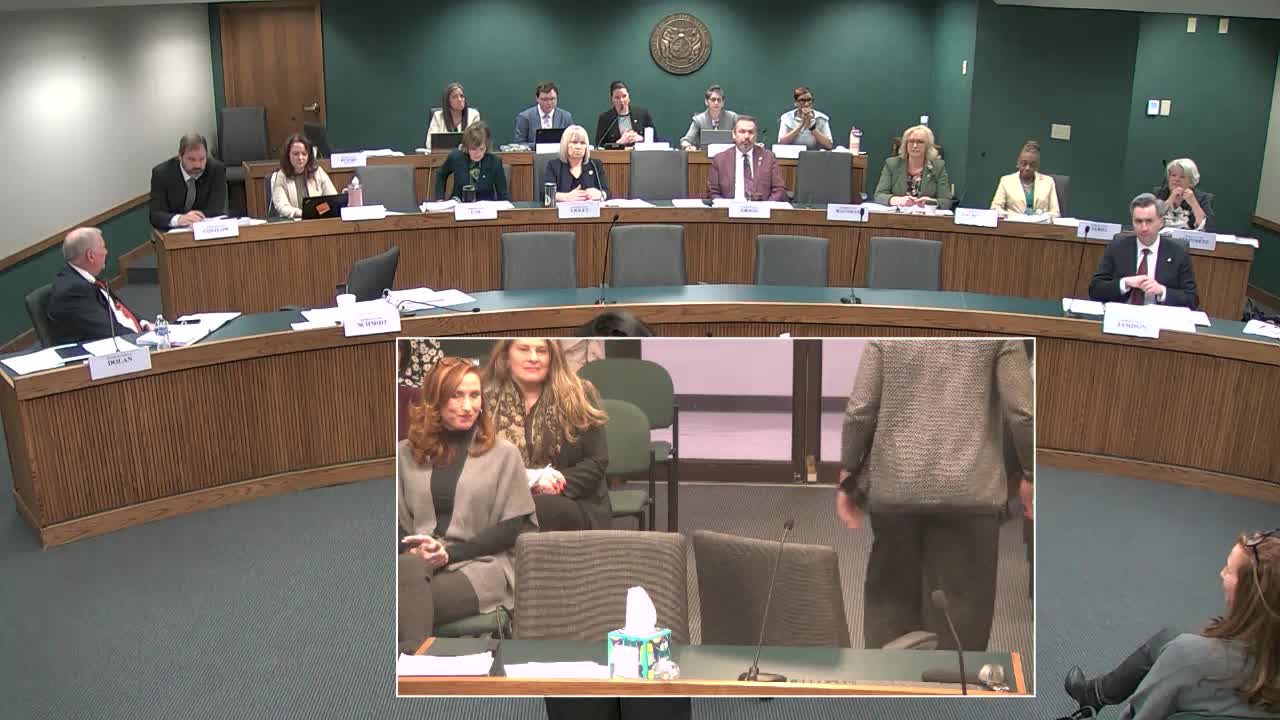
Representative Anne Kelly introduced House Bill 338 in the House Committee on Children and Families, saying the measure aims to “put the focus back on the child” by ensuring guardian ad litems observe an ethical obligation to a child’s best interests.
Kelly said court-appointed advocates and guardian ad litems differ in legal duty and accountability, and her bill would align standards so that a guardian ad litem’s role centers on the child’s welfare. “This is not meant to be the fix that is needed because we must do more,” Kelly said, adding the measure is intended to prompt further conversation and improvement of the system.
Committee members immediately asked whether the bill would apply to lawyer guardian ad litems, who are already bound by Missouri Supreme Court Rule 4 (professional ethics), or to non‑lawyer guardians. Representative Dolan suggested the bill is most appropriate if it targets non‑lawyer guardian ad litems and recommended incorporating the Rule 4 definition into statute for clarity.
Representative Prouty and others said putting an ethical obligation into statute could standardize expectations and make the requirement enforceable for non‑lawyers. Representative Terry and other members described constituent complaints about guardian ad litems who, they said, had limited contact with children or families. Kelly said the bill would not replace existing accountability measures for lawyers but would set a statutory baseline for any guardian ad litem.
No public testimony was offered during the hearing portion for House Bill 338; the committee closed the hearing with no immediate vote or final action recorded in the transcript.
Why it matters: The bill would clarify and potentially expand statutory duties for guardian ad litems in child welfare and juvenile matters, a topic lawmakers said has generated constituent complaints about inconsistent advocacy and contact with children.
What’s next: Representative Kelly and committee members discussed refining language and possibly importing the ethical standard found in Rule 4. The bill remains in committee for further drafting.