Get Full Government Meeting Transcripts, Videos, & Alerts Forever!
Get email alerts on the Child Marriage Ban Hb1200 topic
No spam. Unsubscribe anytime.
Committee hears testimony on bill to ban marriage under 18, survivors urge passage
Summary
A House committee heard hours of testimony in support of House Bill 1200, which would prohibit marriage for people under 18 in Missouri. Survivors and advocates told personal stories of abuse and trafficking; committee members asked about religious rights, emancipation and legal gaps.
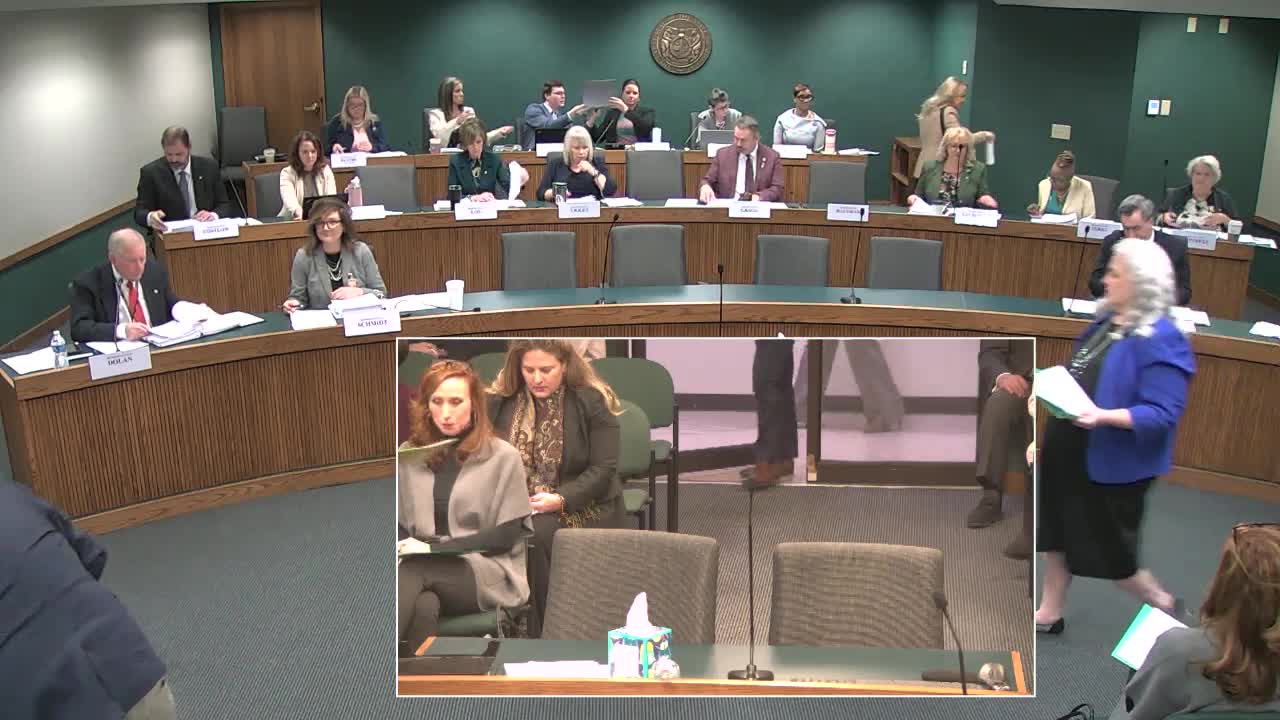
Senator Reuter presented House Bill 1200 to the House Committee on Children and Families on the bill to prohibit marriage under the age of 18 in Missouri and answered lawmakers’ questions before a public hearing filled with survivor testimony.
The bill would remove the current parental-consent exception that allows 16- and 17-year-olds to marry in Missouri. Supporters told the committee the current law leaves many minors without legal recourse, increases their vulnerability to trafficking and long-term economic harm, and that existing close-in-age or pregnancy exceptions do not adequately protect young people.
The bill’s sponsor, Senator Reuter, told the committee the proposal “prohibits marriage before the age of 18 under any circumstances,” and explained concerns about divorce access and emancipation under current law. “I know that today if you wanted to get married in Missouri, you could get married between the ages of 16 and 18 with a parental consent, and this takes away that exception,” Reuter said.
The hearing focused on the risks advocates say child marriage creates. Frady Reese, founder of the nonprofit Unchained At Last and a self-described survivor of forced marriage, told committee members the existing 2018 change to state law — which raised a prior lower limit to 16 with parental consent — left most minors unprotected. Reese cited Missouri Department of Health and Senior Services data and told the panel that “88% of the minors who married in Missouri were age 16 or 17” before the 2018 law, and that between February 2019 and February 2022 “280 minors were married in Missouri.” Reese also cited a U.S. Senate Homeland Security Committee report in describing how federal immigration practice defers to state marriage law for spousal and fiancée visas.
Survivors described long-term harms. Holly Raider of Scott City testified that she married at 15 to escape domestic violence and later endured abuse; she said early marriage curtailed her education and economic prospects. “I wanted out of a tumultuous childhood,” Raider said, adding that she was pregnant within months and later quit school. Brandy Dredge, who described herself as a teen-mom and survivor, told the committee she married at 17 and said the experience led to years of trauma and hardship. Another witness, Sheena Eastburn, said she was married 45 days after turning 15 and described repeated abuse; she said she could not obtain shelter or legal help at the time because of her age.
Advocacy groups urged the committee to act. Michelle Hanash, identified as director of policy and women’s programs at a survivor-founded nonprofit referred to in testimony as "the Foundation," said forced-marriage survivors routinely cannot access shelters, legal representation, protective orders or divorce as minors. “Minors can actually be labeled as missing children,” she told the committee, and added that domestic violence shelters typically cannot accept unaccompanied minors without parental consent. Matthew Huffman of the Missouri Coalition Against Domestic and Sexual Violence and Jessica Petrie Telemaque of the Missouri Network Against Child Abuse (MONACA) also testified in favor, saying the bill would close a statutory loophole that can make trafficking easier.
Committee members asked about religious freedom, pregnancy exceptions and emancipation. Representative Loy asked whether the bill would infringe on religious practices that recognize marriage before 18; Senator Reuter and witnesses urged religious communities to address internal rites while maintaining the state’s role in protecting minors from exploitation. Several lawmakers asked whether judicial exceptions — for example, a judge approving a marriage between two 17-year-olds — could protect legitimate cases; witnesses said Missouri law does not provide a clear emancipation pathway and that judicial exceptions would be difficult to implement and enforce in ways that prevent coercion.
No committee vote was recorded on HB 1200 at the conclusion of the hearing. The committee received written materials and the chair invited additional submissions from witnesses.
Why it matters: Supporters described HB 1200 as a legal fix to reduce child trafficking and exploitation, and argued the current statutory exceptions deny many minors the protections adults take for granted, including access to divorce, shelters and legal counsel. Opponents did not present organized opposition during the hearing; some lawmakers voiced concern about narrow cases such as two close-in-age teens or religious rites.
What’s next: The bill will remain in the House Committee on Children and Families for further consideration. Committee members asked witnesses to provide additional data and legislative language on related legal gaps such as emancipation and shelter access for unaccompanied minors.