Get Full Government Meeting Transcripts, Videos, & Alerts Forever!
Get email alerts on the Ballot Language Courts topic
No spam. Unsubscribe anytime.
Sponsors say courts should not rewrite legislatively referred ballot language; opponents warn of politicization and delays
Summary
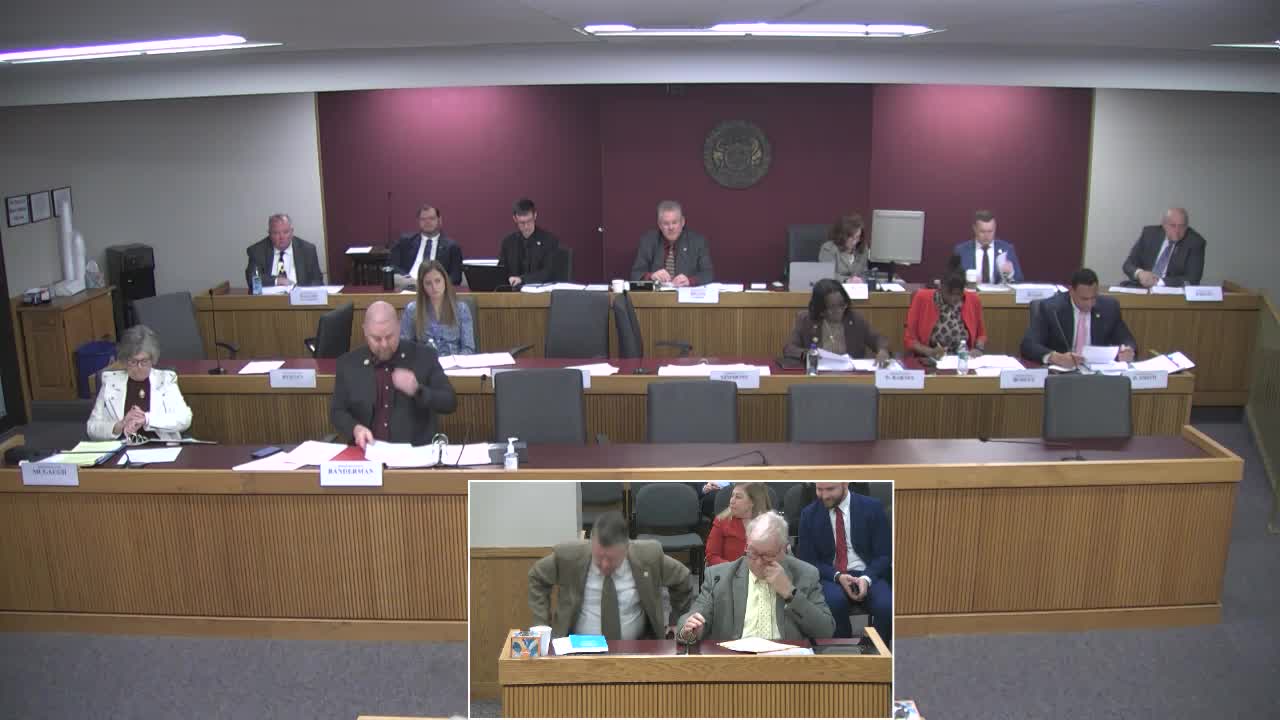
Representatives Jim Murphy and John Simmons presented identical bills that would prevent courts from rewriting ballot language for legislatively referred measures and instead return disputed language to the legislature or, when out of session, give the Secretary of State authority to revise after consulting sponsors and leaders.
Representatives Jim Murphy and John Simmons presented identical bills (House Bill 414 and House Bill 684) that would change how official ballot titles and summary statements are handled for measures referred to voters by the General Assembly. The bills state that if the General Assembly includes an official summary statement within a joint resolution to place a question on the ballot, courts would not have the authority to rewrite that language; instead the measure would be returned for correction to the legislature or, if the legislature is not in session, the Secretary of State would make changes after consulting the sponsor and legislative leaders.
Murphy framed the bills as a checks-and-balances issue: “If the house passes a joint resolution with the senate to put something on the ballot and puts the ballot language within the bill itself the courts have no right to change that,” he said. Simmons said he agreed and proposed changing a discretionary “may” to a mandatory “shall” to require the Secretary of State to seek sponsor and leadership advice if changes are needed when the legislature is not in session. Simmons also said the current 50‑word limit for legislatively referred summary statements is too small and favored allowing a longer summary so voters can better understand lengthy measures.
Supporters told the committee the legislature and the statewide-elected Secretary of State are the appropriate actors to finalize ballot language. Samuel Lee of Campaign Life Missouri argued it is statutory authority and pointed to Chapter 116: “It is the right of the General Assembly by law to decide who gets to review official ballot titles and summary statements,” he said, and suggested the committee could add language ending further court review after a court remand.
Opponents, including Denise Lieberman of the Missouri Voter Protection Coalition and Marilyn McLeod of the League of Women Voters of Missouri, urged the committee to preserve judicial oversight. Lieberman said courts serve as a check when the legislature or executive violate law: “It is the power of the courts to check the legislative and executive branches when they engage in an act that violates Missouri law,” she testified. She warned that removing the court’s ability to edit would politicize ballot language, create opportunities for repeated delays and gamesmanship, and make it harder for voters to receive fair summaries.
Other witnesses emphasized practical concerns and historic examples. Testimony referenced Amendment 3’s contested ballot language and litigation involving Planned Parenthood; Samuel Lee provided a side‑by‑side handout the committee received, arguing the Secretary of State’s original wording was preferable to the appeals court’s rewrite. Testimony also split on whether the Secretary of State would be a reliably impartial fallback when the legislature is out of session.
Committee members asked procedural and constitutional questions: how any rewrite would return to the legislature (fresh filing vs. legislative review), what exactly the Secretary of State could change when the legislature was not in session, and whether the bills would apply only to legislatively referred measures or could be extended to citizen initiatives (witnesses warned the Senate had considered a broader version of the change). Several committee members supported increasing summary word counts to match initiative petition rules (currently 100 words for initiative petitions, 50 for legislatively referred measures), or otherwise aligning the statutory limits.
Ending: The committee heard multiple witnesses both in favor and opposed. No committee vote on either bill is recorded in the transcript segment; testimony and member questions will inform subsequent committee action.