Get Full Government Meeting Transcripts, Videos, & Alerts Forever!
Get email alerts on the Elections It Modernization topic
No spam. Unsubscribe anytime.
Secretary of State briefs budget committee on election-system modernization, library funding and cyber threats
Summary
Secretary of State Denny Hoskins presented the office's FY2026 budget request and told lawmakers the office is within current-year spending but is seeking modest increases mainly for library networking and to keep IT capacity, while flagging daily cyberattacks on voter registration and business filing systems.
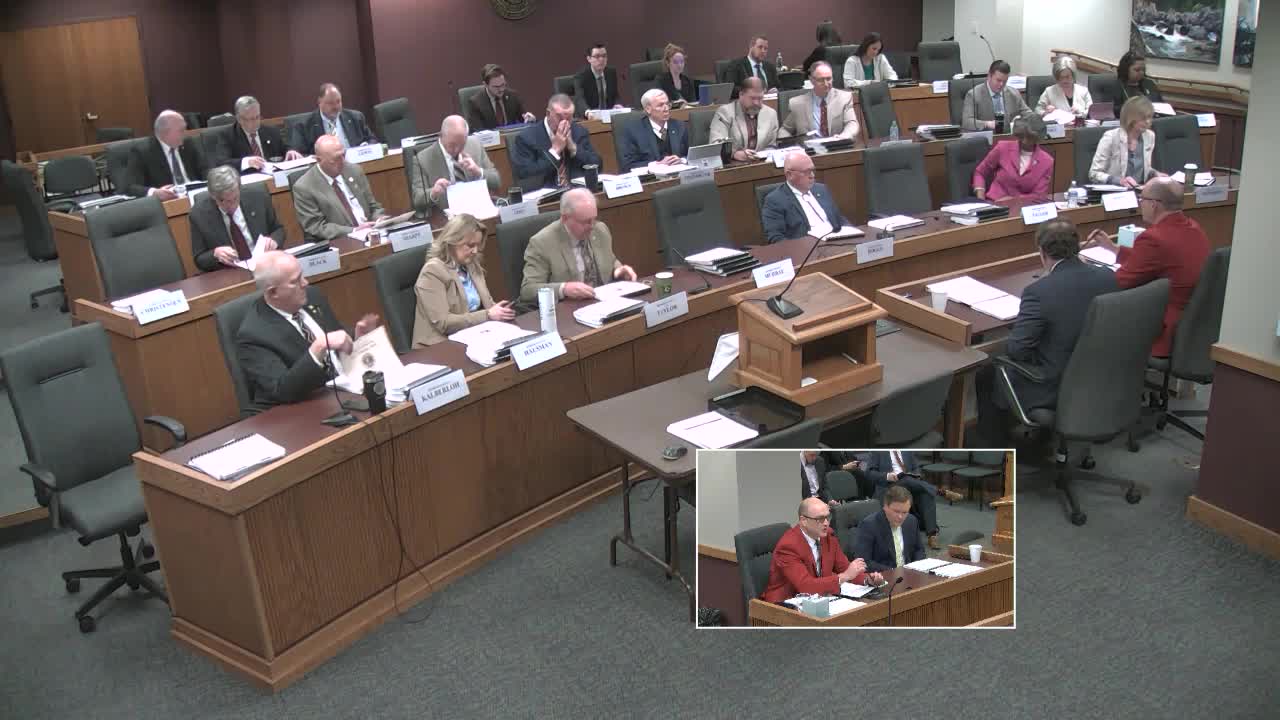
Secretary of State Denny Hoskins presented the office’s fiscal year 2026 budget to the House Budget Committee on Feb. 26, describing the office’s priorities on election administration, business services and the state library.
“We currently have about 204 employees and a $70,156,450 budget request,” Hoskins told the committee. He contrasted the office’s request with the governor’s recommendation of $68,191,000, noting the primary difference was a proposed $1.2 million non‑discretionary increase (NDI) for the state library networking fund.
Hoskins said the office plans a multi‑year modernization of Missouri’s voter registration system. “Our voter registration system is very, very old,” he said, and said federal election administration grants are a potential funding source. He told lawmakers the office moved its web‑based unemployment analogs to cloud hosting in other agencies; for elections he said updating the voter registration system is a long‑term goal and that the office will coordinate with county election authorities to identify needs. He also noted past federal grants for election security, listing awards to the state in 2018, 2020, 2022 and 2023.
Cybersecurity was a running theme: Hoskins said the office is targeted “every day” by hackers seeking voter registration and business‑filing data and described off‑site backups and other protections; no successful breaches were reported. He asked lawmakers to consider legislation this session on the IT fee that funds the office’s internal IT staff; the fee — a $5 business services technology fee — sunsets in 2026 and bills this session would either extend or eliminate the sunset.
On libraries, Hoskins explained a statutory transfer: state statute requires 10% of the estimated revenue from the athletes and entertainers income tax be transferred to the library networking fund, a portion that funds the state library and grants. The office’s request includes NDIs tied to the library networking fund and federal Library Services and Technology Act distributions. Hoskins said the Blue Book — the state manual — continues to be printed at cost and recommended maintaining that practice.
Committee members pressed on staffing, lapses and unused federal funds. Hoskins said some vacancies date to 2022 and prior administration hiring challenges; he described open attorney and IT positions and said candidate recruitment has been difficult in those specialties. On federal election funds, he said the office has unexpended balances held while the office plans a voter registration modernization.
Ending: The committee asked for follow‑up on the NDI details, the upcoming IT fee bills and how the office plans to coordinate with OA ITSD for a voter registration upgrade. Hoskins promised additional details and outreach to county election authorities on how federal funds could be used locally.