Get Full Government Meeting Transcripts, Videos, & Alerts Forever!
Get email alerts on the Energy Grid Planning topic
No spam. Unsubscribe anytime.
Public Service Commission seeks staff, authority to overhaul electric planning amid tight supply forecasts
Summary
The Missouri Public Service Commission told the House Budget Committee it needs 16 technical staff and about $1.4 million to revamp how investor-owned utilities plan future electric generation, citing rapidly rising load demands from new industrial projects and a decade-old planning framework.
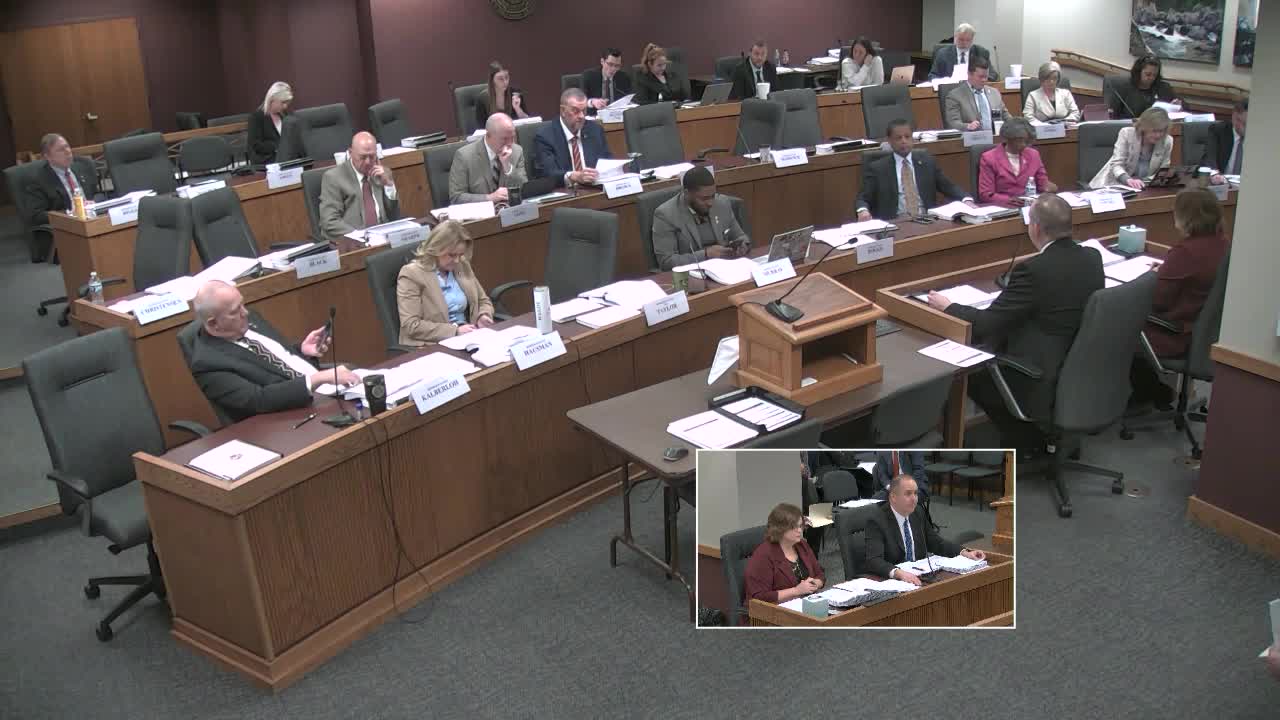
The Missouri Public Service Commission told the House Budget Committee on Feb. 26 it needs 16 new professional staff and roughly $1.4 million in appropriation authority to overhaul the state’s integrated resource planning process.
Rich Germain, Public Service Commission staff, said the request supports a “power mode” proposal to change how Missouri evaluates utility generation and load needs. “When you have flat and declining load growth, your planning process isn't quite as important,” Germain said. “That has changed drastically.”
The commission said the shift is driven by recent large industrial and data-center projects, electrification and onshoring that together have increased peak load needs. Germain told committee members that projects now often require hundreds of megawatts and, in the commission’s pipeline, some exceed 1,100 MW — “the size of Callaway.” He described a move from projects of a few megawatts a few years ago to gigawatt-scale requirements today.
Lloyd Wilson, director of administration for the PSC, told the committee the agency’s planning rules were last substantially updated in 2011 and that the commission needs staff with engineering and economic analysis skills to review complex integrated resource plans and to work with utilities and stakeholders on better planning models. “We have to totally revamp how we do integrated resource planning,” he said.
The commission’s request includes job classes such as professional and assistant engineers and an economist. Germain said the staff would focus on planning and analysis and would not sit in rate cases; integrated resource planning is a separate, ongoing regulatory process.
Committee members pressed on funding and statutory authority. The commission said the work would be funded by the PSC annual assessment on utility revenues — a statutory mechanism that is not general revenue — and acknowledged that expanding the cap or changing the assessment mechanism would require separate statutory action.
Germain and others noted the commission currently performs resource planning work but the statutory tools and staff capacity are insufficient for the scale and speed of change. He said doing the work by rule alone would not produce the meaningful, enforceable changes the commission seeks without legislative changes to expand the commission’s tools.
The PSC briefed the committee on the staffing need and funding pathway but did not request a roll-call vote during the session. Committee members said they would want follow-up on planned job classes, a detailed spend plan, and whether the commission could use contractors or nonpermanent resources while developing in-house capacity.
The PSC presentation also highlighted that recent hiring trends reversed pandemic-era staffing shortfalls; the commission reported 17 current vacancies that it intends to fill with the requested funding.
Ending: The PSC left the committee with concrete next steps: provide a job-class spend plan, clarify how existing assessment caps and balances support near-term hiring, and outline any statutory changes needed to implement the “power mode” integrated resource planning reforms. The proposal will return to legislators for consideration as part of the FY26 budget process.