Get Full Government Meeting Transcripts, Videos, & Alerts Forever!
Get email alerts on the Capital Gains Tax topic
No spam. Unsubscribe anytime.
Missouri House advances bill to eliminate state capital gains tax
Summary
Lawmakers adopted a committee substitute for House Bill 594 (and related bill 508) that would eliminate Missouri's state capital gains tax; sponsors argued it would spur investment and growth while opponents warned of large revenue losses to general revenue and impacts on services.
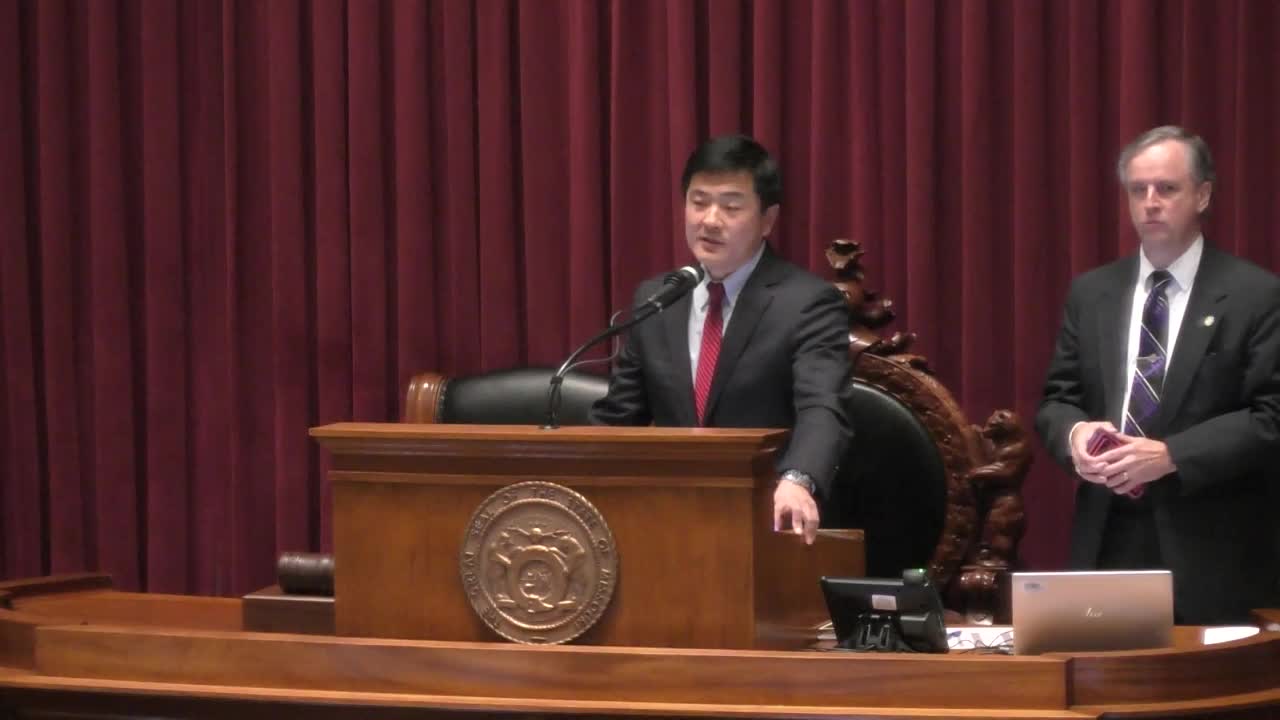
Representative (Pike County), the bill sponsor, described the House committee substitute for House Bills 5 94 and 5 08 as "an elimination of capital gains taxes," saying supporters included agriculture, real estate and business groups and noting broad committee support. "This bill is all about stimulating growth of Missouri's economy to generate high paying jobs," a proponent said on the floor.
Supporters argued eliminating the capital gains tax would unlock otherwise "locked up" capital, encourage reinvestment, and make Missouri more competitive with neighboring states. Representative (Saint Louis County) cited historical examples and several states with zero capital gains rates as supporting the approach. Sponsor and supporters also argued that capital gains burdens small business owners, farmers and employee-owned firms.
Opponents expressed concerns about the fiscal impact on state general revenue and the difficulty of reversing a large tax cut under Missouri's Hancock Amendment. During colloquy the sponsor cited the fiscal note range over three years of roughly $230 million to $300 million in foregone revenue. Representative (Saint Louis City) said the measure would primarily benefit wealthier taxpayers and venture capitalists, and urged caution about reductions that could stress funding for schools, roads and public services. Other speakers noted impacts on working-class taxpayers who may have capital gains due to home sales and the application to retirees and Medicare IRMAA calculations.
After extended debate the House adopted the committee substitute by voice vote and ordered the bill perfected and printed.
The committee substitute moves to the Senate; the floor debate recorded concerns about how the lost revenue would be replaced and flagged potential downstream effects on education, infrastructure and public-sector pay.