Get Full Government Meeting Transcripts, Videos, & Alerts Forever!
Get email alerts on the Mental Health Policy topic
No spam. Unsubscribe anytime.
Sponsor says bill would require law‑enforcement notification before release from mental‑health facilities when warrants exist
Summary
Representative Mitch Boggs presented House Bill 915 to require mental‑health facilities to notify law enforcement before releasing patients who were transferred from correctional facilities or jails, so officers can check for active warrants. Testimony and committee questions raised concerns about HIPAA, custody and training of officers.
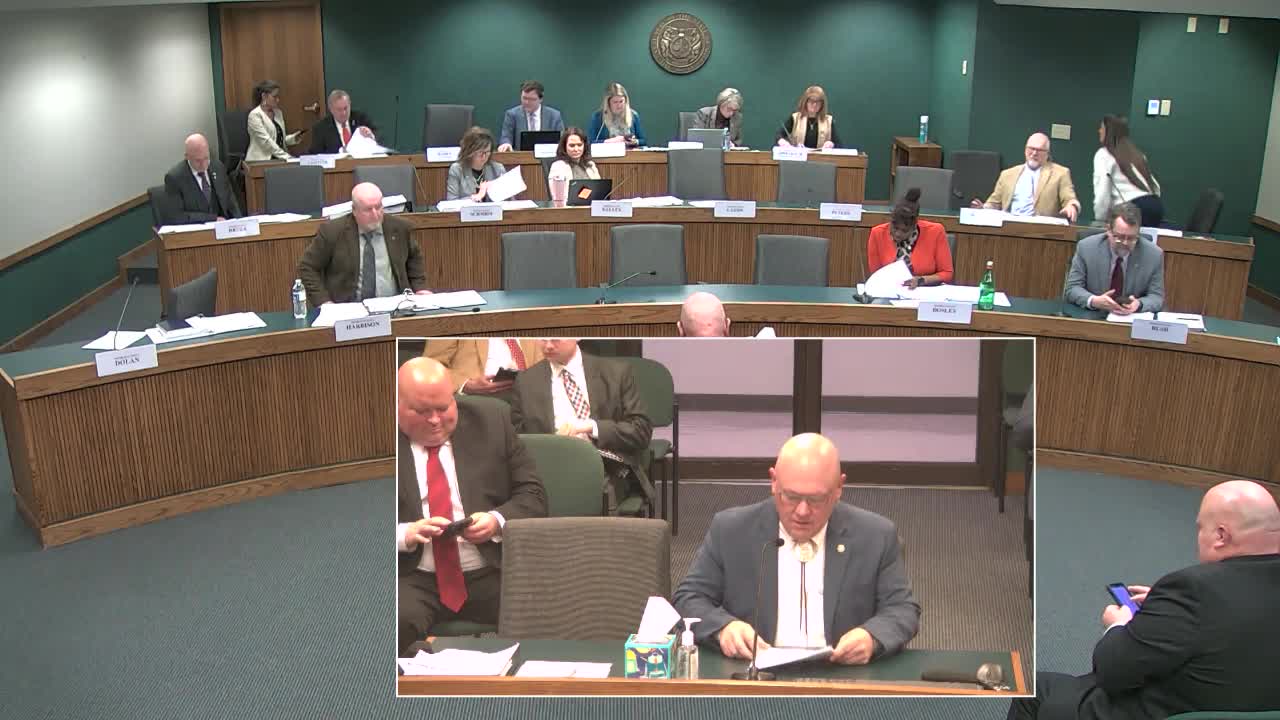
State Representative Mitch Boggs introduced House Bill 915 as a response to an incident in his district where a person transferred from a facility returned to the community without law‑enforcement notification despite active warrants. "This bill does not require disclosure of medical information. Only a protocol step to check for warrants," Boggs told the committee.
Boggs said the bill applies to patients transferred from a correctional facility or jail and would require the head of the receiving mental‑health facility or a designee to notify police, sheriffs or corrections officers before release so the officers can check for active arrest warrants. He emphasized the bill would not compel facilities to hold patients; it would require notification and a warrant check.
Committee members, providers and other witnesses raised legal and operational questions. Several lawmakers and witnesses cited the privacy rules in the Health Insurance Portability and Accountability Act (HIPAA) as a potential barrier and asked whether simply releasing a patient’s name would violate federal law. Representative Farooza and others asked the sponsor to confirm whether the two‑year requirement referenced elsewhere applied and whether notification obligations would conflict with privacy protections.
Hospital representatives and clinicians described operational challenges. Rob Monsess of the Missouri Hospital Association and clinical witnesses said emergency departments and inpatient staff are not set up to act as custodians for patients who arrive without law‑enforcement accompaniment; hospitals sometimes receive people dropped off by officers and lack secure custody protocols. They cautioned that notifying law enforcement on release could create safety risks if officers are not trained to respond to acute psychiatric crises.
Public testimony from a Boone County advocate emphasized broader system problems, including backlogs in state mental‑health evaluations and the shortage of treatment placements. Committee members repeatedly asked whether notice should instead be provided to the original custody agency (for example, the jail or sheriff’s office) or whether the receiving facility should return the patient to the sending agency rather than releasing to the street.
Boggs said he intended the bill to start a policy conversation and was open to revisions, including whether language should cover hospitals as well as psychiatric facilities and how to avoid making clinicians into enforcers of law‑enforcement functions.
No committee vote was taken on House Bill 915 during the hearing.