Get Full Government Meeting Transcripts, Videos, & Alerts Forever!
Get email alerts on the Hemp Policy topic
No spam. Unsubscribe anytime.
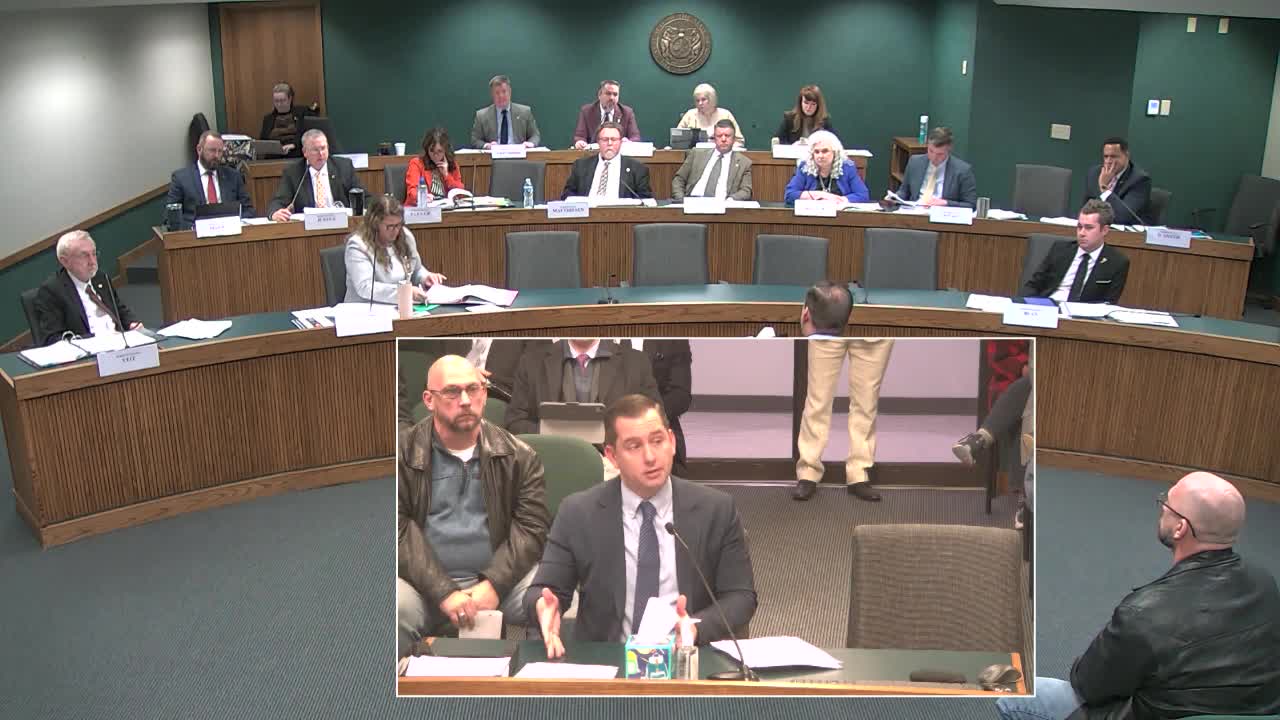
Wide-ranging debate in committee over bill to regulate intoxicating hemp products
Summary
House Bill 696, a sponsor-led bill to create licensing, testing and labeling rules for hemp-derived consumable products (including intoxicating cannabinoids), drew hours of testimony and sharp disagreement over public-safety, federal-law, and fiscal implications.
Representative Ben Baker introduced House Bill 696 as a framework to license, test and regulate hemp-derived consumable products at the retail level. Baker said the statute is designed to allow consumer choice while implementing safety, testing and labeling standards similar to alcohol.
"There's 2 main reasons why I carry this bill," Baker told the committee. "I believe in the free market ... and I think we should protect children." Key provisions he described include licensing for manufacturers, distributors and retailers through the Division of Alcohol and Tobacco Control; mandatory laboratory testing for potency and contaminants; child-resistant packaging; labeling that lists ingredients and cannabinoid content; age limits (21+); and prohibitions on marketing that appeals to minors.
Supporters from the hemp trade and retail sectors urged a regulated market that would keep products out of unlicensed channels and allow existing small businesses to continue operating under safeguards. Witnesses included members of the Missouri Hemp Trade Association, petroleum/convenience-store representatives, and manufacturers. A number of supporters stressed that most hemp-derived products are federally legal under the 2018 farm bill and said state rules should protect consumers without forcing sales into the existing marijuana-dispensary infrastructure.
Opponents — including representatives of the marijuana industry, some policy advocates and an industry consultant representing utility and public-power interests — warned the bill would effectively codify a large new regulatory program and could duplicate or conflict with existing marijuana regulation. Several opponents noted a 2024 DEA interpretive letter about THCA and other synthesized cannabinoids and argued that many intoxicating cannabinoids fall outside the farm-bill's protections and should be treated as marijuana under Article XIV and existing state regulation.
Fiscal and administrative questions were a central focus. Rep. Ben Baker and multiple witnesses pointed out a mismatch between an earlier Department of Health estimate (approximately $877,000 to operate for two years under an executive order) and a much larger fiscal-estimate figure cited in the transcript for a broader licensing program. Critics asked why a new regulatory bureaucracy with substantial staffing and cost was needed rather than folding intoxicating products into the existing cannabis regulatory framework.
Committee members raised technical questions about permitted cannabinoids, federal enforcement risk, laboratory accreditation, enforcement tools, and whether a separate statutory structure would create unintended consequences for banking and federal compliance. The hearing closed with proponents and opponents on record; no committee action is recorded in the transcript.