Get Full Government Meeting Transcripts, Videos, & Alerts Forever!
Get email alerts on the Energy Policy topic
No spam. Unsubscribe anytime.
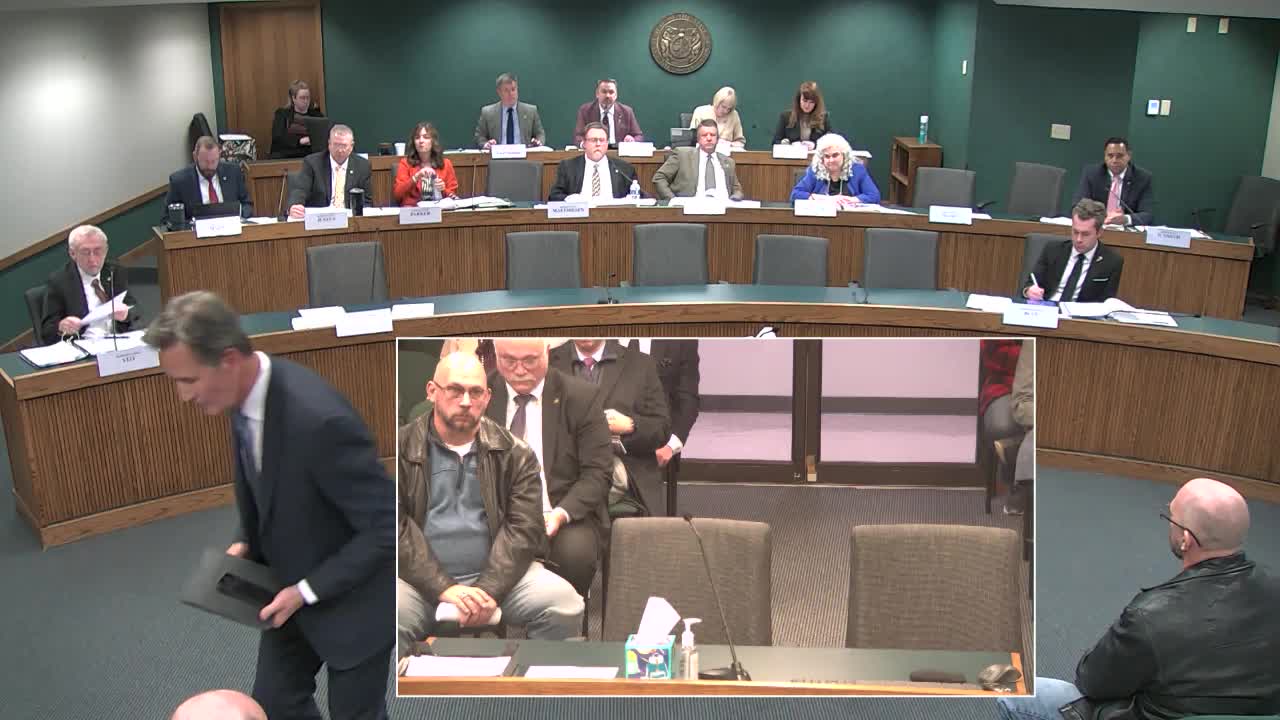
Retail choice for electricity debated as committee hears House Bill 417
Summary
The House General Laws Committee heard competing testimony on House Bill 417, a proposal to allow retail customer choice for electricity generation; proponents said competition would lower costs and expand product choices while utility witnesses warned of higher rates, reliability risks and legal challenges in other states.
Representative Don Mayhew presented House Bill 417 as a measure to introduce retail choice in Missouri's electricity market, emphasizing customer choice and competition in generation while maintaining the regulated wires-and-poles utility model.
"This is just putting free market principles to work and utility choice for customers," Mayhew said. He and supporters framed the bill as opening generation and supply to competitive suppliers while leaving transmission and distribution regulated by the Public Service Commission.
Proponents included Bryce McKinney of NRG and Abby Foster of the Retail Energy Advancement League. McKinney said retail competition enables a range of contract products and places generation risk on market suppliers rather than ratepayers. "In states with competitive markets any company with the funds and capability to build and operate a power plant can do so," he said, noting suppliers offer fixed-rate and time-of-use products and that utilities would continue to own wires and poles.
Opponents included Jason Cline of Evergy and Warren Wood, an engineer. Cline cited federal data comparing retail prices and argued deregulated states often have higher retail rates; he pointed to complaints and legal challenges in Massachusetts and Illinois. "After 25 years of deregulation, those 13 states are still 7 cents higher than regulated states," Cline said, arguing that deregulation tends to raise the price gap and can undermine investment in base-load capacity.
The hearing produced extensive questioning from committee members about outcomes in other states, impacts on residential versus commercial customers, transmission and right-of-way issues, and the role of municipal and cooperative utilities. Sponsor Mayhew confirmed cooperatives and municipal utilities are exempted in his proposal; witnesses said investor-owned utilities could divest generation to affiliates or compete themselves. The transcript records strong disagreement among energy suppliers, utilities, trade associations and industry groups. No committee vote was recorded in this hearing; debate will continue.