Get Full Government Meeting Transcripts, Videos, & Alerts Forever!
Get email alerts on the Student Device Policy topic
No spam. Unsubscribe anytime.
Committee adopts substitute covering phone/device use and local policy control; districts given latitude on instructional exceptions
Summary
The committee adopted a substitute that rolls together House Bills 408, 306 and 854 and includes language giving local school boards control to define when devices may be used for instructional purposes; the committee adopted amendments and voted the substitute "do pass."
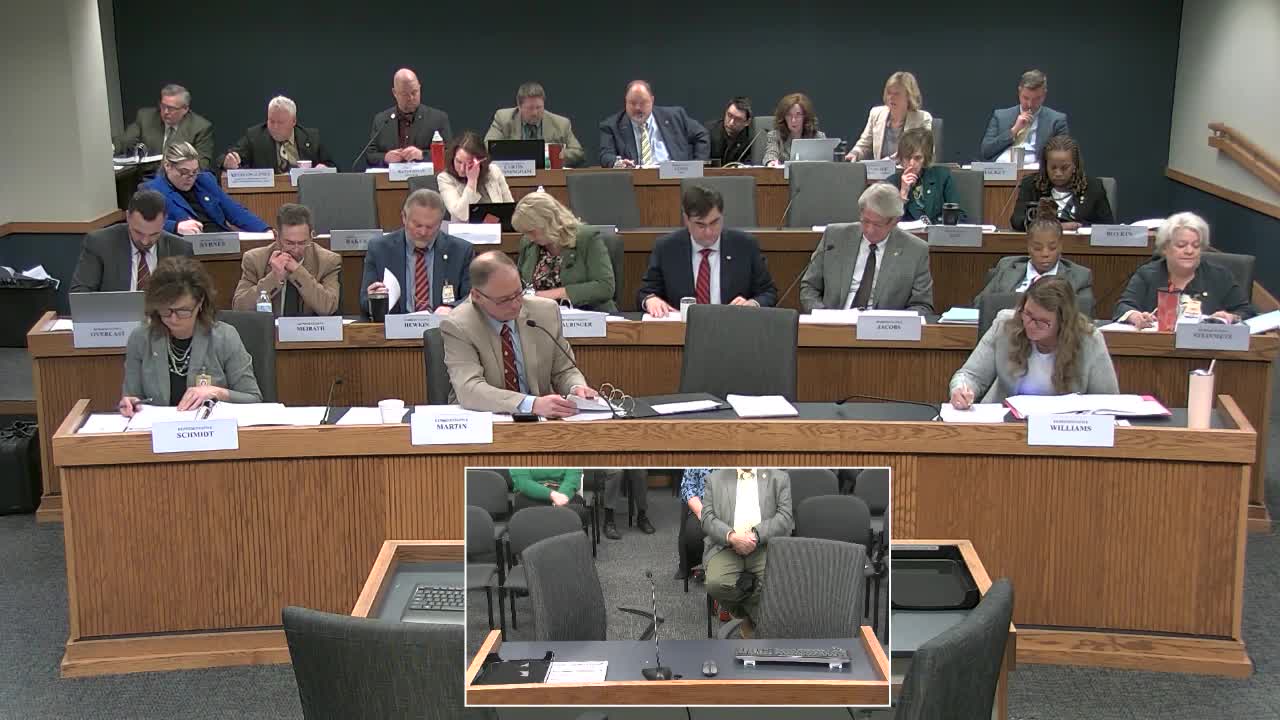
The House Committee on Elementary and Secondary Education adopted a committee substitute for House Bills 408, 306 and 854 that governs student device and cell-phone use during instructional time and clarifies authority for local policy.
The nut graf: the substitute preserves local control by allowing school boards to define "instructional time" and to decide whether principals, teachers or others may authorize exceptions for instructional uses of devices.
Representative Jacobs asked whether authorization would rest with the classroom teacher; Representative Steinhoff said the amendment she offered would give school boards authority to define who may authorize device use. Representative Steinhoff described two small, clean-up amendments that direct districts to define instructional time and allow the school board to decide who may authorize device use for instructional purposes. "We wanted to give the school board the decision making power to decide when we would allow phones to be used during an educational purpose," Steinhoff said.
Committee members adopted House Committee Amendment 1 and rolled it into a new substitute, then voted the House Committee substitute for House Bills 408, 306 and 854 "do pass." The transcript records a roll-call vote of 20 ayes, 0 nos.
Ending: The committee advanced the consolidated substitute; members said the substitute keeps device-authority decisions at the local level and provides a policy framework for instructional exceptions.