Get Full Government Meeting Transcripts, Videos, & Alerts Forever!
Get email alerts on the School Choice Open Enrollment topic
No spam. Unsubscribe anytime.
Committee adopts substitute for open-enrollment bill after extended debate; House committee votes 7-2 to give bill a "do pass" recommendation
Summary
Representative Brad Paul told the House committee that House Bill 711 would create an online, voluntary open-enrollment portal and that state funding would follow students while local tax revenue would remain with the resident district.
Representative Brad Paul, sponsor of House Bill 711, told the committee the bill would create a state-run online resource for voluntary open enrollment among public school districts and said the proposal preserves local funding while allowing the state funding to follow students who transfer.
"This is a choice bill. This bill, the district gives opportunity to opt into the program. If it doesn't opt in, it doesn't keep students from leaving your district. There is a 3% cap. The state money follows the bill. The local money stays local," Representative Brad Paul said.
Paul described multiple changes in the House committee substitute, including expanding the definition of transfer students to include family-based education and nonpublic pupils who live in the district, adjusting timelines and adding a specific section on special education procedures. He told the committee the substitute spells out how receiving districts must handle students with individualized education programs (IEPs): districts must obtain the IEP, may evaluate and revise it, and must offer a free public education but are not required to add new programs or staff to serve an incoming special-education student.
"We've had public schools tell me 'you're discriminating against special ed kids.' Well, we're not doing that," Paul said. "This bill spells out that we are not; they have an opportunity to open enroll." He cited Wisconsin court decisions that he said support the view that receiving districts are not required to add programs or staff to accommodate transfers.
Key provisions and clarifications in the adopted substitute and an amendment included:
- Districts must opt into the program; participation is voluntary. - A 3% cap limits the number of transfer students a receiving district may accept; the statute includes family-based education and some private/nonpublic students in that cap. - Timeline dates: by Nov. 1 districts declare participation and model policy; Nov. 15 portal opens to parents; Jan. 1 application submission deadline; Jan. 15 department processes portal matching; March 1 deadline for districts to accept or reject applications (additional intermediate deadlines and response windows also specified). - Special education: receiving districts will review IEPs, may evaluate and revise them, and must offer a free public education but are not required to add new staff or programs; special-education transfers generate a 0.25 weight in the funding formula when applicable. - Attendance thresholds: if attendance falls below 80% the receiving district may intervene; if not improved to 90% by end of first semester the district may return the student to the resident district. - Transportation: districts may seek payment from a parent choice fund or claim eligible miles in the formula; limits on district-provided transportation were set at 30 miles from the attending school or five miles into the contiguous district, whichever is longer.
Representative Fuchs and other members asked clarifying questions about family-based education (which Paul and the vice-chair said stems from a prior Senate bill) and about how IEPs and transportation costs would be handled. Representative Paul said the department would operate the portal and that funding for transportation would rely on a parent-choice fund if appropriated; otherwise transportation costs would be handled through formula-eligible miles and the special-education weight where applicable.
The committee considered a committee substitute and a technical amendment (0.01h) that removed the word "homeschool" in favor of "family-based education," changed some attendance language from "shall" to "may," and clarified transportation distance calculations. The committee adopted the amendment by voice vote, then adopted the substitute. The committee then moved the substitute as "do pass."
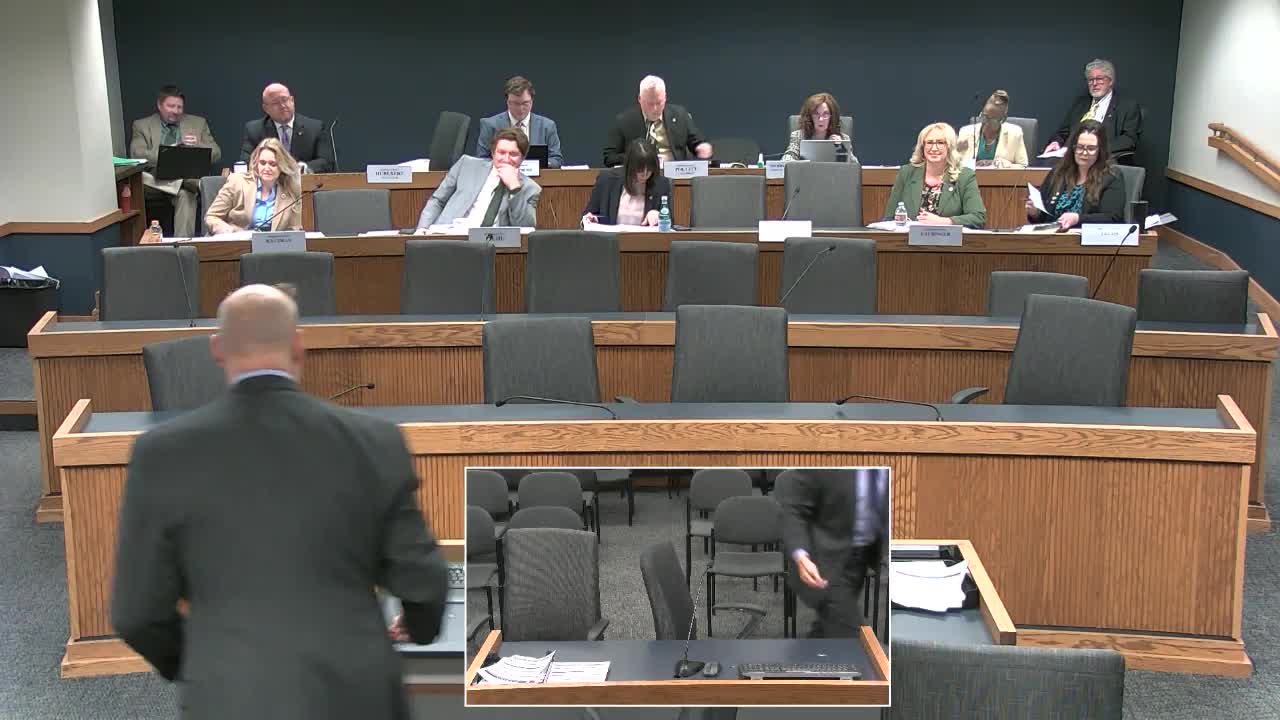
The clerk called the roll on the "do pass" motion. The committee recorded seven ayes and two noes; the roll call recorded the following votes: Chairman Pollack — Aye; Vice Chairman Hurlburt — Aye; Representative Terry — No; Representative Deal — Aye; Representative Dahl — Aye; Representative Fuchs — No; Representative Hausman — Aye; Representative Keith Lee — Yes; Representative Lawbinger — Aye; Representative Perkins — Aye. The chair announced the substitute for House Bill 711 as reported "do pass" by a vote of 7–2.
Several members voiced concern about the bill's potential effects on rural and provisionally accredited districts and on local communities that might lose students. Minority Leader (first name not specified in the transcript) expressed concern about rural impacts and school closures; Representative Paul said the bill puts choice in the hands of parents and that participation remains voluntary for districts.
The committee concluded its business and adjourned for the evening.