Get Full Government Meeting Transcripts, Videos, & Alerts Forever!
Get email alerts on the Justice Deputy Ag topic
No spam. Unsubscribe anytime.
Deputy attorney general nominee says he would empower U.S. attorneys to fight violent crime, pursue targeted antitrust cases and keep DOJ apolitical
Summary
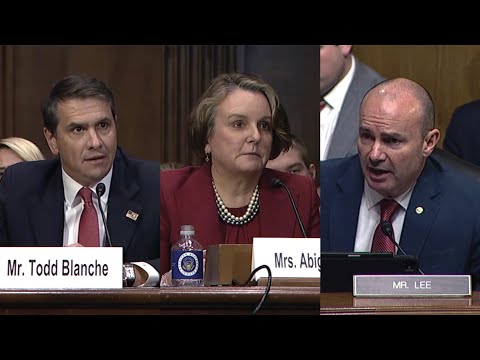
Mr. Blanchard, the deputy attorney general nominee, told Sen. Mike Lee on the Senate floor that, if confirmed, he would "empower United States Attorneys around this country" to work with federal partners such as the FBI, DEA and ATF and with state and local officials to combat violent crime.
Mr. Blanchard, the deputy attorney general nominee, told Sen. Mike Lee on the Senate floor that, if confirmed, he would "empower United States Attorneys around this country" to work with federal partners such as the FBI, DEA and ATF and with state and local officials to combat violent crime.
That pledge came amid questioning about a 4‑year rise in violent crime that Sen. Mike Lee said had affected both cities and rural communities. Blanchard said the response should include sending prosecutors and agents to troubled areas, noting that some cases are handled by state courts while others should be pursued in federal court. "We have a lot of really great agents and great prosecutors who who wanna do this work," he said.
The nominee also outlined his approach to antitrust enforcement, drawing a distinction between case-by-case enforcement and broader regulation. Asked how he would treat ongoing investigations into large technology companies, Sen. Lee asked, "How will you continue to hold big tech accountable when it comes to antitrust law?" Blanchard replied that enforcement is often a "scalpel" while regulation is a "sledgehammer," arguing that targeted antitrust cases can prevent markets from requiring sweeping regulation. He said two Department of Justice cases involving Google were on the docket and that he intended to "read into all of the open litigations" and consult staff before deciding how to proceed, while noting the resource demands of complex civil litigation.
On professional judgment and the role of counsel, Blanchard described lessons from both prosecution and defense work, including the need to tell a client "no" when the law requires it and to guide clients toward the best legal approaches. He said that experience counseling clients would inform how he would advise and direct Justice Department lawyers.
When questioned about politicization at the Department of Justice, Blanchard delivered a pointed vow. "Politics will play no role. Full stop, period," he said, adding that outside influence at the Justice Department had damaged the institution's credibility and that restoring it would take time. He repeated his intention to avoid political influence in Department decisions if confirmed.
Blanchard repeatedly said he would review the files and consult career staff before making decisions on ongoing matters; those steps, he said, would inform whether cases proceed at the federal level and how resources are allocated. He also emphasized the importance of partnering with state and local law enforcement to "get into the inner cities, but also into our rural communities."
The hearing record did not include a timeline for confirmation, nor did it record any formal votes or changes to existing cases. Blanchard described ongoing cases and past awards, referencing his work on a prosecution called United States v. Lee and noting roughly a decade of experience in private practice and defense work that he said shaped his approach.