Get Full Government Meeting Transcripts, Videos, & Alerts Forever!
Get email alerts on the Land Use Fence Regulations topic
No spam. Unsubscribe anytime.
West Miami allows wooden side-yard fences but keeps front-yard ban
Summary
The commission amended land-use rules to permit wood fences on side property lines parallel to streets, while retaining prohibitions on wooden and chain-link front-yard fencing. The measure passed 5-0 with instructions for planning staff to study additional options.
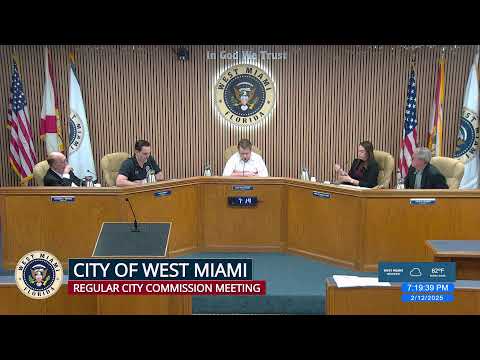
The City of West Miami Commission on Feb. 12 adopted an amendment to the city's fence regulations to permit wooden fences on side property lines that run parallel to a street, while preserving the ban on wood and chain-link fences in front yards. The ordinance amendment passed 5-0 during the meeting's second reading and public hearing.
Why it matters: The change is aimed at balancing neighborhood aesthetics with residents' affordability concerns. Commissioners debated maintenance and visual standards for front-facing fencing and sought a compromise for corner and side-yard properties.
What the commission approved: The amendment revises ordinance 20-22-02 to allow properly designed and approved structural fence materials on side yards that face a street, explicitly permitting wood in those side-yard locations. The city manager explained the original 2022 ordinance had effectively limited permitted front- and street-facing side-yard fencing to masonry walls or decorative iron pickets; the revised language allows other approved materials for side yards but keeps the front-yard prohibition against wood and chain link.
During the debate, Vice Mayor Natalie Miliano Orbis said she would "leave the wood material as an option" for side yards because requiring more expensive materials can burden homeowners. The city manager clarified repair and replacement rules, saying that if a fence is "less than 50%" damaged the owner can repair rather than replace it, and that major replacements may trigger the new standards.
The commission also directed planning and zoning staff to study additional material options and aesthetic alternatives for future code updates. The ordinance passed by roll call 5-0; the manager instructed staff to report back to planning and zoning on feasible alternatives.