Get Full Government Meeting Transcripts, Videos, & Alerts Forever!
Get email alerts on the Gas Resources topic
No spam. Unsubscribe anytime.
DNR-led advisory panel delivers gas‑resources recommendations; agencies urge regulatory framework before permits issued
Summary
The Gas Resources Technical Advisory Committee submitted a multiagency report to the Legislature outlining permitting, inspection, taxation and environmental‑review recommendations for potential helium and geologic hydrogen production in northeast Minnesota; without legislative action a statutory moratorium on gas production remains in effect.
The Gas Resources Technical Advisory Committee (GTAC) submitted its final recommendations and draft legislative language to the Minnesota Legislature in mid‑January, outlining a temporary and permanent regulatory framework for gas resources including helium and geologic hydrogen.
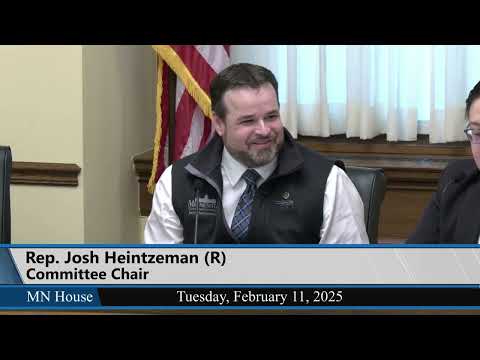
"The Gas Resources Technical Advisory Committee submitted those recommendations and draft legislative language in mid January," said Mike Lildegren, assistant division director for DNR Lands and Minerals, during a Feb. 11 committee presentation.
GTAC was created by 2024 legislation that paused commercial gas production in Minnesota until agencies adopt rules or the Legislature enacts a temporary framework. The committee — made up of the Department of Natural Resources (DNR), Environmental Quality Board (EQB), Department of Health (MDH), Minnesota Pollution Control Agency (MPCA) and Department of Revenue — worked from July through January to produce recommendations on permitting, financial assurance, monitoring, inspection, environmental review, and tax administration for gas production activities. The DNR told the committee that, absent new legislation, the moratorium established last year would continue until expedited rulemaking is complete.
Why it matters: The DNR and other agencies say Minnesota faces a new regulatory question after an accidental high‑grade helium discovery in 2011 and renewed exploration activity beginning in 2022. Helium has industrial and medical uses; geologic hydrogen is being explored as a potential low‑carbon energy feedstock. Agencies told lawmakers the state previously lacked a gas‑resource regulatory history and needs clear rules to manage siting, environmental review and taxation if production proceeds.
Key recommendations and next steps - Permitting and siting: DNR recommendations include a new gas‑resource permit with siting and setback requirements, well construction and sealing standards, pooling and spacing rules, reclamation requirements and financial assurance provisions. - Environmental review: EQB recommended a mandatory Environmental Assessment Worksheet (EAW) for gas development projects under the temporary framework and proposed DNR serve as the responsible governmental unit (RGU). EQB said environmental‑review notices should include tribal contacts. - Public health and wells: MDH recommended explorer licensing, drill‑rig registration, and new rulemaking authority for well construction and sealing. - Pollution control: MPCA said its existing rules appear sufficient to regulate gas activities under both temporary and potential permanent frameworks, and urged timely, meaningful consultation with tribes. - Taxation: Department of Revenue recommended incorporating gas and oil into the state's existing mining tax administration statutes, allowing distinct tax rates by gas type but offering no specific rate or distribution formula — leaving those decisions to the Legislature.
Industry, local governments and environmental groups weighed in during GTAC's public input period. Peter Larson, representing Pulsar Helium, described recent field work: "Jetstream 1 was completed in 2024. It's a little over 5,000 feet deep. Jetstream 2 started in January," he said, describing current appraisal work and a planned feasibility decision in 2026. Liz Kramer of SEH said Pulsar's exploration was carried out with pre‑planning to minimize impacts and obtain multiple permits at federal, state and county levels.
Policy questions and concerns raised in committee - Tribal consultation: Several speakers, including Aaron Clemens of the Minnesota Center for Environmental Advocacy, urged the Legislature and DNR to carry out additional government‑to‑government consultation with tribes that filed extensive formal comments on the draft GTAC report. Clemens warned that draft legislative language lacks a fixed temporal term for permits and recommended permits include "a fixed period of time covering a precise number of years," citing a Minnesota Supreme Court decision on mining permits as precedent for temporal limits. - Timing and grandfathering: Clemens and others cautioned against allowing temporary permits issued under any short‑term legislative framework to remain valid in perpetuity after permanent rules are adopted. He recommended temporary permits expire a set period (he suggested three years) after permanent rules are promulgated to avoid incentivizing a rush for applications. - Scope of activities: Committee members and agency staff discussed whether gas development could include injection projects (for example, carbon storage); agencies said injection was not part of the GTAC temporary‑framework recommendations.
What agencies said about process DNR staff said GTAC's recommendations include both draft permanent statutes and a temporary framework that would expire once permanent rules are adopted. They reiterated an expedited rulemaking timeline that would conclude with a letter of intent to adopt by May 2026 only if the Legislature approves the temporary framework. The DNR and EQB described the EAW→EIS pathway for environmental review; DNR was proposed as the RGU for a project‑level review because of its overarching permit role.
Outlook GTAC turned its recommendations over to the Legislature for possible statutory action. If lawmakers do not adopt a temporary regulatory framework, agencies say they will continue to enforce the moratorium established in last year's law until rulemaking is complete. Industry parties represented at the hearing urged certainty and said additional appraisal wells and feasibility work are planned through 2026 before any production decision.
The committee did not vote on legislation Feb. 11; members requested further questions and follow‑up with agencies and stakeholders.