Get Full Government Meeting Transcripts, Videos, & Alerts Forever!
Get email alerts on the Education Budget 2025 topic
No spam. Unsubscribe anytime.
Governor’s 2025 education budget proposes cuts to QComp, special-education transportation and nonpublic aid; MDE and educators push back
Summary
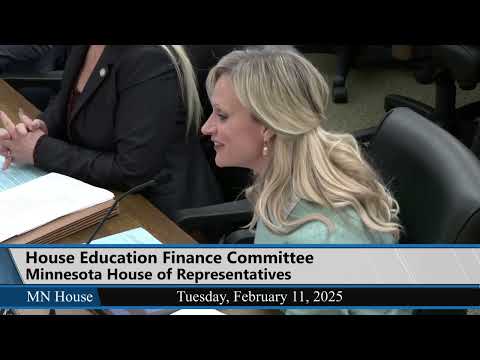
The Minnesota Department of Education on Feb. 11 presented Gov. Tim Walz’s 2025 education budget to the House Education Finance Committee, proposing a mix of one‑time investments and ongoing reductions intended to help the state balance projected deficits.
The Minnesota Department of Education on Feb. 11 presented Gov. Tim Walz’s 2025 education budget to the House Education Finance Committee, proposing a mix of one‑time investments and ongoing reductions intended to help the state balance large projected deficits in later biennia.
The governor’s package includes one‑time boosts — a $30 million deposit to the special revenue fund to cover projected summer unemployment insurance (UI) costs for hourly school workers in fiscal 2026 and a compensatory‑revenue hold harmless estimated at about $39.7 million in fiscal 2026 — paired with reductions the department says are needed to close mid‑ and long‑term shortfalls. The proposal would cut special‑education transportation reimbursement to 95% in fiscal 2026 and 90% in later years, eliminate nonpublic pupil aid and nonpublic pupil transportation aid beginning in fiscal 2026, and end the QComp alternative teacher compensation program on June 30, 2026.
Why it matters: Minnesota faces a sizable projected budget gap later in the decade; committee members and witnesses said the package forces difficult choices with direct consequences for classroom staffing, student services and school budgets.
The Department framed the proposals as a starting point for negotiation. “This is a starting place for a conversation around this incredibly important and difficult task,” Commissioner Willie Jett told the committee. He said the budget aims to “balance a narrow set of urgent and prioritized needs with ideas on how we can reach a balanced budget.”
Key proposals and numbers - Compensatory revenue hold harmless: Kathy Erickson, director of school finance at MDE, said the governor recommends a one‑year modification for fiscal 2026 that would use the greater of fiscal 2024 pupil counts or fiscal 2026 counts, covering both paper forms and direct certification. Erickson said that hold harmless would cost about $39.7 million in fiscal 2026 and roughly $4.42 million in fiscal 2027 (a clean‑up payment). - Unemployment insurance for hourly school workers: Erickson said the governor proposes a $30 million deposit into the special revenue fund so districts receive full state aid in fiscal 2026 and avoid proration; MDE estimated about $63 million in UI costs for fiscal 2026 without new funding. - Special‑education transportation: Erickson said eligible transportation costs would be reimbursed at 95% for fiscal 2026 and 90% in fiscal 2027 and beyond, producing an estimated reduction of about $48.6 million in fiscal 2026–27 and $54.9 million in fiscal 2028–29. - Nonpublic pupil aid and nonpublic pupil transportation: Erickson presented eliminations of nonpublic pupil aid (textbooks, health services, counseling) and nonpublic transportation starting in fiscal 2026, which she said would reduce general‑fund spending by roughly $52.5 million in fiscal 2026–27 and $56.4 million in fiscal 2028–29 for nonpublic pupil aid, plus roughly $56.2 million and $58.4 million for nonpublic transportation in the same two‑biennium windows. - QComp (alternative teacher compensation): The governor would end QComp on June 30, 2026; Erickson said approximately 111 districts currently participate and that the change would reduce state spending by an estimated $78.7 million in fiscal 2027 and about $173.1 million in fiscal 2028–29. - Fraud prevention and program integrity: the proposal includes $550,000 annually for three full‑time positions and software to expand the Office of Inspector General and two legal‑counsel positions focused on charter oversight and nutrition program legal needs.
Reaction from educators and advocates Several education groups urged caution about the package’s impacts on students and district budgets. - Matt Shaver, senior policy director at EdAllies, warned that transportation cuts could worsen chronic absenteeism and said, “there are 200000 chronically absent students, 46000 of these students have disabilities,” calling attendance a prerequisite for delivering services. (Testimony transcript: Shaver) - Caitlin Schneider of Education Minnesota called the compensatory hold harmless the committee’s “most important issue” this session and urged a quicker solution than a working group. “This is the most important issue that's in front of this committee in my opinion this session,” she said. - Administrative groups such as the Association of Metropolitan School Districts (Scott Krunquist) opposed cuts to special‑education reimbursement and urged smoothing or transition aid for any changes to literacy or compensatory formulas so districts implementing the Read Act are not hurt.
Department clarifications and next steps MDE staff walked the committee through a House Fiscal spreadsheet showing the forecast numbers and the fiscal impact of the governor’s recommendations; House fiscal staff said members will receive updated numbers after the February forecast. MDE representatives repeatedly framed several proposals as one‑time or transitional steps intended to preserve recent investments while addressing forecasted deficits, and they invited alternative balanced solutions from the legislature.
What was not decided The committee received the presentation and public testimony but took no votes on budget language. Committee members asked MDE staff for follow‑up detail on litigation spending and calculation methods; MDE said some details tied to ongoing litigation could not be discussed in committee and that other fiscal clarifications would require staff follow‑up.
Ending Committee vice‑chairs and members said they expect further hearings and follow‑up questions; MDE and House fiscal staff remained available to provide additional detail as members craft or contest budget choices in coming weeks.