Get email alerts on the Higher Education Budget Programs topic
No spam. Unsubscribe anytime.
Office of Higher Education outlines priorities: direct admissions, Get Ready, data and basic‑needs work
Summary
The Minnesota Office of Higher Education gave the House Higher Education Finance Policy Committee an overview of agency responsibilities and several programs — including direct admissions, Get Ready (GEAR UP), SLEDS/ECLDS, tribal relations and basic‑needs work — and previewed budget items the committee will examine in detail next week.
The Minnesota Office of Higher Education (OHE) told the House Higher Education Finance Policy Committee on a briefing day that its core work centers on student financial aid, institution oversight, research and programs to expand access, affordability, attainment and accountability.
Commissioner Dennis Olson told the panel the agency administers the Minnesota State Grant, state work‑study and childcare grants, student loans and tuition reciprocity agreements, and runs federally funded programs such as GEAR UP. “We organize ourselves around four key areas: access, affordability, attainment and accountability,” Olson said.
The overview previewed line items the committee will examine in detail at subsequent meetings. Assistant Commissioner Wendy Robinson and Nikki Oliver, OHE grants lead, described several ongoing programs and one‑time appropriations the agency manages. Robinson highlighted direct admissions and Get Ready as two key initiatives aimed at improving college enrollment and completion.
Direct admissions: OHE described a proactive letter program that guarantees admission at participating colleges for students who meet campus criteria and waives application fees. Robinson said 55 institutions — community and technical colleges, tribal colleges, four‑year publics and privates — participate in the pilot, and this year the program touches more than 32,000 high school seniors. She said the average student selects four to six colleges through the system and noted evidence the program correlates with higher FAFSA completion and higher in‑state enrollment for direct‑admissions high schools.
Get Ready (GEAR UP): Robinson said Get Ready targets middle and high school students from low‑income backgrounds to boost college readiness and college‑going behavior. She said Minnesota’s federally funded Get Ready program will serve about 7,500 students in 14 capacity‑building schools following a successful federal renewal.
Data systems and research: OHE emphasized Minnesota’s longitudinal data systems. Robinson described SLEDS (State Longitudinal Educational Data System) and ECLDS (Early Childhood Longitudinal Data System) as essential for measuring outcomes and disaggregating data by race, ethnicity and income. She noted ECLDS staff were moved to the Department of Children, Youth and Families in 2024 while funding and IT support remain in OHE’s budget.
Basic needs and student supports: Robinson described a legislatively mandated working group on student basic needs and said the September 2024 report catalogued campus food pantries, emergency grants and other interventions. Minnesota was selected to join a multi‑state SHEEO basic needs academy to analyze which interventions most affect student completion.
Tribal relations and other items: Olson said OHE has hired a tribal relations director to fulfill a statutory duty under Minn. Stat. 10.65 to consult with the state’s federally recognized tribal nations. Committee members were told the three tribal colleges that received operations and maintenance funding will report back to the committee on outcomes.
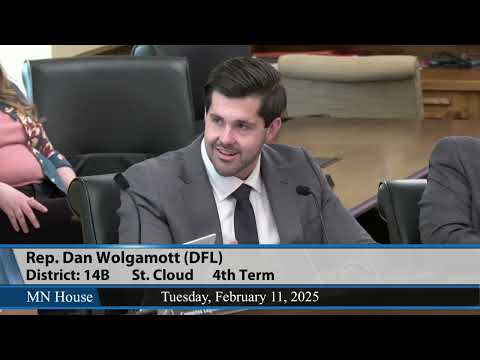
Committee questions focused on program details. Representative Peggy Scott asked whether summer academic enrichment grants (SAEP) are administered from OHE rather than K–12 agencies; OHE staff said SAEP funds academic summer programs (grades 3–11) that are college‑preparatory in nature and may be run by universities or nonprofit providers. Representatives also asked about ways to track career pipelines (for example, CNAs to RNs) and were told some data exist at Minnesota State and that multi‑year tracking may be required to capture credential progression.
Robinson and Olson asked the committee to return next week for a deeper dive into the financial aid budget and program line items, including the Minnesota State Grant and North Star Promise.
The presentation included numerous data points and referenced work to disaggregate attainment data by race and ethnicity; OHE said Minnesota’s statewide attainment goal (set by the legislature in 2015) aims for 70 percent of adults 25–44 to hold a postsecondary credential and currently sits at roughly 63.3 percent.
OHE said most of its budget is appropriated to student aid and related program services rather than agency operations, and the committee was given a packet of line‑item spreadsheets to review ahead of the next meeting.
AI generated
The text on this page is AI generated. Summaries, highlights, analysis, and video transcripts are all produced from the original source material.
AI can make mistakes, so if you spot one, and we will fix it for everyone.
Note: the source content is unaltered by us. Any content source we link to, be it a video, an audio recording, or a document, is presented exactly as its publisher released it. That publisher is usually a government body, sometimes an individual official or another organisation.