Get Full Government Meeting Transcripts, Videos, & Alerts Forever!
Get email alerts on the Juvenile Contact Law Sb5052 topic
No spam. Unsubscribe anytime.
Senate committee adopts substitute clarifying juvenile‑contact rules after heated debate over access to counsel
Summary
Senate Bill 5052 — a measure clarifying when law enforcement must provide juvenile suspects access to counsel and when officers may question youth who are victims or witnesses — drew extensive debate and five failed amendment attempts before the committee adopted a proposed substitute and sent the bill to the Rules Committee.
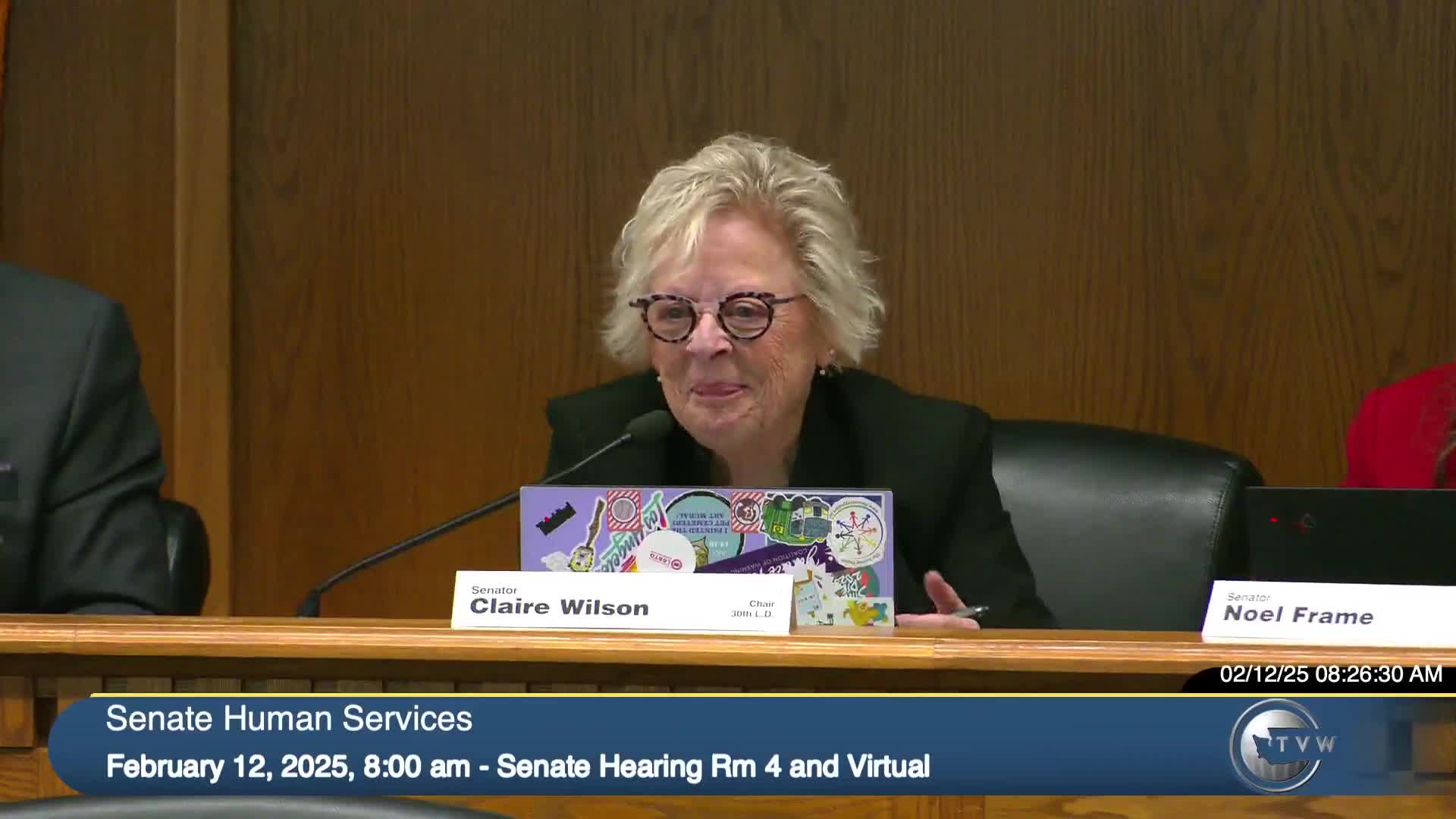
The Senate Human Services Committee on Feb. 12, 2025, adopted a proposed substitute for Senate Bill 5,052 (juvenile contact with law enforcement), after extensive debate about when officers may speak with youth and how statements may be used in later prosecutions.
Staff summarized the original bill and the Chair’s proposed substitute. The substitute would prohibit law enforcement from questioning a juvenile who is detained based on probable cause of involvement in criminal activity unless the juvenile has been given access to counsel. The substitute also clarifies that the act is not intended to prevent admissibility of evidence obtained lawfully for other purposes and adds an intent section, according to committee staff.
The committee considered five separate amendments offered chiefly by Senator Warnick and Senator Christian that would have (A1) permitted officers to speak to juveniles who are victims of trafficking without contacting the youth access to counsel (YAC) line, (A2) barred statements obtained without contacting YAC from the state’s case‑in‑chief when the juvenile is the defendant, (A3) allowed questioning where the juvenile’s statement would be exculpatory, (A4) permitted questioning without attorney consultation where reasonable suspicion existed for the most serious offenses, and (A5) allowed questioning without attorney consultation in exigent circumstances.
Senator Warnick urged support for the trafficking‑victim amendment, saying some trafficking victims may also have committed crimes and officers need ability to gather information. “A victim of trafficking may also have committed a crime. I want the ability for an officer to talk to the victim of trafficking without losing the ability to talk to the victim about a crime that might be committed outside of this trafficking situation,” Warnick said. Senator Orwell warned that statements taken from survivors could be used in ways that would discourage them from speaking and emphasized referral to services.
All five amendments failed on voice votes after floor discussion. Committee discussion included opposition from members who said the proposed substitute already clarifies law enforcement options and exceptions and cautioned against creating ambiguity that could be misinterpreted.
Will Johnson, committee staff, also noted a one‑time fiscal impact estimate from the Washington State Patrol for training of roughly $37,978.
After the amendment votes, the committee adopted the proposed substitute and voted to give the bill a “due pass” recommendation to the Rules Committee. The committee chair said the substitute aimed to clarify the law narrowly in response to law enforcement concerns while preserving protections for youth.
The transcript records voice votes (ayes and nays) but does not record a roll‑call tally in the public hearing. The committee sent the substitute to Rules for further consideration and possible floor action.