Get Full Government Meeting Transcripts, Videos, & Alerts Forever!
Get email alerts on the Indeterminate Sentence Review Board Appointments topic
No spam. Unsubscribe anytime.
Three nominees for Indeterminate Sentence Review Board describe backgrounds and approach during Senate Human Services hearing
Summary
Three gubernatorial appointees — Jeffrey Patnode, Corey M. McNally and Megan Kelly Stallings — appeared before the Senate Human Services Committee for sworn interviews. Each described professional experience relevant to decision-making on post‑conviction release; the committee deferred formal action to executive session.
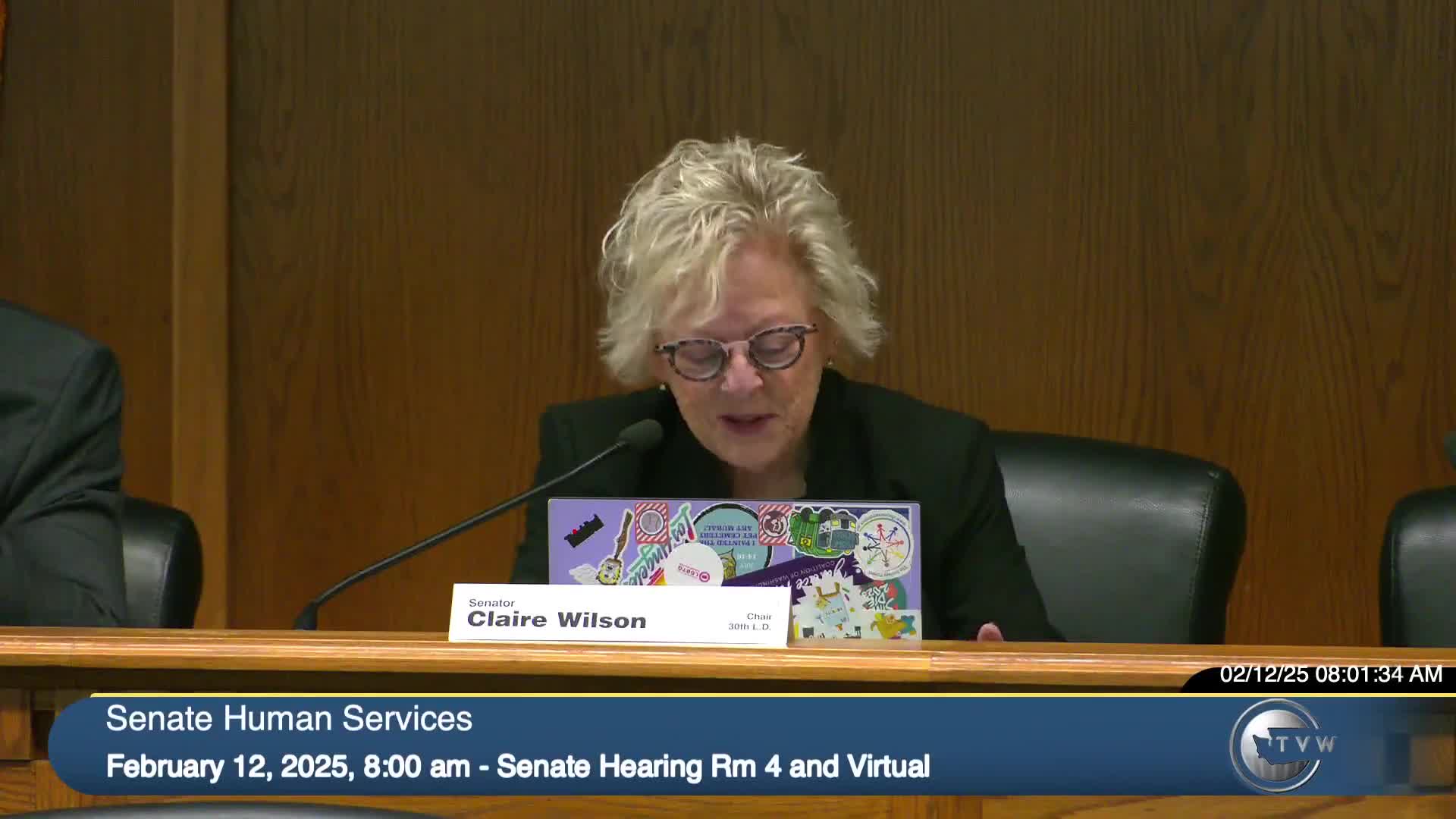
Three nominees for the Indeterminate Sentence Review Board (ISRB) appeared before the Washington State Senate Human Services Committee on Feb. 12, 2025, giving sworn testimony about their experience and approach to decisions about post‑conviction release.
Jeffrey Patnode, a long‑serving ISRB member, told the committee he was first appointed by Gov. Jay Inslee in 2015 and reappointed in 2019 and April 2024. “I've got a pretty good run, almost 10 years on the board,” Patnode said, and described a caseload growth from about 600 people on supervision when he started to roughly 1,800 now. He said the board has added reviews for people whose offenses occurred before age 18 and implemented an evidence‑based framework for post‑conviction release decisions; he noted the National Institute of Corrections has organized site visits to observe the board’s practices.
Corey M. McNally, who said he became ISRB executive director in 2023, described work on treatment and assessment programs for people convicted of sexual offenses, including program development at the Department of Corrections and training on commonly used risk assessments. “Treating them as individuals with dignity and respect gets the outcomes that everybody is looking for,” McNally said, summarizing his view that individualized approaches better reduce recidivism and improve public safety.
Megan Kelly Stallings, an attorney with a background in immigration and government policy who was appointed effective Feb. 1, said her prior work included clemency petitions for the governor and outreach to incarcerated non‑U.S. citizens. Describing her exposure to victim and community perspectives, Stallings said clemency work was “one of the most fulfilling experiences I had during my time at the governor's office,” and said she intends to weigh victims’ input alongside evidence of rehabilitation.
Committee members asked each nominee questions about recidivism data, effectiveness of treatment modalities and how they would weigh victims’ concerns against community safety. McNally said he had not been on the board long enough to speak to juvenile crime trends; Patnode offered anecdotal observations that sex‑offense recidivism appeared low but said he did not have formal recidivism statistics available during his testimony. Stallings said the board invites victims and family members to contribute evidence for release decisions.
The committee recorded that the three appointments would be taken up in executive session and then, if recommended, proceed to a floor confirmation vote. The transcript records no committee confirmation votes for these three nominees during the Feb. 12 public hearing; the committee chair said the appointments would be considered in executive session and then on the Senate floor for confirmation.
The committee hearing opened and closed the public portion of the interviews before moving to executive session, where additional bills and gubernatorial appointments were considered.
Going forward, the committee will decide whether to recommend confirmation during the executive session and the nominations would next appear on the full Senate floor if advanced by the committee.