Get Full Government Meeting Transcripts, Videos, & Alerts Forever!
Get email alerts on the Corrections Healthcare topic
No spam. Unsubscribe anytime.
Bill would let state reimburse counties for jail‑health malpractice awards above $50,000; providers urge action
Summary
House Bill 1743 would permit the state to reimburse, through the sundry claims process, amounts of medical‑malpractice judgments or settlements against community‑based providers delivering care in local jails that exceed $50,000.
Representative Simmons introduced House Bill 1743 on Feb. 12 to address a market failure that, sponsors and providers said, prevents community health centers from providing care inside county jails because private malpractice insurers have largely retreated from the market.
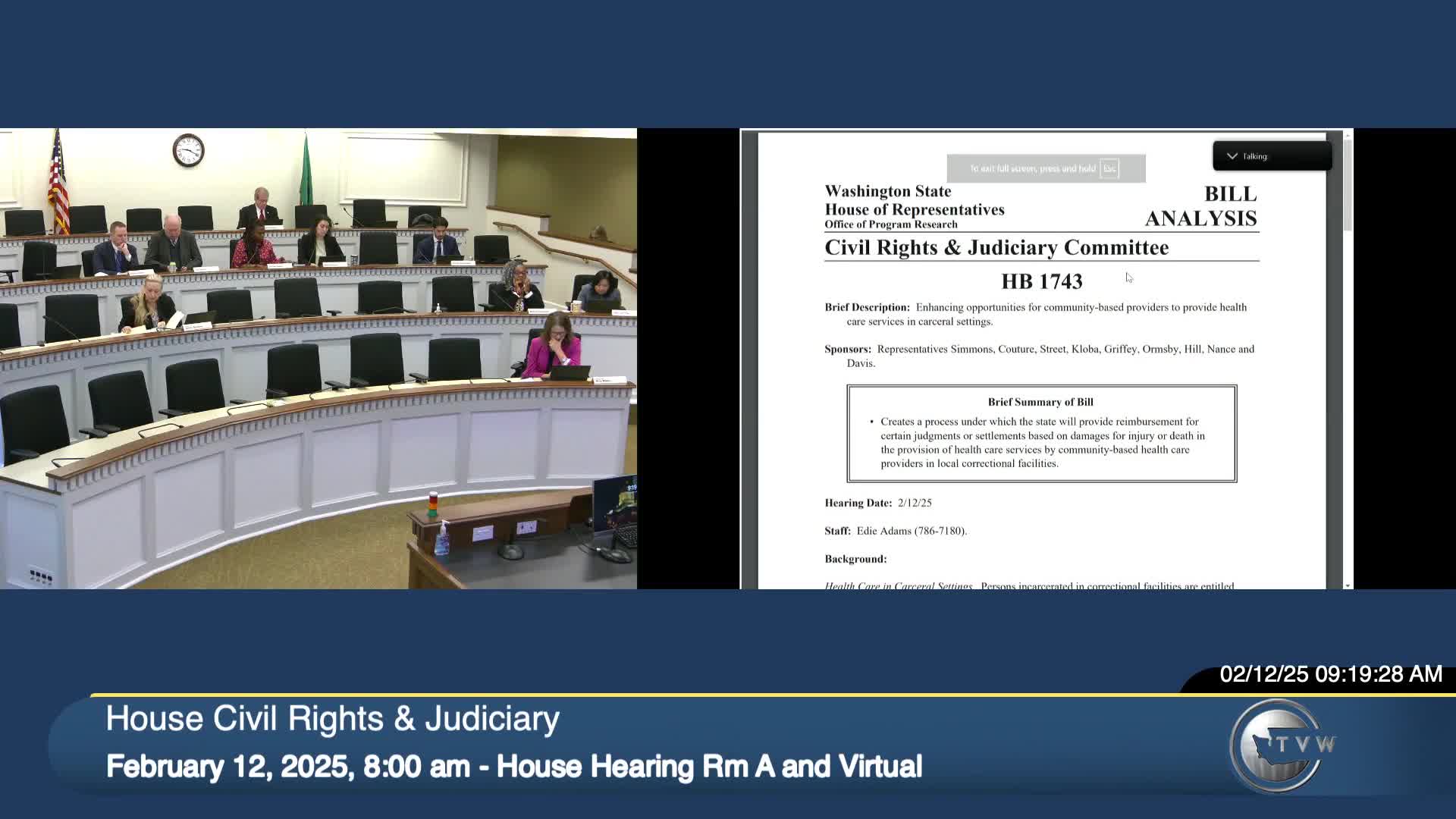
"House Bill 1743 creates a process under which the state will provide reimbursement through the sundry claims process for certain judgments or settlements based on damages for injury or death in the provision of health care services in local correctional facilities," staff explained during the hearing.
Under the bill as described to the committee, reimbursement is available for judgments or settlements against community‑based health providers under contract with a local correctional agency when the award is for medical malpractice and when the reimbursable portion exceeds $50,000. Reimbursement would not cover damages arising from other torts or constitutional claims; qualifying providers must be approved by the Department of Health (for example, federally qualified health centers or clinics meeting similar standards).
Health‑center leaders and county jail officials told the committee they frequently cannot find private malpractice coverage for in‑jail care. "My center was not able to compete for an RFP to serve as the in‑jail provider in Kitsap County because we could not obtain private insurance on the private market," Brynn Felix, chief corporate affairs and legal officer at Peninsula Community Health Services, said in testimony supporting the bill.
David Ford, senior policy advisor for property and casualty at the Office of the Insurance Commissioner, told the committee the private market has effectively exited or limited coverage for jail healthcare: interviewees reported reinsurance exclusions, entanglement with Eighth Amendment civil‑rights litigation, and solvency concerns among insurers. Department of Enterprise Services staff described the existing sundry claims process and indicated the Office of Risk Management is prepared to work with the Department of Health to vet provider qualifications if the bill moves forward.
Supporters said the bill is not designed to provide blanket immunity or to decrease care quality: it would reimburse counties for the portion of medical‑malpractice awards above $50,000, subject to review and approval through the sundry claims process.
Ending: The bill advanced to public testimony on Feb. 12 with broad stakeholder support from community providers and county officials; the committee did not take a final vote that day.