Get Full Government Meeting Transcripts, Videos, & Alerts Forever!
Get email alerts on the Grocery Self Checkout Regs topic
No spam. Unsubscribe anytime.
Grocery workers urge guardrails on self‑checkout; retailers warn against prescriptive statewide rules
Summary
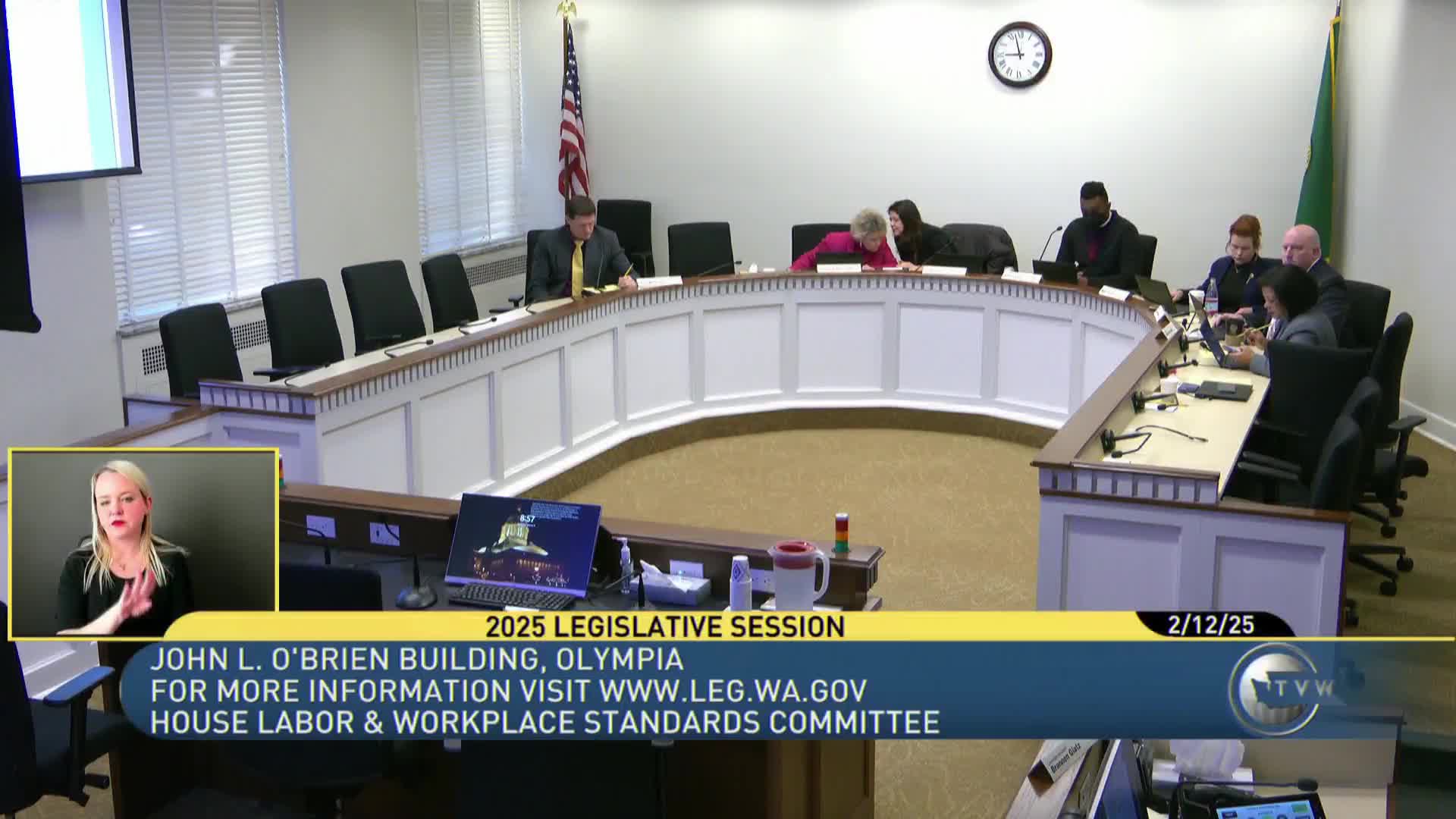
House Bill 17 39 would require large grocery stores to staff manual checkouts when self‑checkout is operating, limit self‑checkout to 15 items or fewer, and require dedicated monitoring staff; the committee heard extensive testimony on Feb. 12, 2025.
House Bill 17 39 drew extended public testimony on Feb. 12, 2025, with grocery workers and unions describing unsafe and stressful conditions when one employee must monitor many self‑checkout machines, and retail groups warning that the bill would impose inflexible, prescriptive requirements on diverse store operations.
Committee staff Ben McCarthy summarized the bill: it applies to grocery stores over 15,000 square feet (excluding discount warehouses and membership stores), requires at least one manual checkout whenever self‑checkout is operating, limits self‑checkout to 15 items or fewer with signage, and mandates that any employee monitoring self‑checkout be relieved of other duties and not required to monitor more than two self‑checkout stations. Penalties in the bill are $100 per day up to $10,000 total for violations.
Frontline workers described frequent understaffing, theft, verbal abuse and safety threats. "I have been cussed out, watched people hit machines, and seen people walk out without hundreds of dollars of merchandise when I step away momentarily," said James Reed, a QFC worker. Trainers and long‑tenured cashiers described lines of 15 or more customers and employees forced to oversee many machines alone.
Union witnesses including Joe Mizrahi of UFCW 3000 called the bill "basic common sense workplace standards" and linked self‑checkout proliferation to reduced staffing, increased theft, and worse customer service. Mizrahi said stores that rely on self‑checkout to cut labor costs are making management decisions that have wider public impacts.
Retail and grocery associations opposed the proposal. Katie Beeson of the Washington Food Industry Association and Brandon Huskeeper of the Northwest Grocery Retail Association said stores implement self‑checkout based on customer demand, store size and operational needs and that a prescriptive statewide mandate would remove local flexibility. Rose Gunderson of the Washington Retail Association suggested using existing complaint and inspection mechanisms (e.g., WA L&I inspections or organized retail‑crime policies) instead of a statutory mandate.
No committee action was taken; testimony highlighted a divide between worker safety and retail operational flexibility. Proponents urged lawmakers to adopt the bill to protect workers; opponents urged more targeted solutions addressing theft and local staffing practices.