Get Full Government Meeting Transcripts, Videos, & Alerts Forever!
Get email alerts on the Workers Comp Healthcare topic
No spam. Unsubscribe anytime.
Workers' compensation bill aims to preserve injured workers' health coverage and equalize payouts for single parents
Summary
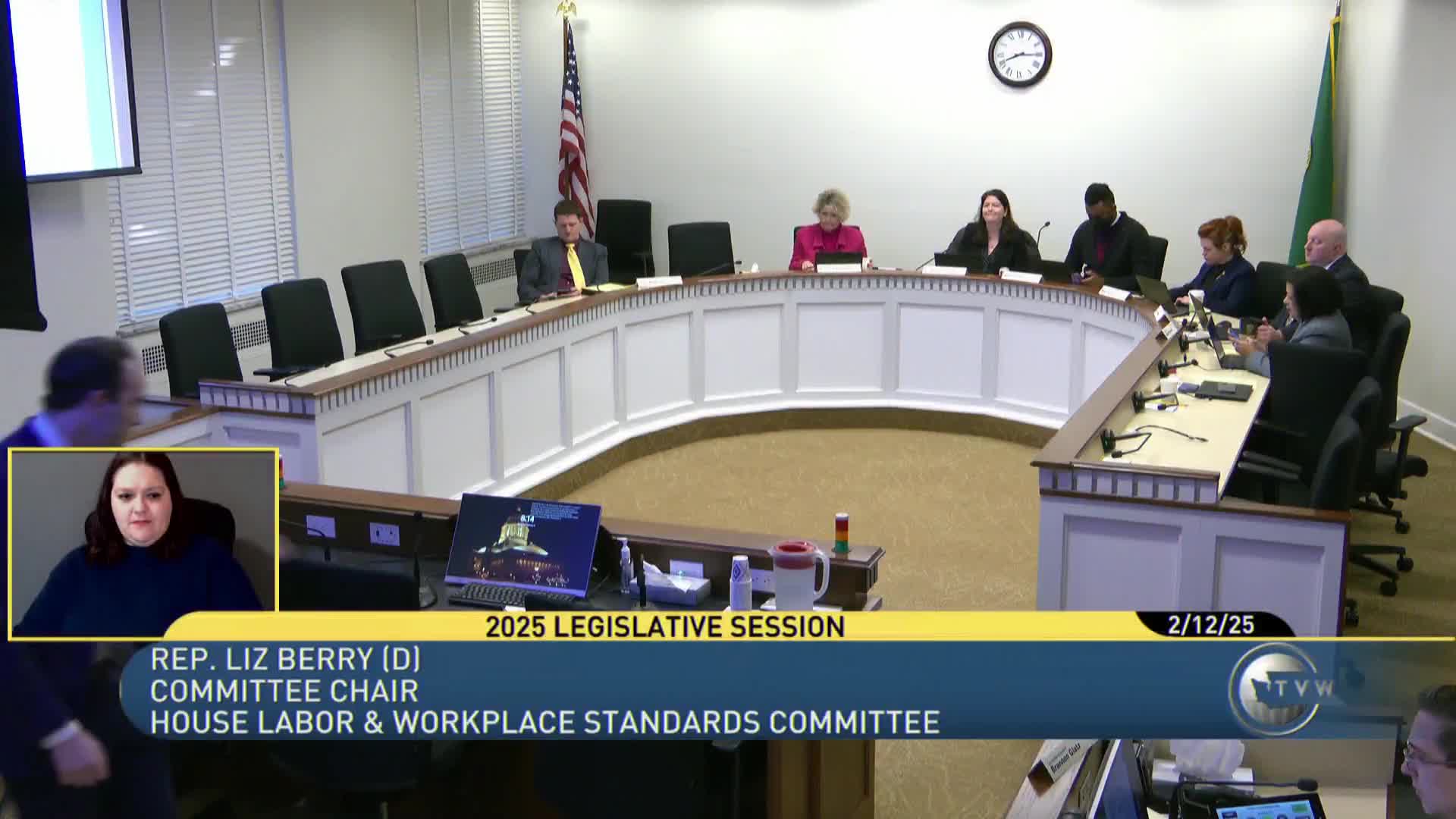
The committee heard House Bill 17 88 on Feb. 12, 2025, which would change workers' compensation calculations to separate an employer's health‑care contribution from wage replacement and to give single parents parity with married workers in benefit calculations.
The committee heard House Bill 17 88 on Feb. 12, 2025. The bill would revise workers' compensation calculations so the employer's contribution for health care is carved out and a percentage of that contribution is provided specifically to the injured worker or to the person with legal custody of the worker's child; it also standardizes wage replacement percentages across family compositions so, for example, single parents with one child would receive the same base percentage as a married worker with no children.
Ben McCarthy, briefing the bill, explained that current law pays injured workers a percentage of total wages using a graduated chart (e.g., 60% for unmarried workers without children, 65% for married workers without children). HB 17 88 consolidates those calculations and assigns a separate percentage of an employer's health care contribution to the person with legal custody of a worker's child when applicable.
Proponents — including trade unions, Building and Construction Trades, Teamsters, UFCW, Washington State Labor Council, and the Washington State Association for Justice — said the bill would prevent injured workers and their families from losing medical coverage or paying high COBRA rates after an employer discontinues family coverage. "This bill ensures injured workers can maintain their existing health care coverage and not have to change providers or disrupt care for themselves and their families," said Mina Long of the Building and Construction Trades Council. Rachel Hamar of the Association for Justice noted the bill would reduce inequities for single parents.
Industry groups raised concerns about broader system impacts. Rose Gunderson of the Washington Retail Association urged a systems assessment, citing rising long‑term disability costs and argued piecemeal changes could worsen incentives in the workers' comp system. AGC and Associated Builders & Contractors noted design questions about whether payments must be made to insurers/trusts to preserve coverage and whether other RCW sections must be amended to ensure the health‑care portion is used for insurance premiums rather than increasing time‑loss pay.
Testimony also addressed attorney fees and enforcement. Rachel Hamar explained that Title 51 RCW limits how attorneys are paid (typically a percentage of benefit increases) and that fee‑shifting statutes could be added if the committee wants to preserve the full health‑care benefit to workers while ensuring legal representation in disputes.
No committee action was taken; testimony showed broad labor support and requests by business groups for a broader review of the workers' compensation system before adopting the change.