Get Full Government Meeting Transcripts, Videos, & Alerts Forever!
Get email alerts on the Dcyf Launch Budget topic
No spam. Unsubscribe anytime.
Minnesota opens Department of Children, Youth and Families with $3.7 billion in annual spending and staggered program transfers
Summary
The new Department of Children, Youth and Families (DCYF), launched July 1, consolidates child-related programs from four agencies, will manage roughly $3.7 billion in annual expenditures and will complete major transfers in June; officials told a House committee the goal is improved access and coordination for families.
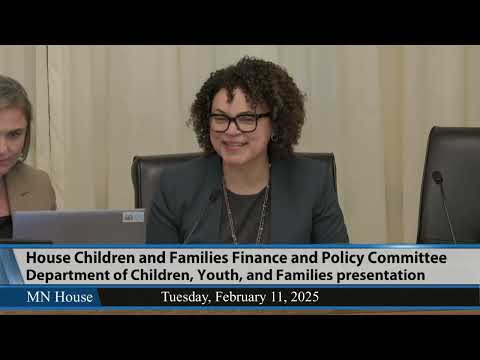
The Minnesota Department of Children, Youth and Families launched July 1 to consolidate child- and family-focused programs from multiple agencies, its commissioner told the state House Children and Families Committee. Commissioner Tiki Brown said the agency aims to create “a sustainable public face for children's issues in state government” and to improve access and outcomes for families across all 87 counties and 11 sovereign tribal nations.
The new department will include programs and staff moved from the Department of Human Services, the Department of Education, the Department of Public Safety and the Department of Health. Commissioner Brown and the agency’s chief financial officer, Ashley Reisenhower, told lawmakers DCYF’s transition is phased: early learning and some children and family services moved in July during the first phase; central operating functions and grants work transferred in October; Help Me Connect moved in January; and the largest transfers — including Office of Inspector General functions and youth-justice programs from Public Safety — are scheduled for June.
DCYF leadership and structure were a focal point of the presentation. The agency has filled most senior positions, Brown said, and is recruiting a deputy commissioner and the inspector general. The legislature appropriated funding for a set of leadership roles in 2023 and additional operating staff in 2024; Brown said about 95 percent of the department’s positions transferred from originating agencies, with roughly 900–1,000 FTE expected when transitions are complete.
Budget details presented to the committee show DCYF managing roughly $3.7 billion in total annual expenditures during the transition year. Reisenhower said federal funding accounts for about $2.5 billion — roughly two-thirds of the total — the state general fund about $1.0 billion, and other funds about $290 million. She also said DCYF oversees an additional roughly $1.0 billion in technical and fiduciary funds, principally child support (about $640 million), that are important to the agency’s responsibilities but are not state general-fund balances.
The department’s spending profile is concentrated in grants and forecast programs: about $2.4 billion a year in grant programs (just over 60 percent of spending), with SNAP (food assistance) and other federal programs dominant; roughly $1.1 billion in forecast programs such as adoption assistance, foster care and childcare; and roughly 7 percent for program operations and administration. Reisenhower cited specific program figures in committee: Great Start compensation payments, early learning scholarships, county and tribal grants for child welfare, and forecast programs that serve tens of thousands of Minnesotans.
Brown told lawmakers the department will use a whole-family systems framework and prioritize coordination across programs, improved “front door” access to services and continued community engagement as it implements the transition. She said the agency’s timeline and interagency agreements are intended to avoid breaks in service for counties, tribes, providers and families during the phased transfer.
Looking ahead, Brown and Reisenhower told the committee DCYF will continue functional analyses to identify potential efficiencies and align training, call centers, grants and technology across the consolidated agency; they said some work is already under way but that full outcomes and savings will be clearer as the transition continues.
Commissioner Brown opened the presentation by saying, “We launched a new agency to create a sustainable public face for children's issues in state government with aligned outcomes and policy, improving the front door for services, easing access and navigation for families, and improving services overall.”
The committee asked for follow-up materials on staffing counts, the precise split of transferred positions, and documentation of the interagency agreements that govern the transition schedule.