Get Full Government Meeting Transcripts, Videos, & Alerts Forever!
Get email alerts on the Reproductive Health topic
No spam. Unsubscribe anytime.
Minn. lawmakers introduce bills to fund pregnancy resource centers and restore newborn-care language
Summary
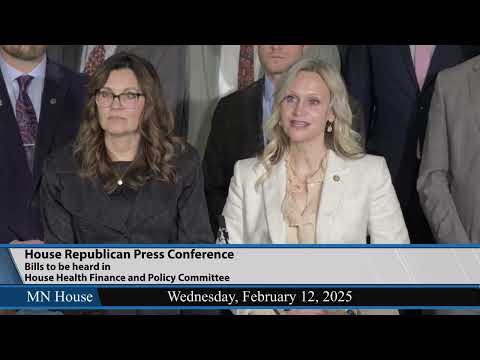
Representatives Krista Knudson and Natalie Slezna Carr told a health committee meeting they will introduce bills seeking funding for pregnancy resource centers and maternity homes and to clarify legal language requiring medically necessary care for infants born alive after abortion.
State Representative Krista Knudson of House District 5A and Representative Natalie Slezna Carr of House District 3B told a Minnesota House Health Committee meeting that they will introduce bills to restore protections for newborns and to provide new grant funding for pregnancy resource centers and maternity homes.
Knudson said her bill is designed "to preserve the life and health of these brand new newborn babies," and Carr said she would introduce House File 25 at 1 p.m. in the health committee, describing it as "a supporting women bill" that would allocate $3,000,000 to pregnancy resource centers and $1,000,000 to maternity homes.
The measures discussed on the committee floor follow changes made in 2023, according to speakers, when language requiring "medically necessary care" was replaced with the word "care." Representative Carr said that change raised concerns that the statute no longer clearly requires medically necessary treatment for infants who survive an abortion, and cited prior committee discussion in 2023 in which Chair Liebling described the revised word "care" as possibly including "palliative care, comfort care." Carr said that, in her view, the wording should be rewritten to ensure "medically necessary care for the survival and health of these born alive infants."
Carr outlined the funding proposal and its history. She said the bill would restore state grant support that, she said, had been removed in 2023: "In 2023, Democrats took $4,000,000 from the long standing positive alternative grants that ran from 02/2006 to 02/2023. This had a 17 year bipartisan support between the senate and the house," she said. Carr added that the new grants would be administered through the Minnesota Department of Health and said the department's budget "has more than doubled in the last 2 years," a change she described as making it possible to allocate the proposed dollars without cutting other programs.
Committee members asked whether the new grants would reduce funding available to other providers. A questioner asked whether the mechanism would "be taking away" money from providers such as Planned Parenthood; Carr responded that the proposed funding would be a separate allocation administered by the Minnesota Department of Health and said, "this money's gonna run through, it would not be that's not what will happen. The mechanism will be through the Minnesota Department of Health in a different allocation," adding that she believed MDH's larger budget could accommodate the grants.
Committee members also asked about retained or reinstated statutory language, including whether the bill would restore prior requirements such as a second-physician provision. Carr said the bill focused on "providing medically necessary care for babies that survive an abortion" but did not assert that specific second-physician language was included.
During questioning, a committee member raised how the statute should treat miscarriages versus induced abortion. A speaker described the two as distinct events and said a miscarriage is not intentional, recounting a personal experience and emphasizing the legal and medical difference when drafting statutory language.
No formal committee vote or final action on the bills was recorded in the transcript excerpts provided at the meeting; speakers said the measures were being presented for committee consideration and scheduled hearings.
The discussion covered both statutory wording around care for infants born alive and the proposed state grant dollars and administration through the Minnesota Department of Health; committee members pressed sponsors on whether the funding would displace other providers and on the precise statutory language needed to require medically necessary care.