Get Full Government Meeting Transcripts, Videos, & Alerts Forever!
Get email alerts on the Public Employer Insurance topic
No spam. Unsubscribe anytime.
UW Medicine seeks relief from contract bundling in Uniform Medical Plan negotiations
Summary
House Bill 17-66 would prevent carriers from conditioning participation in the Uniform Medical Plan on a hospital system's participation in the carrier's commercial products, a change UW Medicine says would allow fairer commercial negotiations.
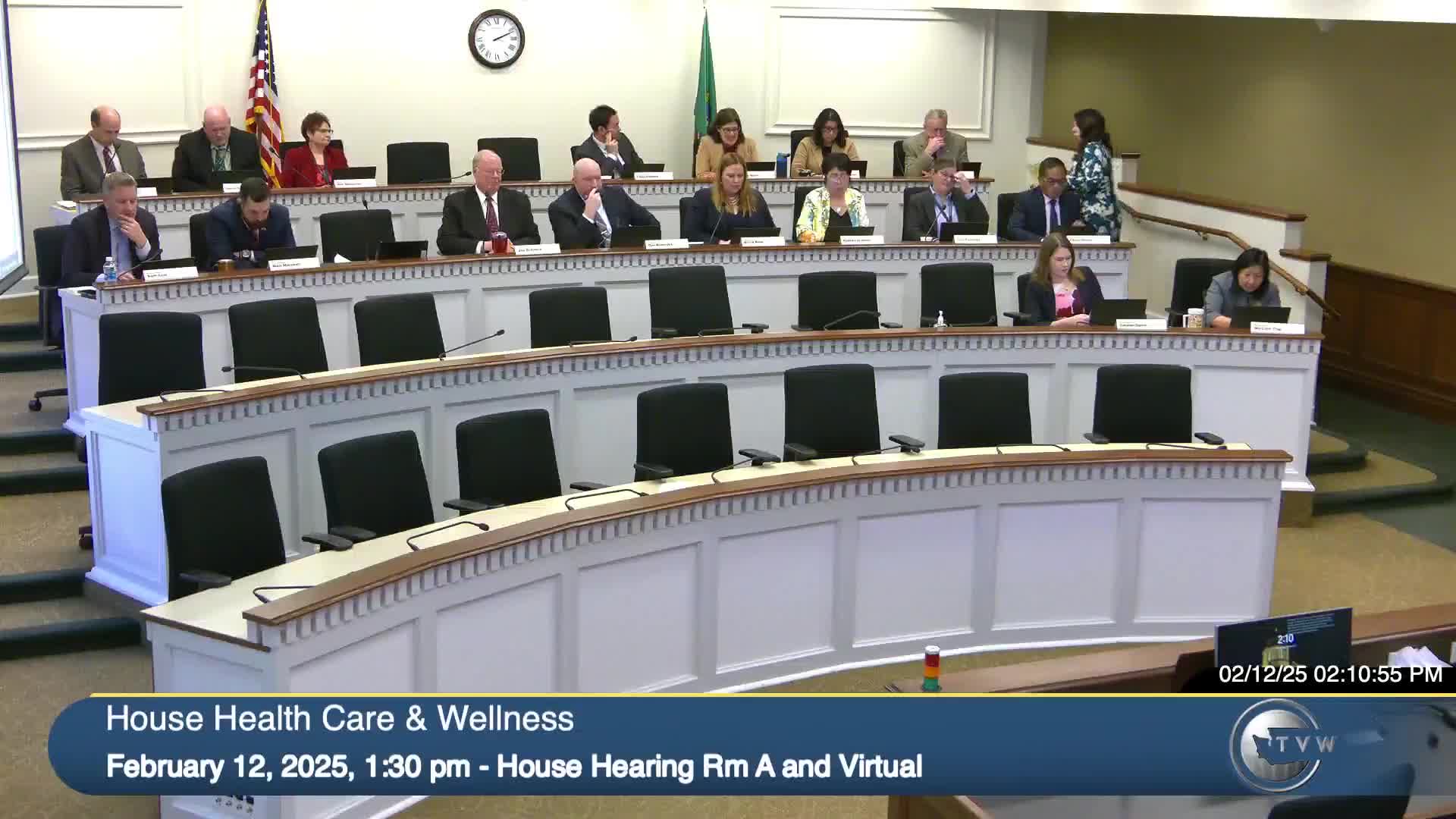
House Bill 17-66, reviewed Wednesday by the House Health Care & Wellness Committee, would bar a health carrier acting as a third-party administrator for the Uniform Medical Plan (UMP) from requiring a state-owned or operated hospital system to participate in the carrier's commercial products as a condition of participating in the UMP.
UW Medicine representatives asked the committee for support, saying the current structure — where an insurer bundles participation in both the UMP and its commercial plans into one agreement — unfairly limits UW Medicine's ability to negotiate commercial contracts independently. "UW Medicine cannot negotiate or end a commercial agreement without cutting off thousands of additional state employees," Ian Goodhue said. He told the panel that UW Medicine is both a major provider to public employees and an employer of thousands of state employees who rely on PEP (Public Employees Plan) networks.
The prime sponsor framed the bill as a fairness measure and noted precedent in Cascade Care, where insurers negotiate public-option contracts separately from commercial contracts. "This bill would require that the two contracts be negotiated separately," the sponsor said.
Regence BlueShield testified as concerned, warning bifurcating contracts may require creation of new provider networks, regulatory filings and could set a broader precedent. Carrie Tellson, speaking for Regence, said a bifurcated approach could require filing a new network with the Office of the Insurance Commissioner and could produce unbalanced negotiation dynamics. "This is somewhat of a complicated issue," Tellson said, and asked stakeholders to discuss alternatives before legislating a solution.
No committee vote was recorded on the bill during the hearing; sponsors said they will continue discussions with insurers and the Health Care Authority to resolve operational and regulatory details.
The bill aims to separate UMP negotiations from commercial bargaining to avoid compelling public hospitals to accept commercial contract terms as a condition of serving public employees.