Get Full Government Meeting Transcripts, Videos, & Alerts Forever!
Get email alerts on the Workforce Wellbeing topic
No spam. Unsubscribe anytime.
Committee hears testimony for bill to protect confidentiality of physician well‑being programs
Summary
House Bill 17-18 would create confidentiality and limited-reporting protections for physician well‑being programs; supporters described benefits for burnout and retention while some trial-law and patient-advocate witnesses cautioned that broad confidentiality could hide systemic problems.
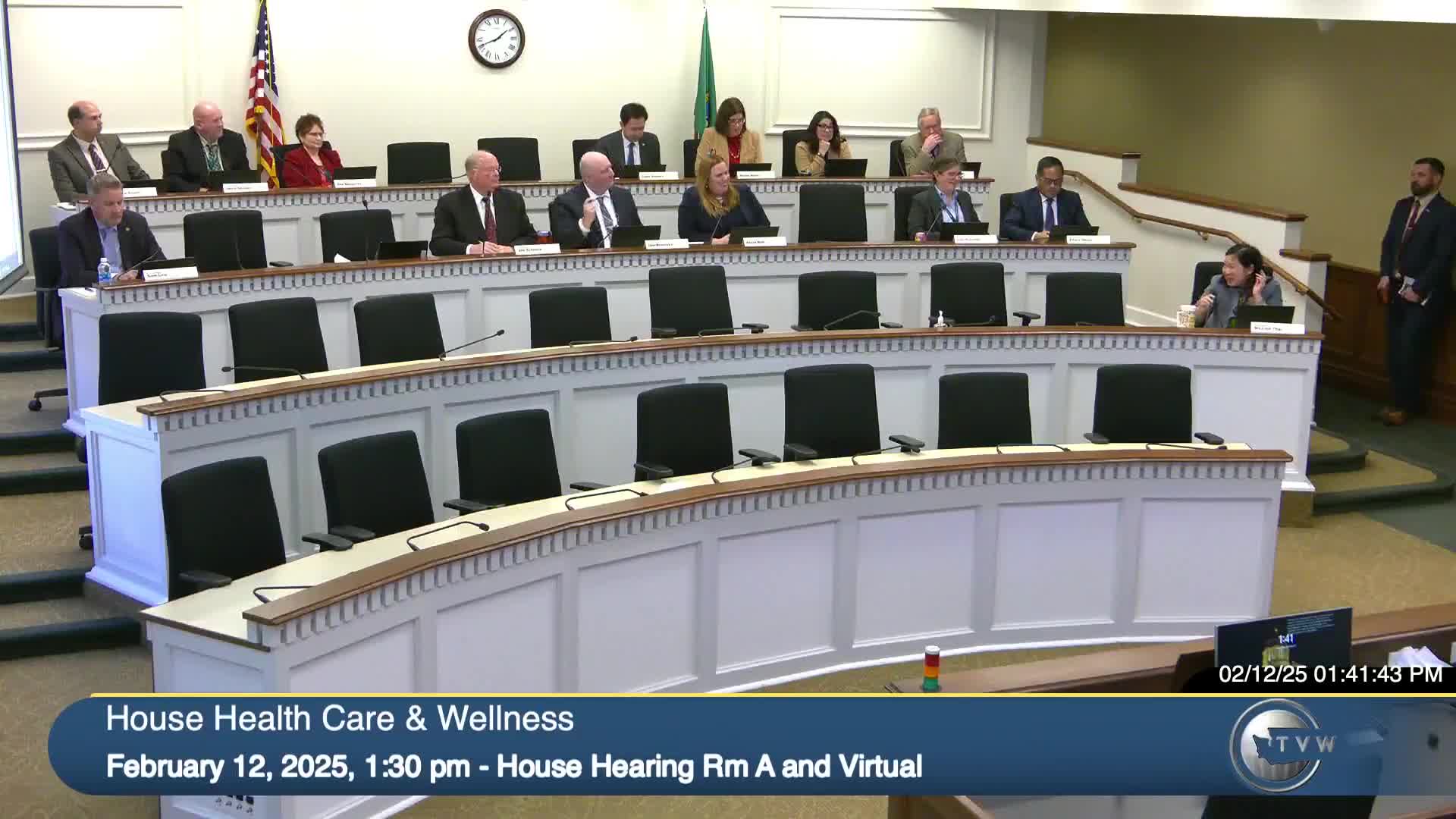
House Bill 17-18, which would create limited confidentiality and partial reporting exemptions for physician well‑being programs, drew largely supportive testimony Wednesday in the House Health Care & Wellness Committee but also prompted caution from consumer advocates and trial attorneys.
Staff described the measure as granting a partial exemption from mandatory reporting requirements for unprofessional conduct and unsafe practice if the information arises from participants in a qualifying well‑being program — unless the participant is unable to practice with reasonable skill and safety or patients have been harmed. The bill would also make program records confidential and exempt from disclosure while excluding certain types of evidence and formal documents from the shield.
Representative Tighe (prime sponsor), joined by stakeholders including the Washington State Medical Association and the Washington Chapter of the American College of Obstetricians and Gynecologists, told the committee the proposal is intended to give clinicians safe, confidential peer-to-peer support and connect them to treatment resources. "Peer to peer counseling allows doctors to speak with a trained peer who can understand the specifics of a stressful situation," said Dr. Andrea Collis, the physician coordinator for the peer support program at the University of Washington.
Supporters argued the policy is a workforce retention tool that addresses burnout and can keep experienced clinicians in practice. "Physician well-being programs are a workforce retention strategy," Alex Weinger of the Washington State Medical Association told committee members.
But Colleen Durkin Peterson, immediate past president of the Washington State Association for Justice, spoke in support with concerns, warning that confidentiality provisions can sometimes obscure systemic problems that contribute to burnout and patient harm. She recounted a patient-paralysis case she represents where staffing and delay issues cited by clinicians were treated as quality-improvement matters and not disclosed in discovery, saying the bill "may inadvertently mask the systemic problems that contribute to burnout."
Witnesses described program requirements in the bill: the definition limits qualifying programs to employer-established, nonprofit specialty organizations, or statewide physician organizations; programs must rely primarily on one-on-one peer interactions, connect participants to physical and behavioral health resources, be limited to three sessions in 12 months, and not include license-monitoring functions for clinicians who are unable to practice safely.
Committee members asked questions but took no formal action on the bill during the hearing. Staff said sponsors planned to continue stakeholder engagement to address concerns about scope and implementation.
The bill remains under committee consideration.