Get Full Government Meeting Transcripts, Videos, & Alerts Forever!
Get email alerts on the Research Funding topic
No spam. Unsubscribe anytime.
University president warns NIH cap would slash research overhead, jeopardize grants and graduate training
Summary
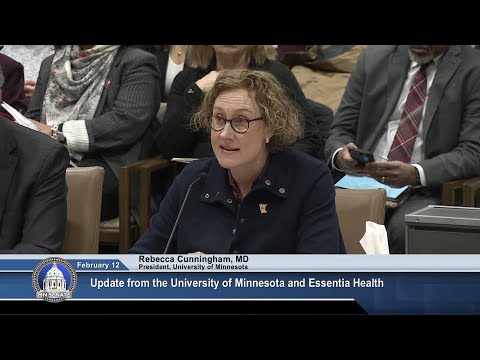
Rebecca Cunningham, president of the University of Minnesota, told the Senate Health and Human Services Committee on Feb. 12 that a federal directive to cap indirect cost reimbursement at 15 percent would reduce the university’s negotiated rate from 54 percent and immediately cut roughly $130 million from research overhead.
Rebecca Cunningham, president of the University of Minnesota, told the Senate Health and Human Services Committee on Feb. 12 that a federal directive to sharply reduce indirect cost reimbursement for research grants would substantially curtail the university’s biomedical enterprise.
Cunningham said the university’s negotiated indirect cost rate for federal research currently is 54 percent and that, if the executive action stood, “it would be an immediate cut of approximately $130,000,000 to the university's budget.” She told senators the change would affect more than just faculty salaries: indirect funds pay for laboratory facilities, equipment, grant administration, research security and the training environment used by graduate students and postdoctoral trainees.
“Those researchers actually can't do that work,” Cunningham said, arguing that without overhead funds there would be no facilities, data security or administrative infrastructure to administer federal awards. She warned the cut would “devastate our ability to train the next generation of scientists” and the state’s broader biomedical‑research competitiveness.
Committee members pressed Cunningham for details while noting political sensitivity. Senators asked whether the federal change was a cap or a cut and whether private funding could replace lost overhead. Cunningham said the difference was largely semantic in impact: cutting a negotiated 54 percent rate to 15 percent would produce an immediate shortfall in the hundreds of millions of dollars on federally supported projects and that private philanthropy was unlikely to scale to cover that gap for high‑cost biomedical research.
Lawmakers and witnesses also discussed reports of “stop work” notices from certain federal agencies on specific grants. Cunningham said the university is compiling information about individual “stop work” orders but that the broader directive’s immediate budget effect would be severe. Senators encouraged further follow‑up and asked Cunningham to share more detailed lists of affected projects and jobs as the university completes its assessment.
Cunningham framed the issue as nonpartisan and focused on research infrastructure and patient care: she said the funds support clinical research, medical innovations and trials that can affect patient outcomes. She added that reductions would likely ripple to tuition and training opportunities for graduate students.
No formal legislative action was taken at the hearing. Senators expressed interest in continuing bipartisan oversight and asked for follow‑up data from university officials about the number of stopped projects, the funding lines affected and potential local economic impacts.