Get Full Government Meeting Transcripts, Videos, & Alerts Forever!
Get email alerts on the Dtot Budget topic
No spam. Unsubscribe anytime.
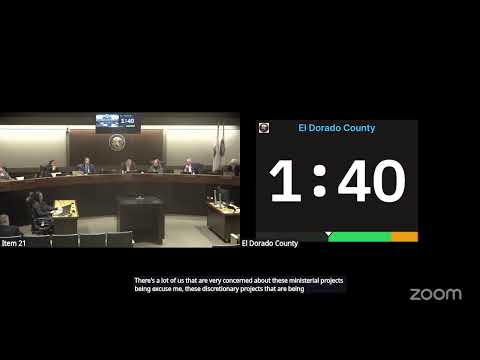
Board directs staff on discretionary TOT after hours of debate; funds trimmed for roads and economic development
Summary
El Dorado County supervisors on Feb. 11 voted to treat discretionary transient-occupancy tax revenue as general-fund resources for the coming budget and directed staff to prioritize county operations as DTOT receipts fall, while trimming some road and economic-development allocations.
El Dorado County supervisors on Feb. 11 debated options for reallocating the county's discretionary transient occupancy tax as DTOT revenues drop and then approved a mixed plan that will fold DTOT into the county budget while cutting some specific commitments.
The board heard a detailed presentation from the county's chief administrative office that forecast a roughly $2 million shortfall in DTOT for fiscal 2025—6 and proposed two general approaches: (1) prioritize county operations and stop funding outside promotion agencies, or (2) keep the same categories and apply a roughly 24% across-the-board reduction. Departments and outside agencies were asked to prepare budgets on that basis.
At a public meeting that included hours of testimony from chambers of commerce, tourism groups and multiple fire districts, county staff also outlined how DTOT had shifted since 2019: Tahoe Basin receipts account for roughly two-thirds of the revenue and the county projects $7.2 million to $7.7 million in DTOT for 2024—25, down from prior years. Staff recommended a framework for allocating a smaller pool to county operations (planning, building, public safety, roads) and to outside promotion and fire-district tourism-impact reimbursements.
Supporters of keeping outside promotion funding argued the investments drive the tourism that produces DTOT. "When the economy turns, you cannot stop marketing," said Debbie Manning of the El Dorado Hills Chamber of Commerce, noting studies showing tourism'generated local and state tax revenue. Fire district chiefs and sheriff's representatives warned that rising visitor calls strain public safety resources and urged continued funding for emergency services and first-responder needs.
Taxpayer groups and several public commenters urged more transparency and for the county to live within its means. "Before asking residents and businesses to pay more, the county must first demonstrate fiscal responsibility and full transparency with the funds it already collects," said Lee Tannenbaum of the El Dorado County Taxpayers Association during public comment.
After extended board discussion and multiple proposed motions, the board approved a motion directing staff to: include DTOT revenue in the county's general fund budgeting process for 2025—26; treat county operations as the budget priority for DTOT; and implement two specific adjustments to the current DTOT allocations — reduce the special projects/road-related DTOT contribution and reduce the county planning and economic development allocation. The board also set a cap on tourism-impact reimbursements awarded to outside fire and tourism-impact agencies for the coming cycle and asked staff to solicit requests with that cap in mind so the board can review specific applications during regular budget hearings. The board asked staff to return in April with updated line-item budgets and proposals for final appropriation in the 2025—26 budget.
Why this matters: DTOT is an important discretionary revenue stream the county has used to fund emergency services, Tahoe Basin road maintenance, visitor promotion and some county planning functions. The board's direction shifts DTOT toward the county's core operations while shrinking specified allocations; staff now must prepare detailed budgets consistent with those decisions and with an expectation of roughly $7.0—7.2 million in revenue for 2025—26. Implementation questions remain about how to treat carryover projects, which DOT projects remain funded and which outside programs will be reduced or phased out.
The board asked staff to return with a revised DTOT budget proposal at its April budget workshop and to continue outreach to affected agencies and districts. No formal new tax or fee was adopted; board members said additional revenue options — including fees on campgrounds and recreation uses, tourism assessment districts and targeted user fees — should be explored as longer-term solutions.